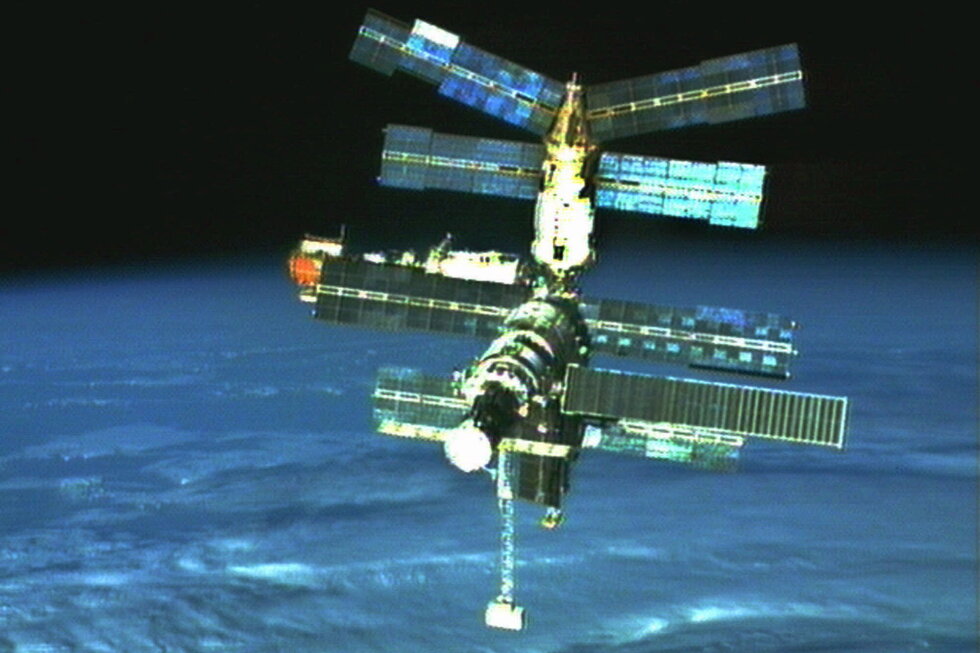
Abdul Ahad Momand, the trailblazing Afghan who made history as the first person from his country to reach outer space, has passed away at the age of 67 following a battle with cancer. His death, confirmed by close family and friends on June 21, came at a Stuttgart, Germany hospital, where he had resided since fleeing Afghanistan’s escalating civil war in 1992.
Widely celebrated as a national hero across Afghanistan, Momand’s passing drew widespread tributes from political leaders and ordinary citizens alike. Former Afghan President Ashraf Ghani shared his grief in a post on X, writing, “I am deeply saddened by the sudden death of Afghanistan’s first and only astronaut, Abdul Ahad Momand.” He extended his heartfelt condolences to Momand’s wife, children, and extended family, adding that the astronaut’s nine-day mission aboard the Mir space station helped Afghans temporarily set aside the deep pain and division of the 1980s civil conflict.
Momand’s journey to space began in 1988, when the 29-year-old Afghan Air Force pilot was selected to join a Soviet space initiative that flew representatives from Soviet-aligned nations into low Earth orbit. At the time, Afghanistan was under Soviet military occupation.
After completing months of rigorous spaceflight training, Momand launched alongside veteran Russian cosmonauts Vladimir Lyakhov and Valery Polyakov on the Soyuz TM-6 mission. Over nine days docked at the Mir space station, he carried out a slate of planned scientific experiments aligned with his pre-mission goals: mapping Afghanistan’s untapped mineral reserves, evaluating the country’s hydroelectric energy potential, studying glacial patterns, and assessing regional earthquake risk. Before his flight, he told Soviet media outlet *Sovietskaya Rossiya* that the data collected from orbit would directly benefit his home country’s long-term development.
A historically notable moment of his mission came when he broadcast a televised address to his fellow Afghans from orbit. In the message, he noted that national borders and the violence plaguing his homeland were invisible from space. “I would like to believe that such will be the situation on the land inhabited by my brothers and sisters, on the land of our fathers and mothers who have suffered so much during the years of the war,” he said at the time. During his flight, he also brought a copy of the Quran and read from it, a detail Ghani highlighted as a moment that introduced Afghanistan to the global community “with national colors and national words” and shared the country’s Islamic identity with the cosmos. Momand also added his native Pashto to the small list of languages ever spoken in space, a point of national pride that endures for many Afghans today.
His return trip to Earth almost did not go according to plan. Momand and Lyakhov were scheduled to return on Soyuz TM-5, but a last-minute technical issue pushed their landing back by 24 hours. The pair were briefly stranded in the cramped return capsule, facing potential shortages of food and oxygen before the issue was resolved and they landed safely.
Contemporary Associated Press reporting from the flight period notes that Momand, whose surname was alternately spelled Mohmand at the time, had previously participated in joint Soviet-Afghan counterinsurgency operations early in his military career, and had flown hundreds of combat attack missions before his selection for the space program.
Born in the Andar district of Afghanistan’s southeastern Ghazni Province, Momand received military training at institutions in both Afghanistan and the Soviet Union before his selection for the historic space mission.
Across Afghanistan, news of his death sparked widespread sorrow among residents who still regarded him as a unifying national icon. Zahir Ammar, a 35-year-old cosmology blogger based in Jalalabad, honored Momand’s legacy in a tribute, emphasizing the unprecedented nature of his achievement for the country. “Now, astronauts’ trips to (international space stations) have become commonplace, but during the time of the late Abdul Ahad Momand, this was a great achievement for Afghanistan,” Ammar wrote. He also voiced regret that Momand spent his final decades in exile, saying the astronaut’s lifetime of experience could have inspired a new generation of young Afghans interested in science and exploration.
As of the announcement of his death, no formal funeral or memorial service arrangements have been made public. Momand is survived by his wife, two daughters, and one son.