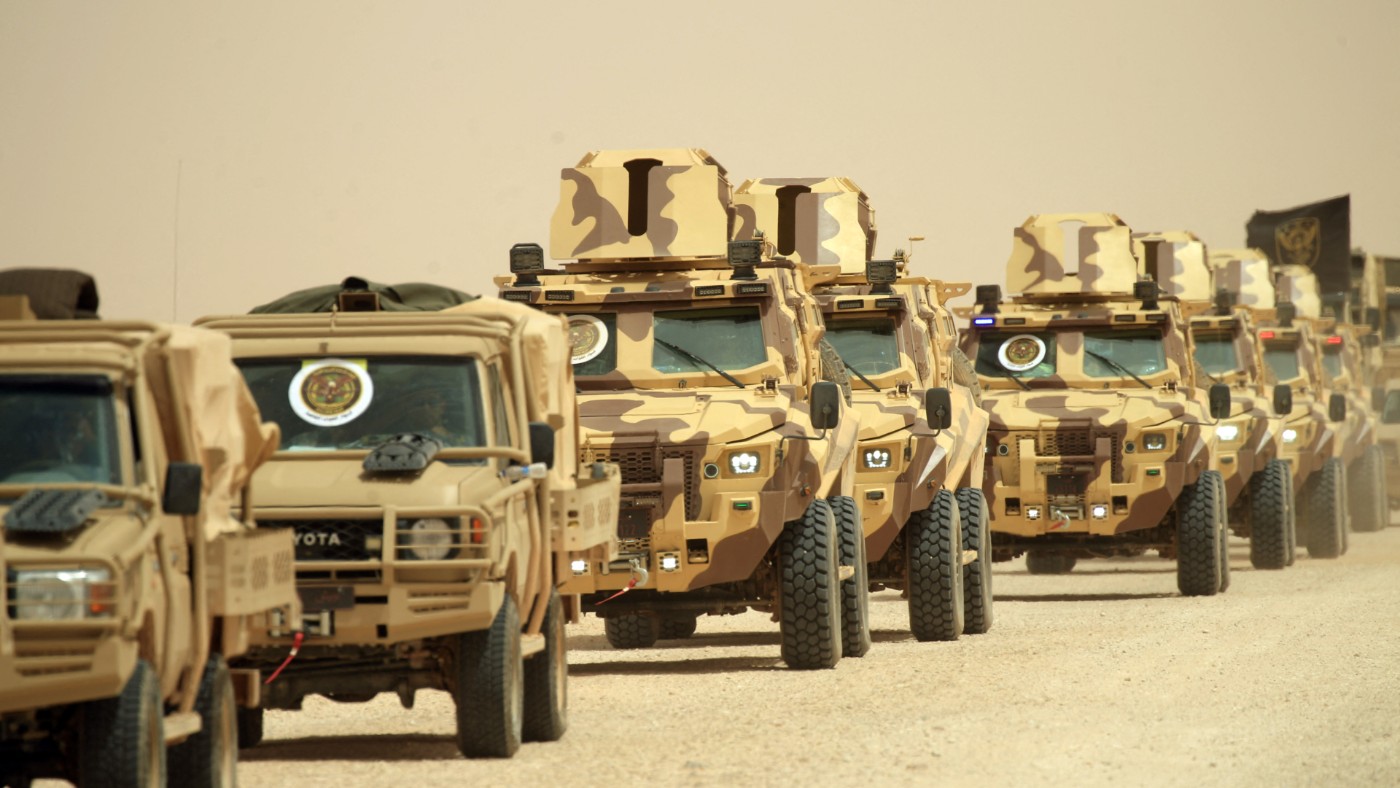
A landmark collaborative investigation by three independent journalistic and monitoring groups has uncovered a sustained, covert network of military support that the United Arab Emirates (UAE) maintains for Sudan’s Rapid Support Forces (RSF) through territory in eastern Libya, even after regional pressure targeted the group’s weapons supply lines. The probe, carried out by Lighthouse Reports, Sudan War Monitor and Evident, confirmed on Monday that RSF fighters receive weapons, logistical backing and specialized weapons training at multiple dedicated camps across Libya, contradicting repeated public denials from Abu Dhabi, the Libyan Arab Armed Forces (LAAF) led by Khalifa Haftar, and the RSF itself.
Interviews with seven RSF defectors who have passed through the Libyan training infrastructure, plus current and former LAAF insiders, have corroborated the findings. One defector, identified only as Ahmed, offered on-the-record testimony detailing the full supply chain. According to Ahmed, all military equipment sent to the RSF is Emirati-made. “Emirates is the one supporting the RSF. They would bring it from their country by a plane to here and from here we would receive them and deliver it to Sudan,” he explained. Ahmed added that he personally saw an armored vehicle marked “Made in Emirates” at one camp, even as most supplies are shipped without visible branding to cover the UAE’s involvement. He also emphasized the critical nature of Abu Dhabi’s backing, stating, “If the RSF lost UAE support, if UAE stopped supporting them, the RSF won’t be able to fight in the field anymore, it will break apart.”
The investigation identified five active RSF camps in Libyan territory controlled by Haftar’s LAAF, four of which were newly mapped: Seweidiya near the key southeastern LAAF base of al-Kufra, Sabha, al-Jufra, and Camp 17 near the eastern coastal city of Benghazi. Ahmed confirmed the logistics chain: RSF fighters are transported to the remote Chad-Libya-Sudan border triangle, moved to al-Kufra, then relocated to Benghazi and finally to Camp 17, which serves as the primary storage hub for all supplies bound for Sudan. Training at the camps includes hands-on instruction for operating heavy weaponry, such as DShk heavy machine guns, rocket-propelled grenades (RPGs) and multiple rocket launch systems. Investigators also confirmed the presence of Colombian mercenaries at the sites, matching a May 2025 Human Rights Watch report that identified these fighters as contracted by a UAE-based security firm with direct ties to the Emirati government.
This is not the first time foreign support networks for the RSF have been exposed: Middle East Eye, which first broke extensive coverage of LAAF-RSF collaboration, previously revealed a separate RSF training camp operated in Ethiopia. Longstanding ties bind the UAE to RSF leader Mohamed Hamdan Dagalo, widely known as Hemedti: for decades, gold extracted from Darfur mines controlled by the Dagalo family has been exported to commercial markets in Dubai, and RSF fighters previously deployed as mercenaries to support the Saudi-UAE coalition in the Yemen war.
Despite regional pressure that included Egyptian and Turkish airstrikes on RSF weapons convoys departing from LAAF-held territory starting in November 2025, the investigation finds that the UAE has not scaled back its support – it has merely rerouted it. Egypt backs the Sudanese Armed Forces (SAF), the RSF’s opponent in Sudan’s ongoing civil war, putting Cairo in direct conflict with the UAE and Haftar’s alliance. After airstrikes forced the temporary closure of al-Kufra air base, the UAE shifted its main supply hub to Amdjarass airport in eastern Chad, according to senior Egyptian military and intelligence sources speaking to Middle East Eye. Flight tracking data confirms a sharp uptick in flights from the UAE and Libya to Amdjarass following the closure of al-Kufra, proving the route shift was a tactical adjustment, not an end to operations. “The flights didn’t stop,” a senior Egyptian military source noted. “They were simply redirected – from Libya to Chad, and specifically to Amdjarass.”
Egyptian security surveillance has documented large-scale, ongoing expansion of Emirati infrastructure at Amdjarass, including a fully operational Emirati military coordination room, new drone hangars, and upgraded facilities capable of accommodating large Ilyushin cargo aircraft, one of the world’s largest military transport planes. “Emirati companies carried out extensive construction and expansion work at the airport that wasn’t limited or symbolic development,” an Egyptian commander explained. “What happened was large-scale expansion and the construction of new facilities.” The UAE has claimed its activities at Amdjarass are purely humanitarian, a claim that contradicts the documented military infrastructure observed by Egyptian intelligence.
A new secondary weapons corridor has also been established, running from the Gate 17 border crossing between Libya and Chad through central-eastern Chad to the Sudanese border town of Adre, before entering Darfur – the vast western Sudanese region almost entirely controlled by the RSF. Adre currently hosts hundreds of thousands of refugees who have fled Sudan’s civil war, which has been classified as the world’s worst ongoing humanitarian crisis, with an estimated 200,000 people killed since fighting broke out between the RSF and SAF in April 2023. The RSF has faced widespread international accusations of committing genocide against non-Arab communities in Darfur.
Jalel Harchaoui, a leading analyst specializing in Libyan political economy, told Middle East Eye that recent developments had incorrectly suggested the UAE was winding down its involvement. “Far from receding, Emirati interference is returning with full force: the UAE is aggressively re-escalating its support for the RSF via eastern Libya,” he said. To date, the UAE’s ongoing support for the RSF has faced no significant pushback from major Western powers, including the United States and the United Kingdom.
All parties involved have continued to deny any wrongdoing: the UAE’s foreign ministry issued a statement asserting “The UAE has not provided and is not providing military or financial support to any warring party in Sudan,” while the RSF has also denied receiving Emirati backing.