Forty-four years after the infamous 1982 ‘Disgrace of Gijon’ left Algeria eliminated from the World Cup amid accusations of a pre-arranged result between West Germany and Austria, history looked set to repeat itself for the two nations on the 2026 global stage. When Algeria and Austria entered their final Group J matchup on a June Sunday, a single point apiece from a draw would see both progress to the knockout round, eliminating Iran in the process—an eerie parallel to the 1982 incident that has hung over both teams for decades. What followed was a chaotic, high-drama 96 minutes of football that ended in a 3-3 draw, but the chaotic finish featuring two last-minute injury-time goals has left conspiracy theorists and angry Iranian fans questioning whether the result was carefully scripted.
The match opened at a surprisingly sedate pace, with Austria’s veteran striker Marko Arnautovic notching the first shot on target to open the scoring in the 28th minute. Just before halftime, Rafik Belghali equalized for Algeria with a powerful finish, setting the stage for a frantic second half. Marcel Sabitzer restored Austria’s lead in the 55th minute, only for Algeria captain Riyad Mahrez to level the score again just five minutes later. For a stretch after the match went to 2-2, circulated clips appeared to show both sides easing off the pace rather than pushing for a decisive winning goal, feeding early speculation of a quiet arrangement.
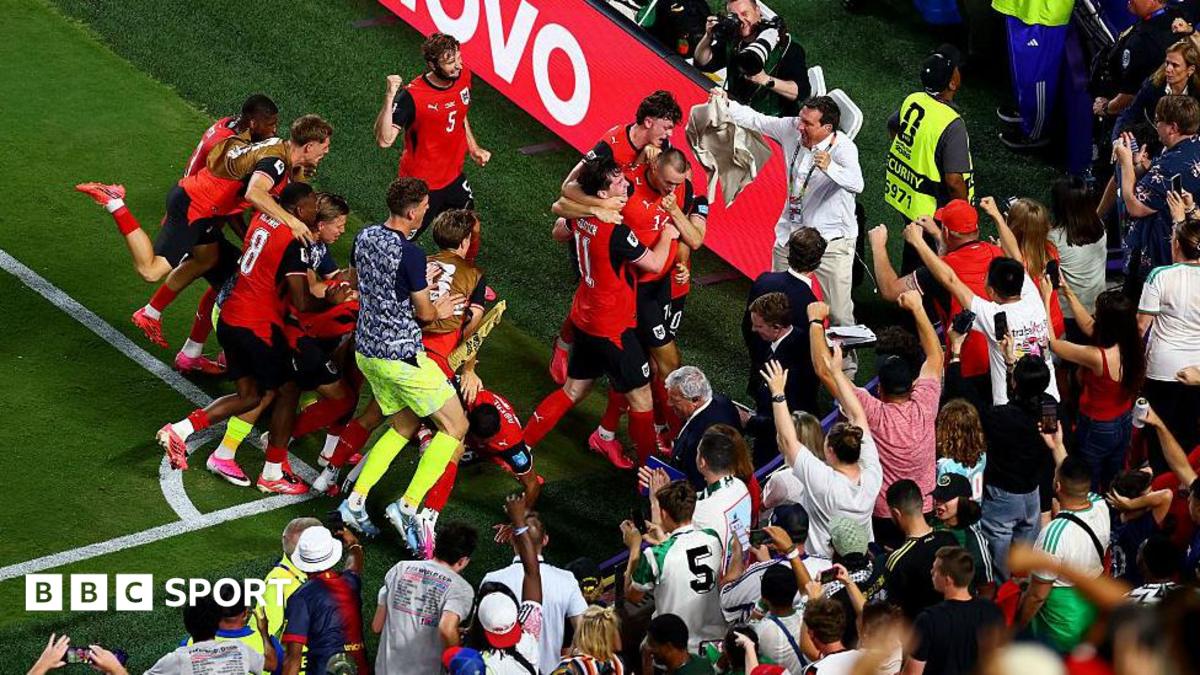
In the third minute of stoppage time, Mahrez slid home what appeared to be a match-winning goal for Algeria. The result would have sent Iran through to the knockout stage at Austria’s expense, upsetting the projected outcome that saw both Algeria and Austria progress. With just seconds left on the clock in the sixth minute of stoppage time, Austrian striker Sasa Kalajdzic powered a header into the back of the net, locking the score at 3-3 and securing progress for both teams.
Circulated social media clips have added fuel to conspiracy claims: one clip shows an apparent confrontation between the two teams’ benches after Mahrez’s go-ahead goal, with some observers claiming it stemmed from frustration that the pre-planned draw had been disrupted. Another shows Algerian defender Aissa Mandi leaning toward Mahrez, speaking while covering his mouth, with one fan claiming Mandi warned Mahrez that a win would pit Algeria against Spain in the Round of 32 rather than the more favorable matchup against Switzerland.
Iranian fans have been among the loudest critics, taking to social media to call on FIFA to launch a formal investigation, claiming the result was rigged against their national side. Football fans around the world have also echoed the accusations, with some describing the match as a second ‘Disgrace of Gijon’ and calling it the most obviously scripted game in recent World Cup history. Some accusers claimed Austrian players eased off attacking pressure for large stretches of the match before forcing the late equalizer when the pre-planned result was at risk.
Both national team managers have forcefully rejected all claims of a pre-arranged result, describing the dramatic finish as a natural example of football’s unpredictable nature. Austrian head coach Ralf Rangnick argued that the chaotic final 90 seconds of the match, played in Kansas City, clearly disproved any conspiracy theories. “In this match, when you have a 3-3, nobody can assume that it was an agreement, especially after what we saw during the last 90 seconds,” Rangnick said. “If, with three minutes to play, somebody had said this would happen, you would have told them they were mad. I’ve been a coach for about 40 years and I don’t even remember a match that had such a dramatic course and such an unexpected trajectory. Most people anticipated a 0-0 or 1-1, and now it’s 3-3. It’s incredible—the dressing room is madness. If Alfred Hitchcock had written such a drama, I probably would have said he was completely mad.”
Algeria manager Vladimir Petkovic also dismissed all talk of a fixed arrangement, noting that the high-scoring, unpredictable result spoke for itself. “I’m extremely happy that, at the end, it was football that won, that prevailed—3-3 as a score says it all,” he said.
Now, both sides advance to the knockout round of the 2026 World Cup. Austria is set to face Spain in Los Angeles on July 2, while Algeria will take on Switzerland in Vancouver early on July 3.