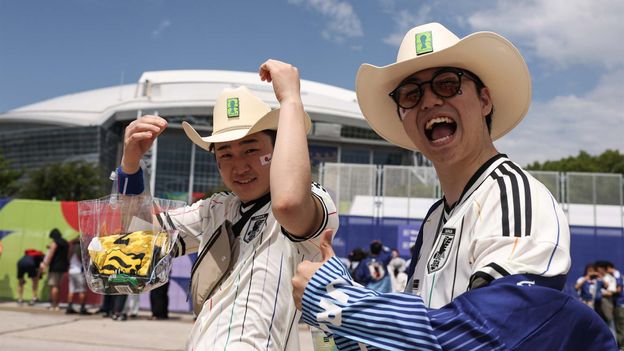
In the weeks leading up to the 2026 FIFA World Cup this summer, nearly all global attention centered on the 16 host cities and their state-of-the-art stadiums where the world’s top football teams would compete. But just two weeks into the tournament, an unexpected and heartwarming trend has taken over social media: thousands of feel-good videos from international fans exploring the lesser-known, everyday parts of the United States that lie between the gleaming coastal skylines.
For many foreign visitors, these off-the-beaten-path discoveries have become the highlight of their trip. A Norwegian visitor gasped in shock stepping into the sprawling outdoor retailer Bass Pro Shops. A British traveller could only describe Texas’ iconic Buc-ee’s – a one-stop destination combining a convenience store, full-service restaurant, gas station, and grocery superstore – as “absolutely insane”. Fans have posted gushing reactions to everything from the massive bulk sections of Costco and Walmart to the ubiquitous, creamy ranch dressing that has become an unexpected viral obsession. These moments are shining a light on a version of America rarely seen in international film or television: a quirky, unscripted, ordinary side of the country that has nothing to do with partisan politics and that most first-time visitors never get a chance to see. For Americans watching these reactions from home, the videos have become a gentle reminder of the small, unique joys that make the country special, rekindling a love for their own homeland that many had let fade.
Spanning roughly 2,800 miles from coast to coast, with World Cup matches hosted in cities across both the Atlantic and Pacific shores, many international fans have opted to skip constant cross-country flights and embrace the classic American tradition of the open road. Road-tripping between matches has let them stumble upon kitschy nostalgic roadside attractions along historic Route 66, and experience the unrivaled grandeur of the U.S. National Park System. Videos of fans standing awestruck beneath the golden sandstone arches of Utah’s Zion National Park, gazing out over the layered red rock expanse of the Grand Canyon, and exploring the misty, cypress-draped lowland swamps of Louisiana have served as a reminder of the country’s staggering natural diversity. One British visitor who explored Zion put it simply: “I don’t think people realise how big, large, wild, full of wildlife America is. There is nothing quite like American national parks and state parks. It’s just incredible.”
Intrigued by how deeply these fan reactions resonated with me as an American, I reached out to Charlotte Russell, a clinical psychologist and founder of The Travel Psychologist, to unpack why these simple videos feel so moving. Russell explained that for people who live in a place full-time, it is easy to take everyday cultural landmarks and natural beauty for granted. “Just like we don’t notice our wallpaper at home, we don’t spend much time thinking about our own culture in our day-to-day lives; it’s normal to us,” she said.
Beyond natural landscapes, road-tripping fans have also fallen for the country’s diverse, unassuming regional cuisine – far beyond the global McDonald’s franchises most associate with American food overseas. Visitors are lining up at iconic Southern institutions like Waffle House, obsessing over crispy tater tots, and indulging in the classic American pastime of filling up on gas station snacks, from Buc-ee’s famous Beaver Nuggets to regional barbecue specialties. One Scottish traveller who spent his trip sampling everything from Dunkin’ Donuts to Atlanta seafood boils broke down in tears eating his last buttery, syrup-soaked waffle on the drive to the airport before his flight home. Two British football podcasters from *The England Pod* who detoured through Kansas City were so blown away by the city’s signature smoked ribs and brisket that they are already planning a follow-up trip to Dallas to test Texas-style barbecue, even as they admit: “It’s tough to imagine anything beating this.” The obsession with ranch dressing has gotten so out of hand that airport authorities have issued public warnings about legal carry-on limits after countless fans tried to smuggle large bottles of the dressing home in their checked luggage.
Beyond viral clips of fans marveling at American food and scenery, the videos have also highlighted a quiet, powerful side of American generosity. Social media comment sections are flooded with local residents recommending hidden gems off the typical tourist trail, and even offering homemade meals to passing fans. That warmth feels particularly meaningful at a time when the U.S. has faced widespread international criticism for strict travel bans, tighter entry restrictions, and high visa rejection rates for citizens of many participating World Cup nations. For every video of a fan falling in love with American culture, there is a matching story of Americans opening their homes and communities to visitors. One traveller reported that Houston transit workers handed out free cold drinks to overheated fans heading to matches, while police officers across the country have been filmed cheering on and hyping up international supporters.
Few communities have embodied this welcoming spirit more fully than the small college town of Lawrence, Kansas, which was chosen as the training base for the Algerian national team. The city’s 96,000 residents pulled out all the stops to welcome the team: the local university marching band learned to play the Algerian national anthem, community artists created a massive custom Algerian flag, and local pub staff studied basic Arabic phrases to greet guests. When the team arrived late at night, hundreds of local residents – many with no personal connection to Algeria – waited in total darkness to greet them, with one local telling the team: “Thank you for choosing our hometown.”
These stories of unexpected cross-cultural connection have left many Americans feeling emotional during this tournament, and it is not hard to see why. As Russell notes, many U.S. citizens have felt discouraged about their country in recent years, and troubled by the negative global perception of the United States heading into the World Cup. “With all the negative news in the run-up to the World Cup… seeing people actually enjoying the US and its people feels more intensely joyful,” she explained. After scrolling through weeks of these warm, unscripted social media posts, I have felt a swell of national pride that I have not experienced in many years.
Soon, this summer-long tournament will draw to a close: a new World Cup champion will be crowned, and fans will return home, most a few pounds heavier from all the ranch dressing and barbecue. But the hope this trend has sparked lingers – that Americans will continue to find joy in the quiet quirkiness of their own culture, take pride in the wild natural beauty that stretches across the country, and keep our doors open to visitors, so that more people can see the real America that we know and love.