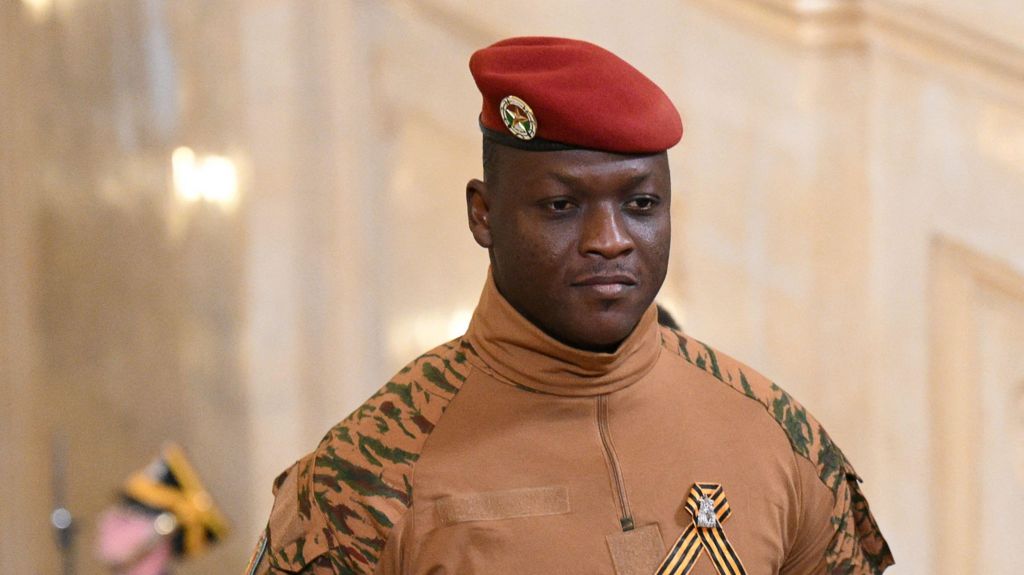
In a sharp escalation of tensions that have been simmering for more than two years, Burkina Faso’s military-led government has formally severed all diplomatic relations with France, marking one of the most significant breaks between the West African nation and its former colonial ruler in modern history. The split comes after years of escalating friction that began when Captain Ibrahim Traore seized control of the country in a 2022 coup, after which the new junta quickly pivoted away from longstanding Western alliances and toward alternative partners including Russia and China. The announcement was delivered in a nationally televised address Friday by Communications Minister Pingdwendé Gilbert Ouédraogo, who laid out the junta’s full slate of grievances against Paris. Ouédraogo accused France of engaging in “ceaseless activism” that directly undermines Burkina Faso’s national interests, leveling fresh claims that France continues to harbor overt neo-colonial ambitions for the Sahel region nation. The statement further alleged that France provides covert support to subversive networks operating within Burkina Faso and actively works to marginalize the country in global diplomatic forums. After more than two years of escalating disagreements, Ouédraogo emphasized that the fundamental conditions for mutually respectful bilateral relations no longer exist between the two governments. In a carefully worded clarification, the minister added that the severance of ties applies only to official institutional diplomatic relations, and does not challenge the deep historical, cultural, social and people-to-people ties that connect the populations of both countries. The French Ministry of Foreign Affairs quickly pushed back against the decision, dismissing the junta’s claims as “hostile and unfounded.” In a formal response, the French foreign ministry argued that the move underscores what it called a “troubling drift” by Traore’s administration, and issued an urgent advisory urging all French citizens currently residing in Burkina Faso to exercise extreme vigilance amid the rising diplomatic uncertainty. This formal break in relations is the culmination of a steady deterioration of ties that began immediately after Traore’s 2022 coup. Within months of taking power, Traore expelled all French combat troops that had been deployed to the country to support counter-insurgency operations, marking an end to a partnership that had stood for years. France has not had a sitting ambassador in Ouagadougou since January 2023, and in 2024, Burkina Faso expelled three senior French diplomats over unsubstantiated claims of subversive activity—claims that Paris immediately and categorically denied. Like its neighboring military-ruled states Mali and Niger, Burkina Faso has been locked in a brutal decade-long battle against Islamist insurgent groups across its territory, a conflict that once saw French forces fighting alongside Burkinabe troops to counter extremist expansion. Since taking power, Traore’s government has repeatedly accused France of pursuing a hidden “secret agenda” in the Sahel, justifying its decision to reorient the country’s foreign policy toward Moscow and Beijing. Beyond its split with France, the Traore administration has overseen a series of major shifts in Burkina Faso’s regional and political standing. The junta initially pledged to restore civilian democratic rule by 2024, but later backed out of that commitment and formally dissolved all national political parties in January 2025. Just weeks after that move, Burkina Faso joined Mali and Niger in officially withdrawing from the Economic Community of West African States (ECOWAS), the region’s leading political and economic bloc, to launch a new alternative regional alliance called the Alliance of the Sahel States.