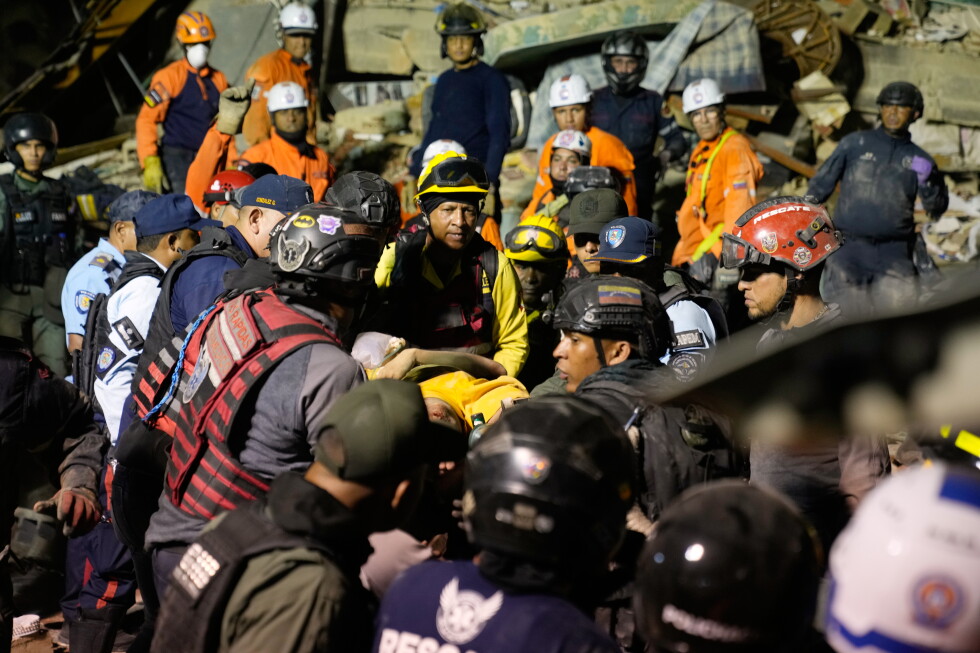
Two massive back-to-back earthquakes, measuring magnitudes 7.2 and 7.5, struck Venezuela on Wednesday evening, leaving a trail of widespread destruction, hundreds dead, and thousands of families trapped in agonizing uncertainty as they search for missing loved ones. By late Thursday, Venezuelan Health Minister Carlos Alvarado confirmed the national death toll had climbed to approximately 235, with no fewer than 4,300 people recorded as injured. Experts note these quakes rank among the most powerful seismic events to hit the South American nation in over a century, and officials warn casualty numbers will likely continue to rise as rescue teams reach remote and hard-hit areas.
Across hard-hit regions such as La Guaira state, located just north of the capital Caracas, rescue teams and local residents have been digging through the rubble of collapsed structures by hand, desperate to pull survivors from the wreckage. For thousands of relatives both inside Venezuela and among the 8 million Venezuelan migrants living abroad, broken and patchy communication infrastructure has turned social media and independent online registries into the only reliable lifeline for information about missing family members.
Official government data on missing persons lags far behind crowdsourced independent records, which document as many as 40,000 unaccounted-for people across the country. Relatives have flooded platforms including WhatsApp, Facebook, and X with digital missing person flyers, pairing photos of their loved ones with last known locations and contact details in the hope that someone, somewhere, has information.
One of those sharing appeals from abroad is 31-year-old Vanesa Marcano, who posted photos of her missing uncle and aunt from her home in Madrid. The couple, who reside in heavily damaged La Guaira, had been hosting their daughter and 7-year-old grandson, who were visiting from the United States. All four have not been heard from since the quakes struck. “It’s a feeling of impotence and uncertainty,” Marcano explained in a phone interview. “I know you must stay calm and focus on the actions you can take. But it’s very easy to fall into despair.” From thousands of miles away, she says she can do little more than share posts and wait for updates, even as she tries to stay calm for her 1-year-old daughter.
For Venezuelans inside the country, the search effort was initially complicated by long-standing restrictions on social media platforms. Back in August 2024, then-President Nicolás Maduro had blocked access to X and messaging app Signal to suppress communication among opponents disputing his claim of victory in that year’s presidential election. By January 2025, Maduro was captured and removed from power by U.S. forces, with former Vice President Delcy Rodríguez stepping into the role of acting president, but the platform restrictions remained in place immediately after the quakes.
On Thursday, the United Nations human rights mission to Venezuela issued an urgent public statement calling on the acting government to lift the social media blocks, noting that timely access to accurate, actionable information is a critical factor that can save lives in disaster response. Shortly after the U.N. appeal, access to X was restored for users within Venezuela, a shift that has already helped speed up the sharing of missing person appeals and rescue updates.
In Catia La Mar, a northern coastal city hard hit by the quakes, Jhoyser Concalves lost contact with his partner and her daughter just minutes before the shaking began. It was the last conversation he would have with them. When the seismic activity stopped, Concalves rushed to their sixth-floor apartment, only to find the entire building reduced to rubble. He shared a missing person flyer on X and Facebook, holding out hope that his family will be found alive: “They are pulling people out of the building alive. So I still have hope that they are in there alive.”
For the large Venezuelan diaspora, these platforms are an even more critical lifeline. Millions of Venezuelans who left the country in recent years have been unable to travel to the disaster zone to join search efforts, leaving them dependent on online updates. Elibel Tovar Lanas, a 38-year-old Venezuelan who has lived in Chile for 23 years, was scheduled to meet his 70-year-old father Saturday for their first reunion in a decade. His father, Félix Ramón Tovar Hernández, had been in La Guaira for business when the quakes hit, and Lanas has had no word of his fate since. “I feel powerless because I don’t know how this is affecting him: the shock, the decisions he’s having to make, whether he is physically okay, or even whether he is still alive,” Lanas said via WhatsApp from Chile. “Being in Chile makes it very difficult to get information, and everything we see feels confusing.”
As rescue efforts stretch into a second day, families across Venezuela and across the globe remain stuck between fragile hope and crippling uncertainty, clinging to digital appeals as their best chance of finding their loved ones alive.