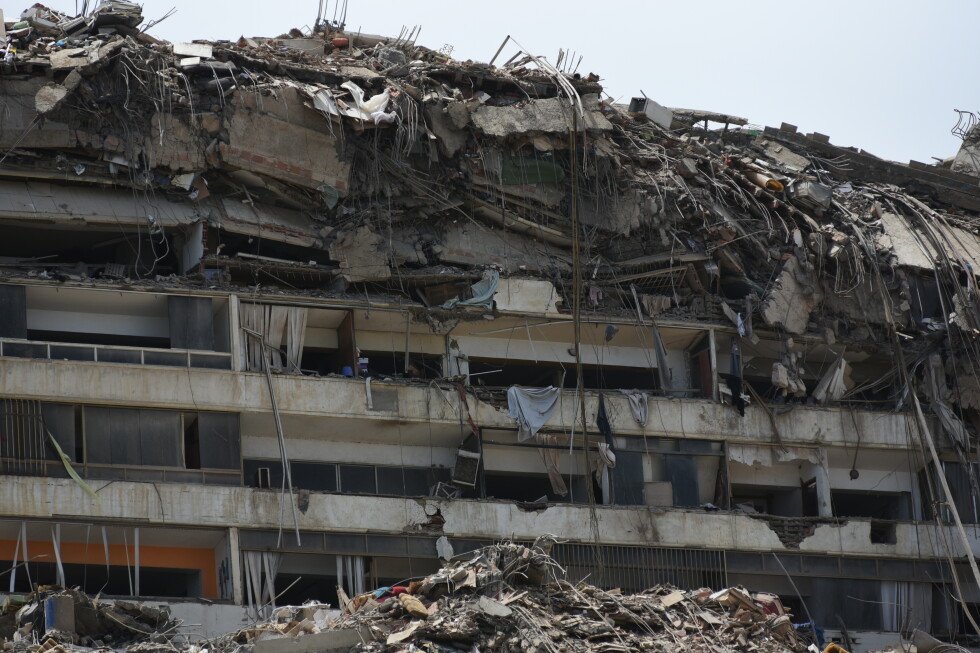
Two rare consecutive deadly earthquakes rocked Venezuela this Wednesday, leaving hundreds dead and injured across the affected region. The destructive doublet quake has drawn renewed attention to the severe seismic risk that has shaped the history of the Americas, prompting a retrospective look at the deadliest seismic events recorded across Central and South America over the past 100 years.
In September 2017, Mexico faced an unprecedented seismic disaster when an 8.1 magnitude quake and a 7.1 magnitude aftershock struck within seven days, laying waste to large swathes of southern and central Mexico, including the capital Mexico City. The event claimed the lives of nearly 500 people and left thousands more displaced.
Just one year earlier, on April 16, 2016, a 7.8 magnitude tremor hit Ecuador’s coastal provinces, leveling entire towns and killing more than 650 residents. In February 2010, central Chile was shaken by an 8.8 magnitude earthquake that shook the capital city for 90 straight seconds before triggering a devastating tsunami. The disaster resulted in 523 fatalities. Three years prior, in August 2007, an 8.0 magnitude quake off Peru’s central coast killed more than 500 people.
One of the deadliest events in recent regional history unfolded in El Salvador across the first two months of 2001. A 7.7 magnitude offshore quake on January 13 was followed just a month later by a 6.6 magnitude aftershock. Combined with massive landslides triggered by the seismic activity, the back-to-back events killed more than 1,200 people. In January 1999, a 6.0 magnitude quake destroyed the Colombian city of Armenia, leaving roughly 1,170 people dead.
In April 1991, a 7.4 magnitude quake killed more than 80 people across Costa Rica and neighboring Panama, leaving an estimated 30,000 residents cut off from critical food, clean water, and emergency medical supplies for days. In September 1985, an 8.1 magnitude quake hit central Mexico, killing an estimated 12,000 people; the true death toll has never been confirmed due to widespread reporting gaps in the aftermath of the disaster.
Going further back, in February 1976, a 7.5 magnitude quake hit western Guatemala, killing more than 22,700 people. Four years earlier, in December 1972, a 6.2 magnitude quake struck Nicaragua, killing a minimum of 6,000 people, with unofficial estimates placing the death toll as high as 9,000. In May 1970, a 7.9 magnitude quake hit northern Peru, killing more than 66,000 people, making it one of the deadliest seismic events in the region’s modern history.
The 1960 Great Chilean Earthquake, also known as the Valdivia Earthquake, remains the most powerful quake ever recorded in human history, registering a magnitude of 9.5. The disaster killed more than 1,655 people, many of whom lost their lives to the massive tsunami it triggered, and left more than 2 million people homeless. Nearly a decade earlier, in August 1949, a 6.8 magnitude quake in Ecuador killed roughly 5,050 people.
In January 1939, an 8.3 magnitude quake hit the Chilean city of Chillan, killing approximately 28,000 people, with some estimates putting the death toll near 30,000. At the start of the 20th century, in January 1906, an 8.8 magnitude quake struck near Ecuador’s Esmeraldas, an event dubbed the Ecuador-Colombia earthquake. It generated a massive tsunami that killed roughly 1,500 people and traveled all the way north to the coast of San Francisco, California.