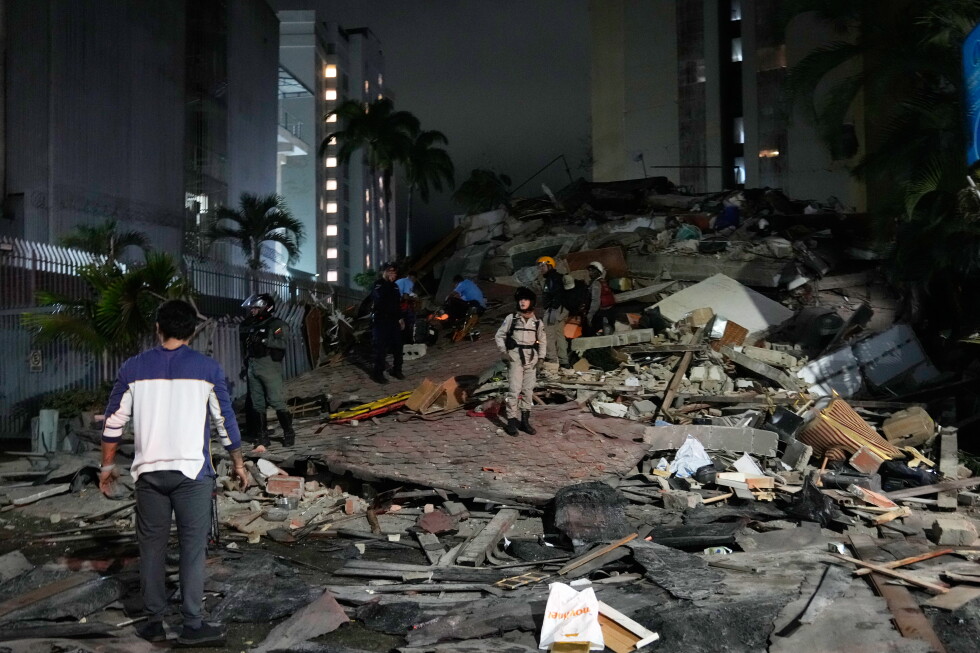
On a Wednesday evening, Venezuela was hit by two successive powerful seismic events that left a trail of structural damage in its capital city of Caracas, sending panicked residents fleeing into the streets. Data from the United States Geological Survey (USGS) confirms that the first tremor registered a magnitude of 7.1, with its epicenter located 168 kilometers west of Caracas, off the Caribbean coast near the small community of Morón. Shallow in its origin, the quake struck at a depth of just 13 kilometers below the Earth’s surface.
Remarkably, only 60 seconds after the first shock hit, an even stronger quake followed. The second seismic event measured 7.5 in magnitude, originating at a depth of 10 kilometers just 16 kilometers southwest of Morón. Geologists note that these two quakes rank among the most powerful seismic events to strike the South American nation in more than 100 years, making them an extremely rare geological occurrence for the region.
In response to the undersea tremors, the U.S. Pacific Tsunami Warning Center issued an initial tsunami warning for the U.S. Virgin Islands, while Dominican Republic authorities also activated a public alert for their territory. A separate warning issued for Puerto Rico was canceled shortly after assessment confirmed no imminent tsunami risk to the island.
In Caracas, the violent shaking left multi-story buildings swaying violently, forcing thousands of residents and workers to evacuate immediately. Eyewitness accounts from the capital show many residents remained gathered outside hours after the quakes, visibly shaken by the destruction around them. Entire building walls have collapsed, leaving interior rooms and home furniture exposed to passersby on the street. Plumes of dust from damaged structures could be seen rising over two densely populated Caracas neighborhoods—areas that are normally filled with busy patrons at local restaurants and small businesses on a weekday evening.
Venezuela’s Interior Minister Diosdado Cabello confirmed that the tremors were felt across multiple states, noting that the upscale Altamira neighborhood of Caracas faced particularly alarming scenarios, with multiple homes and commercial structures suffering partial or full collapse. Cabello confirmed that injuries had been reported, and issued a public appeal for motorists across the capital to clear roadways to make way for ambulances and emergency response vehicles heading to impacted areas.
Speaking on state-run television, Cabello addressed public concerns over the response effort: “We understand that some people may be desperate, but we are acting according to established protocols to activate aid and rescue efforts to help those who need it most. Be very careful with children and the elderly; call each other and check that no one has been harmed.” He also urged the public to remain outside of damaged structures, warning that aftershocks could further weaken compromised buildings and cause additional collapses.
Roberto Damas, a long-term Caracas resident who was out in the city during the quakes, described the experience as surreal: “The building really shook from side to side. Unreal. The force was incredibly strong. We were walking and it was tossing us around. Everything in the apartment fell. Well, thank God we were able to get out.”
The reporting on this developing disaster was contributed by Garcia Cano, reporting out of Bogota, Colombia, as rescue and assessment efforts continue across Venezuela.