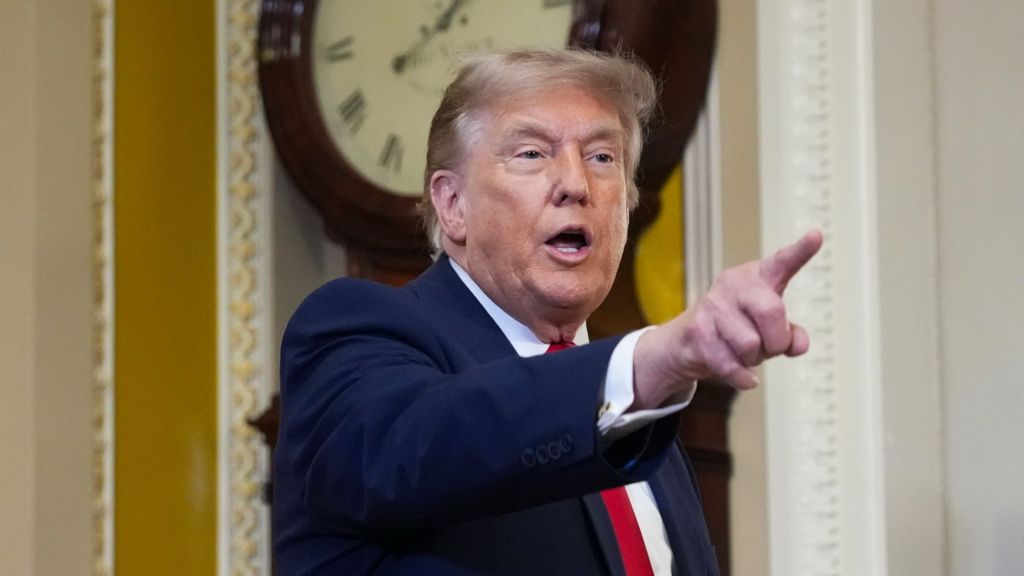
A high-stakes constitutional clash has erupted in Washington D.C. after the United States Congress passed a war powers resolution aimed at forcing former President Donald Trump to halt any unauthorized military action against Iran that could escalate into a full-scale conflict. The move marked a rare moment of bipartisan pushback against executive authority on military matters, as lawmakers from both major parties raised alarms over rising tensions in the Persian Gulf that threatened to draw the U.S. into another costly Middle Eastern war.
BBC senior White House correspondent Gary O’Donoghue has broken down why this specific congressional resolution triggered such a sharp reaction from the then-sitting president. At its core, the resolution represented a direct challenge to Trump’s claims of broad executive power to launch military operations without formal congressional approval, a long-running point of contention between the legislative and executive branches that predates his administration.
For Trump, the rebuke from Capitol Hill was not just a policy disagreement—it was a public insult to his authority as commander-in-chief, undermining his leverage in ongoing diplomatic and military posturing against the Iranian government. Even as many political analysts question whether the resolution will have any tangible practical impact, given its limited enforcement mechanisms and the president’s willingness to push back against congressional constraints, its symbolic significance cannot be overstated. It exposed growing unease among lawmakers across the political spectrum about the risk of an open-ended war in Iran, and set a precedent for future congressional efforts to rein in unilateral military action by future presidents.