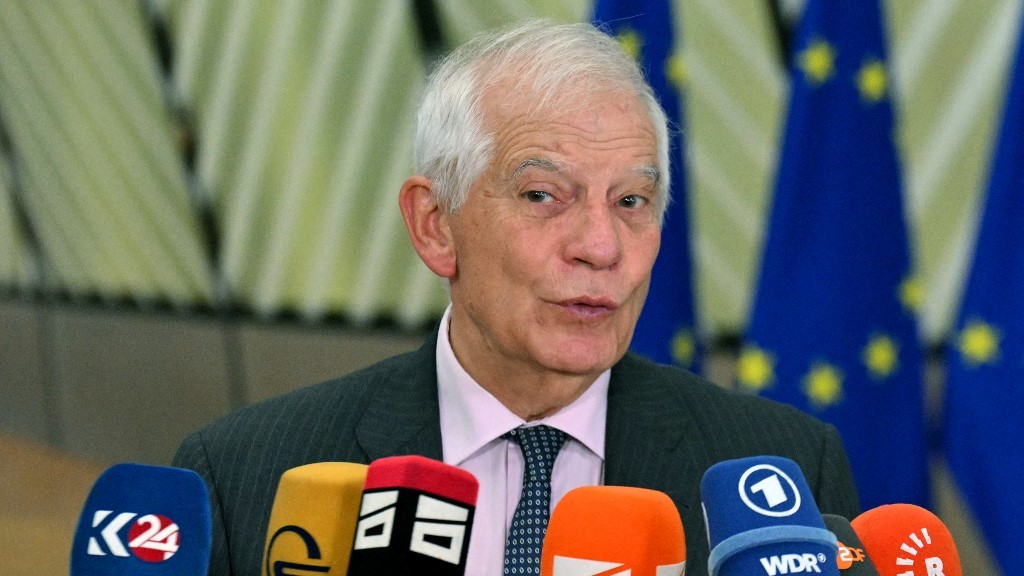
A sharp new rift has opened within European Union diplomatic circles after former European Union Vice President Josep Borrell publicly accused the bloc of abandoning its current High Representative for Foreign Affairs Kaja Kallas to curry favor with Israel. The controversy ignited last week when leaked details of a confidential May meeting between Kallas and Mexican officials emerged, revealing the EU’s top diplomat had drawn a parallel between Israel’s governance of Palestinians in Gaza and the occupied West Bank and the apartheid regime that ruled South Africa between 1948 and the early 1990s.
According to multiple sources including Euractiv, which first broke details of the closed-door talks held during Kallas’ May 20–22 trip to Mexico City as part of a senior EU delegation, Kallas referenced her 2023 visit to Johannesburg’s apartheid museum to frame the comparison. The revelation immediately sparked fierce backlash from Israeli officials, with Israeli Foreign Minister Gideon Saar announcing he would suspend all diplomatic contact with Kallas over the remarks.
Just days after Israel’s punitive move, the EU confirmed it would send Dubravka Suica, the bloc’s Commissioner for Mediterranean and Demographic Affairs, on a scheduled visit to Tel Aviv. It is this decision that drew Borrell’s scathing rebuke in a post to the social platform X on Wednesday. In his critique, Borrell pointed out that after Israel declared Kallas persona non grata over claims of antisemitic sentiment, a fellow EU official traveled to Tel Aviv just one day later, exchanged cordial pleasantries with Saar, and failed to issue any public rebuke of Israel’s actions against Kallas. “What a fine display of ‘solidarity and coordination’ in the EU,” Borrell wrote, his words laced with biting irony.
The leak of Kallas’ private comments has also laid bare a stark contradiction in her public approach to international affairs: while Kallas’ private remarks aligned her with critics who label Israel’s treatment of Palestinians as apartheid, she has repeatedly and publicly backed Israel’s claim to “self-defense” amid the ongoing military campaign that has left Gaza under deadly bombardment, crippling siege, and mass displacement. This duality has drawn accusations of selective application of international law from critics, who note Kallas has taken an uncompromisingly hard line on Russia’s full-scale invasion of Ukraine, pushing for sweeping, harsh sanctions against Moscow.
The controversy also amplifies long-simmering discontent among progressive factions in the European Parliament, who have already attacked the EU’s response to the Gaza crisis as weak and hypocritical when compared to the bloc’s swift, forceful reaction to Russia’s invasion of Ukraine. These progressive lawmakers have ramped up calls for sweeping action from Brussels, including the imposition of tougher sanctions on Israeli officials, the formal suspension of the EU-Israel Association Agreement, and an end to the bloc’s longstanding political protection of Israel on the international stage.