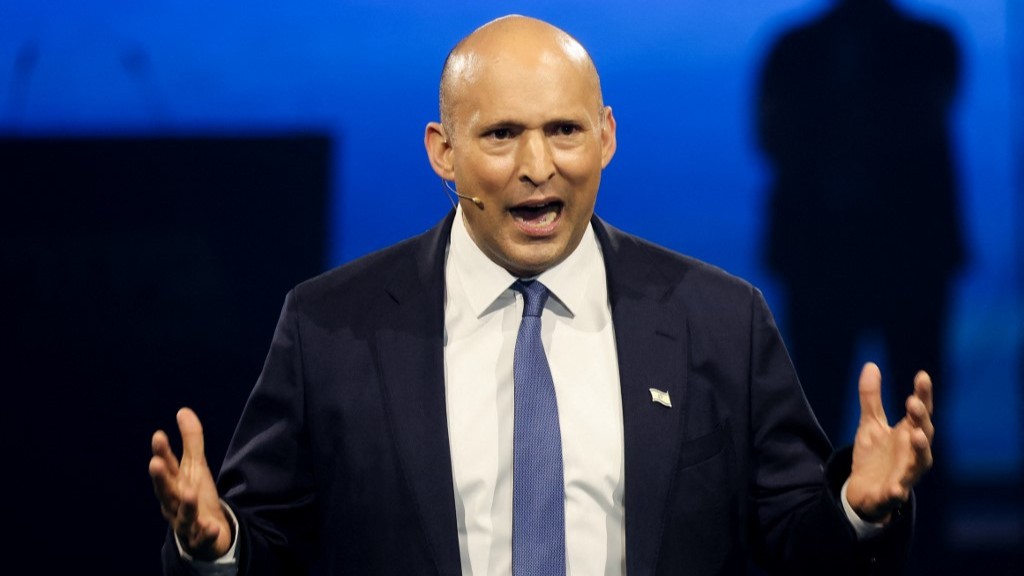
In a bombshell revelation at the JNS International Policy Summit held in Jerusalem on Tuesday, former Israeli Prime Minister Naftali Bennett has publicly confirmed that he orchestrated a covert operation to smuggle tens of thousands of Starlink internet receivers into Iran. The operation, Bennett explained, was specifically designed to support anti-government demonstrators in the country, who repeatedly face state-ordered internet shutdowns during periods of unrest.
Bennett laid out the core logic behind the initiative, noting that Iranian authorities uniformly cut off digital communications every time large-scale protests erupt. By getting Starlink receivers into the hands of activists, the project aimed to guarantee uninterrupted access to the internet and social media platforms even during shutdowns, allowing protest organizers to coordinate their actions and, ultimately, challenge the ruling Islamic Republic.
However, Bennett made scathing accusations against the current administration led by Prime Minister Benjamin Netanyahu, claiming the program was halted due to what he called the government’s incompetence. When large-scale anti-government protests swept Iran starting in late December, the pre-positioned communications infrastructure that Bennett’s team had worked to deploy was never put in place, he said.
The unrest, which began in Tehran’s Grand Bazaar as a response to soaring inflation, rapidly escalated in January, evolving into a nationwide movement expressing broad anger at the Islamic Republic’s governance. Thousands of people lost their lives during the crackdown on demonstrations. While most fatalities have been linked to violent crackdowns by Iranian police and the Islamic Revolutionary Guard Corps (IRGC), separate allegations have circulated claiming that Israeli operatives infiltrated the protests and that anti-government activists were responsible for the deaths of Iranian security personnel and civilians.
Bennett’s remarks come at a pivotal diplomatic moment, as U.S. and Iranian negotiators continue talks aimed at ending the ongoing conflict that broke out in February, when joint Israeli-U.S. military strikes killed Iran’s supreme leader, Ayatollah Ali Khamenei. Over the weekend, the U.S. took a significant step forward in negotiations, temporarily suspending sanctions on Iran during a new round of talks. U.S. Vice President JD Vance described the recent discussions as yielding “good progress.”
U.S. Treasury Secretary Scott Bessent announced that the Treasury Department has issued a 60-day general license that temporarily lifts sanctions through August 21, authorizing Iranian oil production and commercial sales for the duration of the truce talks. All transactions completed under this license must be conducted in U.S. dollars, according to the official announcement.