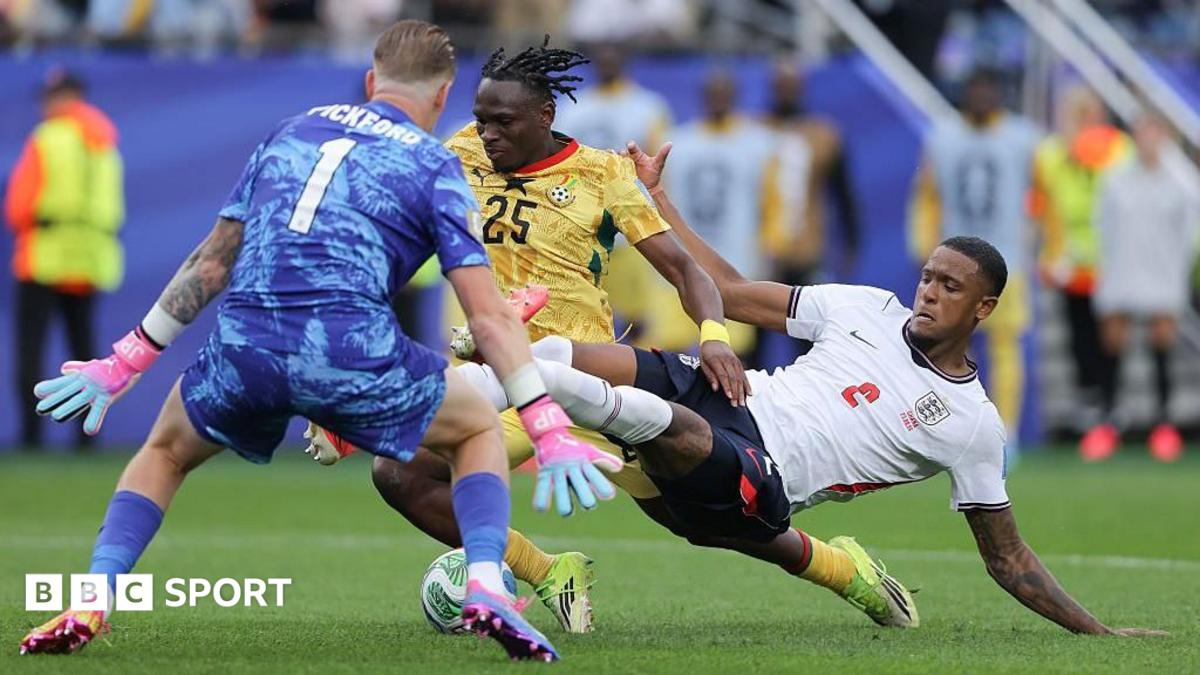
A tense goalless friendly draw between England and Ghana ahead of the 2026 FIFA World Cup has ignited widespread debate over Video Assistant Referee (VAR) protocols, after a clear foul inside the England penalty area went unpunished by on-field officials and was not reviewed by VAR.
Ghana boss Carlos Queiroz did not hold back after the match, venting his frustration over the late-game incident that saw his midfielder Prince Kwabena Adu brought down by England defender Ezri Konsa as Adu charged toward goal. Replays confirmed Konsa made contact with Adu’s knee and failed to touch the ball, a challenge that Queiroz insisted should have resulted in both a penalty and a red card for England.
In a sarcastic rebuke of VAR’s performance, Queiroz questioned whether the system was even operational during the fixture. “Once again VAR went for a coffee,” he told reporters. “I’m not sure VAR is still working in the World Cup. We still have VAR? It’s working? It was a clear penalty, red card. You have any doubts about that?” He added a lighthearted caveat to his criticism, noting: “I’m sorry for my sarcasm, but if I say these kind of things seriously they punish me, so I hope you understand that I’m joking.”
Queiroz’s complaints were echoed by multiple prominent football pundits and former elite players covering the match for the BBC, including several former England internationals. Former England and Manchester United striker Wayne Rooney said straight away that he believed the challenge deserved a penalty award. “Konsa takes a huge risk. His feet are off the floor when he comes flying in and he gets the man, not the ball. That could easily have been given in my view,” Rooney explained.
Fellow ex-England defender Micah Richards echoed that assessment, noting that while England was pushing for a late winning goal, the rules of the game still required clear fouls inside the box to be punished. “On another day, that could have been a penalty,” Richards said.
Even former 2010 World Cup assistant referee Darren Cann, who identifies as an England supporter, admitted the decision was incorrect. “As an England fan I am delighted that it wasn’t given, but I have to be honest, for me this should have been referred [to VAR], Cann told BBC One. “Konsa makes absolutely no contact at all with the ball, he brings down his opponent. He is airborne, he is out of control, he makes contact with the attacker. For me this was a penalty kick.”
The incident has raised questions about why VAR did not intervene to review the call, a step that would be standard in most top-tier club competitions including the English Premier League. The difference, however, comes down to new protocol guidelines put in place for the 2026 World Cup by FIFA’s head of referees Pierluigi Collina. Collina has mandated a higher threshold for VAR overturns, with a policy of limiting interventions to preserve the flow of the game and defer more decisions to on-field officials. That policy is widely seen as the reason no review was initiated for the Konsa challenge.
While Ghana walked away with a hard-fought respectable draw against England, the controversy has put renewed focus on FIFA’s adjusted VAR rules ahead of the tournament, sparking debate over whether the new threshold will lead to more contentious incorrect decisions as teams prepare for the 2026 World Cup.
This report was first published in June by BBC Sport, ahead of the 2026 FIFA World Cup.