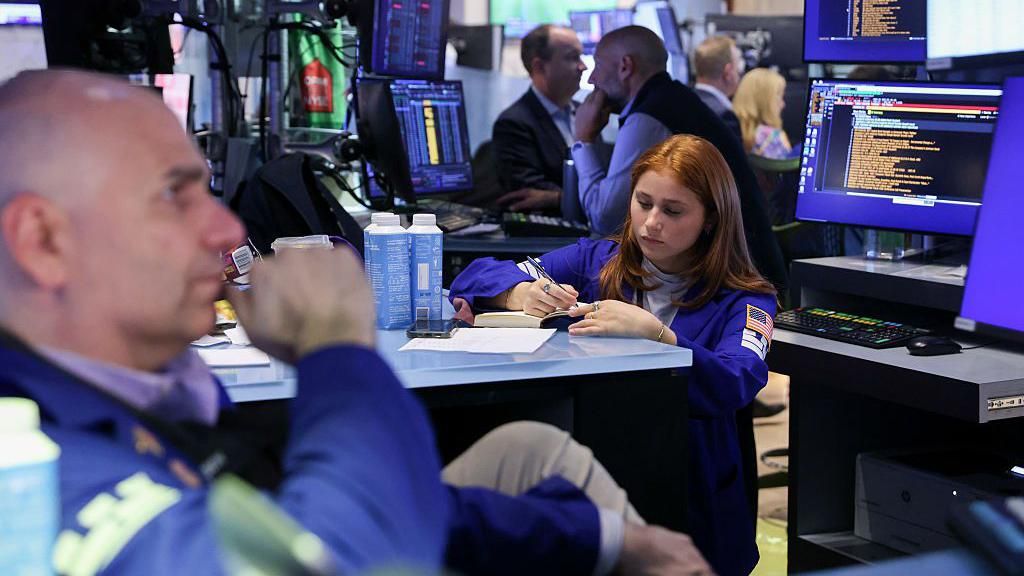
Global financial markets were jolted into a stark reality check on Tuesday, as a sudden broad sell-off across major technology equities sparked fierce debate over whether the months-long AI-driven rally has finally hit its ceiling. The tech-heavy Nasdaq Composite dropped roughly 2% by market close, with losses dragging down semiconductor manufacturers and chip industry indices around the world, ending a relentless 90-day upward climb that had pushed valuations to unprecedented levels.
The sudden shift in sentiment also spilled over to one of the most high-profile new public listings of 2026: Elon Musk’s aerospace giant SpaceX. Just days after its 12 June initial public offering (IPO), the company endured an extraordinarily choppy trading session, with its share price dipping below the $150 IPO mark at one point before clawing back to a close of roughly $157, defusing some but not all of the day’s market anxiety.
For months, global stock exchanges have been lifted by unbridled investor optimism around artificial intelligence, with widespread bets that AI would revolutionize corporate productivity and drive massive revenue growth for tech hardware and software providers. That enthusiasm pushed major indices to repeated record highs, but it also left valuations looking increasingly stretched, with the broader tech sector more than doubling from 2022’s cyclical lows by the start of June. On Tuesday, that momentum collapsed as investors began asking a question that had loomed over the rally for months: can real-world corporate AI adoption ever justify the sky-high share prices currently baked into the market?
Semiconductor firms that have led the AI rally, including industry giants Nvidia and Intel, bore the brunt of the selling, as analysts warned that investors may have moved far too fast to price in demand for the AI hardware that powers corporate AI deployments. The anxiety quickly spread to newly listed growth stocks like SpaceX, which became the latest high-profile firm caught in the crossfire of shifting tech sentiment.
Since its public debut, SpaceX has seen extreme price swings that highlight how sensitive unproven, high-growth newly listed companies are to broader market shifts. While some bullish traders viewed the stock’s quick rebound from sub-IPO levels as evidence of solid underlying fundamentals and sustained long-term investor interest in the fast-growing commercial space industry, sceptics argue that the wild volatility is just further proof of the speculative froth that has built up in today’s growth stock market.
Market analysts are now deeply divided over what the sell-off means for the future of tech investing. Optimists, including Bank of America analyst Vivek Arya, frame the pullback as a healthy, temporary pause after a historic rally, arguing that profit-taking is a standard market movement after months of consistent gains. In a recent note to clients, Arya argued that persistent inflation paired with strengthening long-term demand for AI hardware will ultimately push sector earnings forecasts higher. He added that the tech industry is simply moving past the early phase of proving AI’s ROI, and entering a new stage focused on solving physical infrastructure and power supply constraints that have limited large-scale deployments.
On the other side, a growing camp of sceptics counter that the days of easy double-digit market gains for AI stocks are over, pointing to cooling corporate IT budgets and ongoing broader macroeconomic pressures that will weigh on technology spending. Danni Hewson, head of financial analysis at UK-based investment platform AJ Bell, noted that the relative lack of large AI-focused tech stocks listed on London exchanges actually helped the FTSE 100 end the day in positive territory, even as major indices on Wall Street slumped.
As the trading week progresses, all eyes will remain on upcoming corporate earnings reports from the world’s largest tech firms, which will be forced to demonstrate that their massive investments in artificial intelligence are delivering tangible bottom-line profits, rather than just generating hype to drive share prices higher.