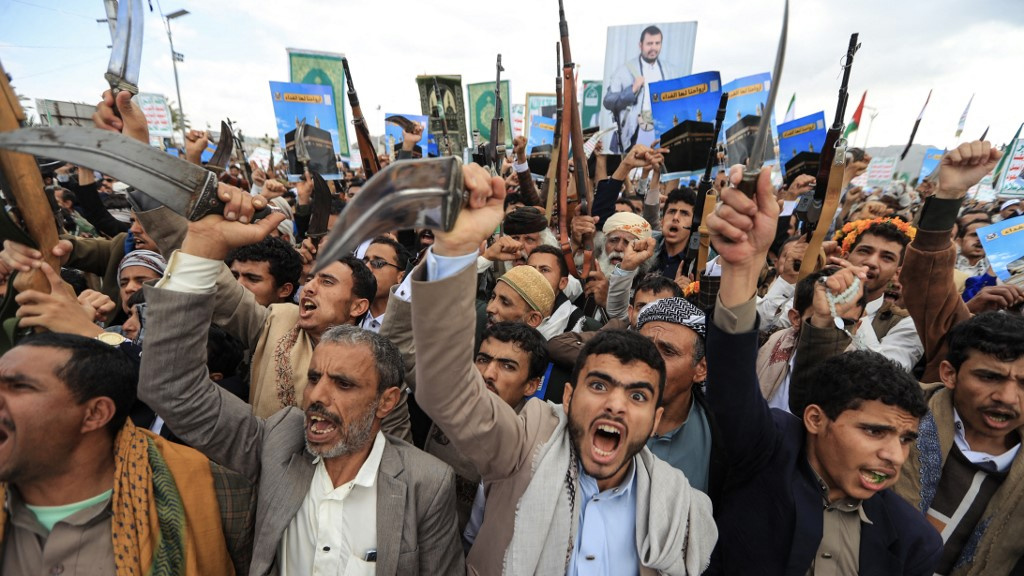
A major escalation in Yemen’s years-long conflict has laid bare the gap between security cooperation and operational capability between Washington and Riyadh, as multiple sources confirm the two allies have no unified counterstrategy to reverse recent Houthi gains on the strategically critical Red Sea coast. Multiple anonymous U.S. officials confirmed to CNN that even with expanded American intelligence and targeting support provided to Saudi forces, Riyadh has failed to dislodge Houthi fighters from the recently seized island, a position that puts critical commercial shipping lanes at risk.
For months, U.S. intelligence agencies have warned that the Iran-aligned movement would seek to close off an additional key waterway for global trade, mirroring actions Tehran took earlier this year. Despite a decade of Saudi assurances that it had successfully trained Yemeni government forces loyal to Riyadh to counter Houthi advances, U.S. officials remain convinced that Saudi-led forces lack the capacity to reverse the group’s territorial gains.
The CNN disclosure follows a surprising early end to U.S. President Donald Trump’s weekend retreat at Camp David, where he cut his stay short Saturday to return to the White House. While the White House attributed the schedule shift to incoming severe weather in rural Maryland, the sudden departure aligned exactly with a major military escalation by the Houthi movement against Saudi Arabia.
Early Saturday morning, the Saudi-led coalition fighting in Yemen confirmed that the Iran-backed group launched a ballistic missile targeting Riyadh. Local Saudi media reported that authorities issued an uncommon early-morning public alert ordering residents to take shelter indoors. First responders were called to extinguish a blaze at a fuel storage depot near King Khalid International Airport, where an Aramco-branded tanker caught fire following the attack.
Coalition spokesperson Major General Turki al-Maliki confirmed that Riyadh’s air defenses intercepted the missile over the capital, adding that additional incoming attacks targeting Taif, Baish, Farasan and the Red Sea coastal city of Yanbu were also intercepted before reaching their intended destinations. Houthi spokesperson Yahya Saree immediately claimed responsibility for the coordinated strikes, framing the attacks as retaliation for what he called “criminal attacks by the Saudi enemy on the Yemeni capital Sanaa.”
In response to the heightened risk of wider conflict, the U.S. State Department and multiple American diplomatic missions across the region issued urgent security warnings for U.S. citizens in the area. The alerts highlighted “the potential for unforeseen escalation” and noted that “Iranian-supported Houthis have engaged in hostilities against Saudi Arabia, including attacks targeting civilian airports.”
Weekend’s coordinated missile attacks are part of a wider, accelerated Houthi offensive aimed at seizing full control of Yemen’s entire Red Sea coastline and the Bab al-Mandeb strait, one of the world’s most vital chokepoints for global oil and commercial shipping. The rapid advance has exposed critical gaps in Saudi military capabilities: regional defense sources confirm the kingdom is currently facing critical shortages of air defense interceptors needed to protect critical domestic infrastructure, and has already requested urgent air defense support from Paris, London, Islamabad and Cairo.
Recent defense agreements Riyadh signed with Ankara and Islamabad have failed to deliver immediate tangible military support. While Turkish Foreign Minister Hakan Fidan condemned the Houthi attacks and pledged to uphold the trilateral security pact with Saudi Arabia, he also warned Riyadh against becoming entangled in the broader standoff between Iran and the United States. For its part, Pakistan only stated it would take action “when the time comes,” offering no immediate commitment of support.
Despite the rapidly deteriorating security situation for Saudi Arabia, the Trump administration has repeatedly ruled out direct U.S. military involvement in the expanding conflict. Administration officials have made clear that the U.S. red line rules out direct American kinetic strikes against Houthi targets, limiting U.S. engagement to intelligence sharing and the provision of targeting data. That said, the State Department recently approved a $24.3 billion sale of F-35 fighter jets to Saudi Arabia, framed as a measure to “deter current and future threats” to the kingdom.
Saudi Crown Prince Mohammed bin Salman reportedly held two phone calls with Trump last week to formally request U.S. military strikes against Houthi positions, but all requests for direct American intervention were rejected. Trump has repeatedly stated his goal to keep U.S. forces out of the Yemen conflict, telling reporters recently: “The Houthis called us and they don’t want to fight with us… It’s just one country they’re not too happy with, and we’ll get that straightened out.”
This deliberate hands-off approach from Washington has sparked deep alarm among other U.S. Gulf cooperation partners, who view the expanding Houthi offensive as a dangerous new escalation of broader regional proxy tensions between Iran and Western-aligned states. As Houthi advances worsen an already severe global energy crisis and force Saudi Arabia to reduce crude oil exports, Riyadh is confronting an increasingly grim reality: amid reports that Washington is negotiating its own separate ceasefire with the Houthis through backchannel talks in Oman, the kingdom is left to manage a rapidly expanding conflict largely on its own.