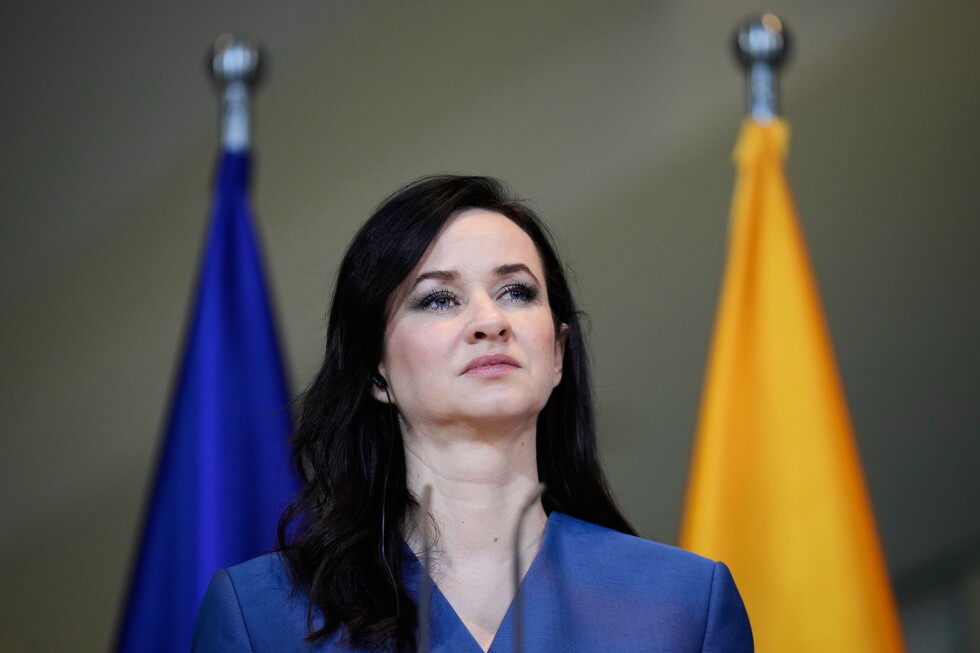
VILNIUS, Lithuania — A major political shift is underway in the Baltic state of Lithuania, where Prime Minister Inga Ruginienė and her entire cabinet formally resigned on Tuesday, triggered by a breakdown in the country’s ruling coalition over a high-profile antisemitism scandal. The departure clears the way for a new administration that will be Lithuania’s third prime minister in just two years, with the incoming majority already signaling plans to pursue a more pragmatic, stabilized relationship with Beijing after years of strained bilateral ties.
The collapse of Ruginienė’s government traces back to early this month, when the center-left Social Democratic Party — Ruginienė’s party — walked away from its coalition agreement with Nemuno Aušra, a populist political faction that has been mired in controversy. The rupture came over inflammatory rhetoric from one of the party’s former leaders, Remigijus Žemaitaitis, who has been accused of spreading antisemitic hate speech.
The legal case against Žemaitaitis dates back to 2023, when a Lithuanian court handed down a 5,000 euro ($5,800) fine after finding him guilty of inciting hatred against Jewish people. The court ruling also confirmed that Žemaitaitis had grossly downplayed Nazi Germany’s wartime atrocities and minimized the scale of the Holocaust in a series of offensive social media posts and public statements made in May and June of that year. The case is currently pending before an appeals court, where prosecutors are pushing for a harsher sentence, and Žemaitaitis has maintained a plea of not guilty.
Following Tuesday’s resignation, Ruginienė’s decree will officially be submitted to President Gitanas Nausėda. Per Lithuanian political procedure, the president is widely expected to request that the outgoing cabinet remain in place in a caretaker capacity to handle routine state business until a new fully functional government is sworn in.
Addressing her cabinet minutes after the resignation, Ruginienė — a former labor union leader — struck a measured tone, acknowledging the political turbulence while highlighting the administration’s achievements. “Despite all the difficulties, we have much to be proud of, and each of you has made a significant contribution to the welfare of our state and the improving lives of its people,” she said.
Under constitutional rules, President Nausėda has 15 calendar days to put forward a prime ministerial candidate for a vote in parliament. Following a new coalition agreement signed last week by the incoming center-left ruling majority, Social Democratic Party leader Mindaugas Sinkevičius is the presumptive nominee for the top post.
A key focal point of the new coalition’s policy platform is its approach to China. The agreement explicitly signals a willingness to pursue more stable, constructive relations with Beijing, stating that the new government supports the restoration of diplomatic dialogue and the expansion of economic cooperation in areas that align with Lithuania’s national interests. At the same time, the new coalition reaffirms Lithuania’s existing commitments to the European Union, NATO, and its established strategic partnership with Taiwan, maintaining continuity on core security and alliance priorities.
The Social Democrats negotiated their new governing deal with two other center-left political factions, cutting Nemuno Aušra out of the ruling bloc entirely. The new governing alliance holds a solid working majority of 75 seats in the 141-seat Lithuanian parliament, the Seimas. Per the terms of the coalition agreement, at least four cabinet minister positions will change hands, but the new government is expected to keep most major national policy strategies unchanged from the previous administration.
If Sinkevičius’s nomination is approved by the Seimas, he will have up to two weeks to put forward his full proposed cabinet and governing program, which will be coordinated with President Nausėda before going to a final parliamentary vote for approval.