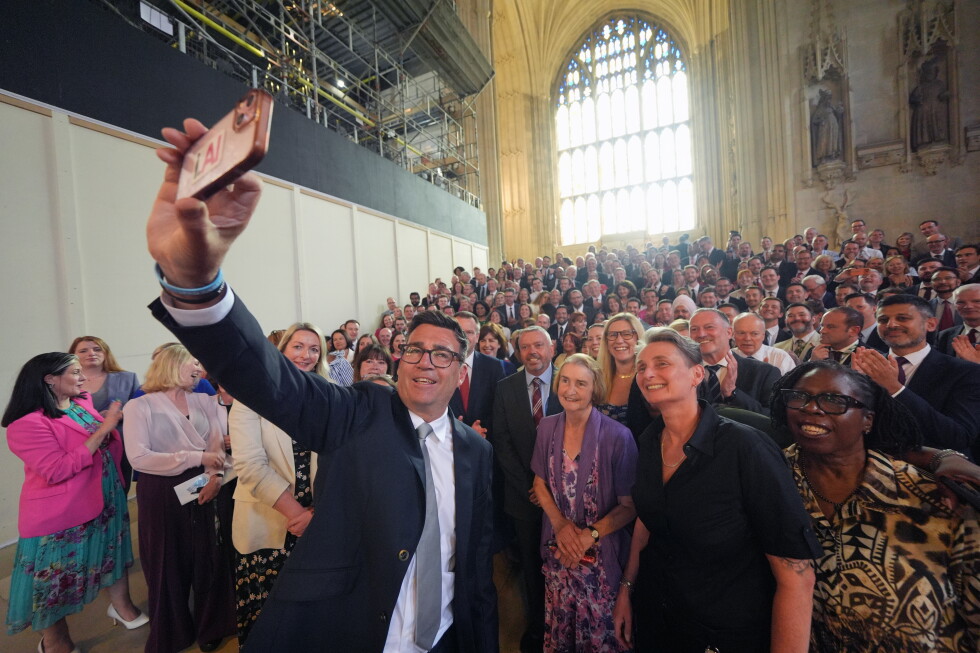
LONDON – Just two years after securing a landslide general election victory, UK Prime Minister Keir Starmer’s announcement of his imminent departure from Downing Street has cleared a path for Andy Burnham, the popular former Greater Manchester mayor, to step into the nation’s top job. Burnham, who only won a parliamentary seat in a recent special election staged specifically to position him for a leadership challenge, began meeting with Labour Party colleagues on Tuesday to map out his transition, as political insiders widely expect him to run unopposed for the party leadership.
Starmer’s exit caps a turbulent tenure marked by sinking approval ratings, unmet policy promises, and high-profile missteps that eroded his support among both party members and the British public. He confirmed Monday he will step down within weeks, becoming the sixth UK prime minister to resign from the post in just 10 years – a milestone that arrives as the country marks a decade since the Brexit referendum, a decision that continues to roil Britain’s economic and political landscape.
When Starmer led Labour to a sweeping parliamentary majority in 2024, expectations were high for a reset after years of Conservative rule. But his premiership quickly stumbled: he failed to deliver on pledges for robust economic growth, never managed to repair Britain’s strained public services, and made little progress easing the persistent national cost-of-living crisis. Repeated judgment calls damaged his standing most, most notably his decision to appoint Peter Mandelson – a figure long tied to Jeffrey Epstein with a history of scandal – as UK ambassador to the United States. By the time of his resignation, Labour had slipped behind Nigel Farage’s right-wing, anti-immigration Reform UK in national opinion polls, while liberal voters were defecting in growing numbers to the Green Party.
For Burnham, the road to the premiership opened rapidly last week, when he won the parliamentary special election he had called to put himself in position to challenge Starmer. His path to the leadership cleared even further on Monday, when Wes Streeting, the former Health Secretary once widely seen as Burnham’s biggest rival for the top job, publicly endorsed his candidacy.
Under the UK’s parliamentary system, the ruling party can replace its leader – and automatically the prime minister – without triggering a full national general election, which is not required to be held until 2029. The official nomination window for the Labour leadership will open on July 9 and close seven days later. If no other candidate secures enough backing to enter the race, Burnham could be sworn in as prime minister as early as July 17. If a contest is held, the new leader will be confirmed by the time Parliament returns from its summer recess on September 1.
To qualify for the leadership race, potential candidates need the backing of at least 81 Labour MPs, one-fifth of the party’s parliamentary delegation. A handful of possible challengers have been floated: former Armed Forces Minister Al Carns, who resigned earlier this month to protest what he called inadequate UK defense spending, has suggested he may enter the contest but has not yet finalized a decision. Senior Cabinet minister Darren Jones, a close ally of Starmer, has also been named as a potential candidate, but he has not yet commented on the speculation.
Many within the Labour Party argue that a drawn-out leadership contest would only highlight deep internal divisions within the party and prolong a period of damaging political uncertainty for the country. “I think the transition should be swift and orderly,” Cabinet Office Minister Nick Thomas-Symonds told the BBC, echoing the view of many pro-Burnham party figures.
Supporters of Burnham point to his successful 7-year tenure as Greater Manchester mayor, where he oversaw a sweeping urban regeneration program in the city that birthed the Industrial Revolution. He has pledged to bring his popular, locally focused approach – which he has dubbed “Manchesterism” – to national governance. Many Labour members believe Burnham’s natural charisma and strong people skills will let him connect with voters far more effectively than Starmer, who was widely seen as a stolid, managerial leader.
Still, Burnham faces major unanswered questions: his policy agenda for key national areas remains largely untested and undisclosed to the public. Critics and some rebel Labour MPs argue that a public leadership contest is necessary to force Burnham to defend his platform and undergo open scrutiny from voters and opponents. Burnham has confirmed he will deliver a keynote speech next week that will lay out his core economic plans for the country.