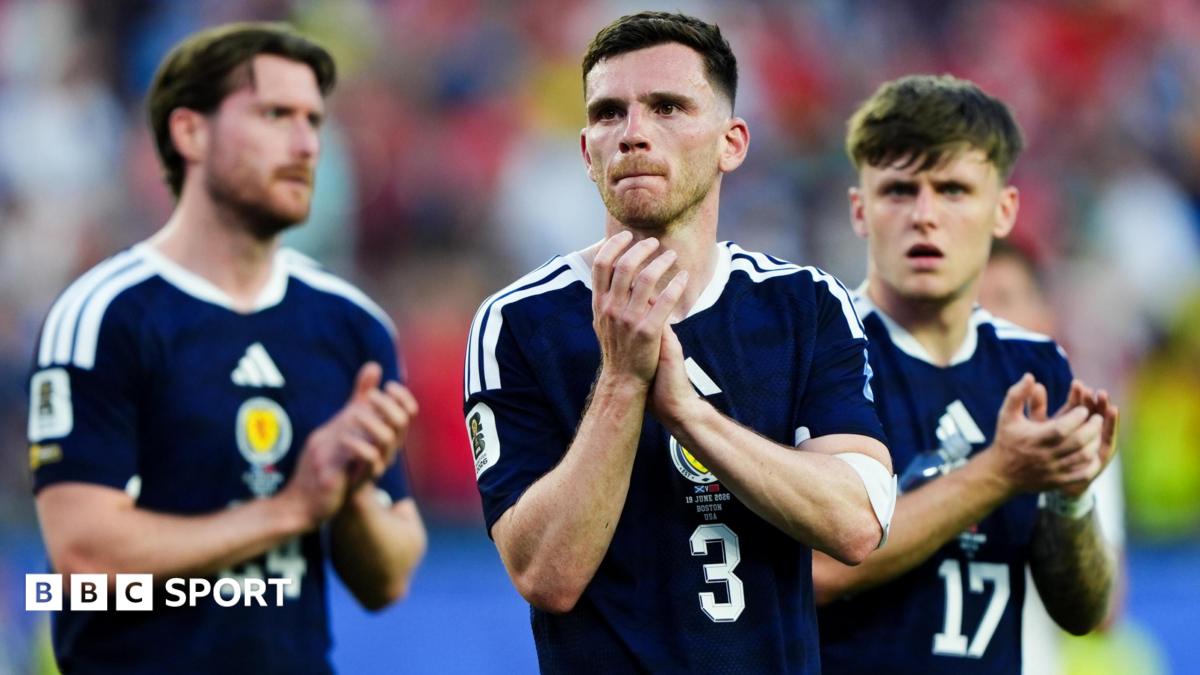
As Scotland prepares to lock horns with five-time World Cup champions Brazil at Miami Stadium on June 24, 2026, the entire Scottish football community is gripped by a mix of anticipation, anxiety and historic hope. Captain Andy Robertson will lead his side out for the crunch group stage tie, where even a single point from a draw will secure Scotland’s place in the World Cup knockout round for the first time in their modern history. A narrow defeat could also still see Steve Clarke’s side advance as one of the eight best third-place finishers across the tournament’s groups, a scenario that has become the central obsession for Scottish fans poring over tournament standings this week.
The prospect of only needing a draw to make history has sparked intense debate around what approach the Scottish side will take when they step onto the pitch. The match will kick off at 23:00 BST, with full live coverage available across BBC platforms including BBC One, iPlayer, BBC Radio Scotland, BBC Radio 5 Live, and live text updates on the BBC Sport app and website.
Conventional football wisdom almost universally rejects the idea of setting out to play for a draw. No top-level coach or player will openly admit they are not going into a match chasing all three points, and the Scotland camp will be no different in pre-match media commitments. But the constant external discussion around the ‘only a point needed’ narrative raises a critical question: could it create an undercurrent of caution that subtly shifts the team’s mindset heading into kickoff?
Former Scotland player and manager Craig Levein, who has first-hand experience of navigating high-stakes matches where a draw was a desired outcome, warned of the inherent risks of prioritizing a result over an aggressive approach. Speaking to BBC Sport, Levein referenced his 2010 clash with Czech Republic where he deployed a controversial 4-6-0 setup designed to secure a draw. “I don’t believe Steve will be playing for a draw because there’s a dangerous element to that,” Levein said. “Because you’re in a mode where if you do lose a goal then getting shifted out of that mind space is difficult. I’ve been in that situation on a number of occasions.”
He added: “You can plan all you want to play for a certain outcome, but football is so random that you’re not guaranteed to get that.” Levein argued that Clarke’s approach to training, team selection and gameplan will be far more impactful on the squad’s mentality than outside noise. Pointing to the potential inclusion of young attacking winger Ben Gannon-Doak in the starting lineup, Levein noted that adding an extra attacking threat can send a clear message to the whole squad to play without defensive shackles. “If we just put another attacking player on, it gives everybody the idea that it’s time to take the shackles off and have a go,” he explained.
While the conversation around needing a draw has dominated headlines, critics argue the bigger issue facing Scotland is not subconscious caution from the stakes, but an overly passive defensive approach that has held the side back in their first two group matches against Haiti and Morocco. Against Haiti, Clarke’s side held just 46% of possession, and that share dropped to 40% in their narrow 1-0 defeat to Morocco. Through two matches, Scotland have managed only two shots on target, and have failed to apply consistent high pressure when out of possession. Opta data from the Morocco match shows Scotland took an average of 25 seconds to recover possession after losing it, while Morocco won the ball back an average of eight seconds faster.
Former Hibernian and Celtic midfielder Scott Allan argued that sitting deep does not require a passive mindset. “When you’re constantly sat off the game and you’re passive, players go into a certain mindset where they start to worry, instead of having that real belief about going and creating and scoring goals,” Allan told the Scottish Football Podcast. “You can sit in a low block and still be aggressive. There’s a point where once they [the opposition] reach here, when they make a square pass, can we go with real purpose and go and try and get the ball back?”
Former Rangers and Motherwell midfielder Andy Halliday echoed that assessment, stressing that Scotland must inject far more urgency into their off-the-ball work against Brazil’s world-class attacking talent. “When you’re going to be this team that wants to sit in and frustrate then try and be as quick as you can on transitions. I think we need to be a lot more aggressive than we’ve been off the ball,” Halliday said. “I think every chance we created actually came from us putting pressure on Moroccan players and turning the ball over at the top end of the pitch.”
Halliday acknowledged that Scotland are unlikely to dominate possession against Brazil, but warned that giving elite global stars too much time and space on the ball will play directly into the opposition’s hands. “I’m not expecting a huge difference in possession [against Brazil], but I think, out of possession, we can’t just allow these top players time and space on the ball and make it easy for them to just feel their way into the game,” he added.