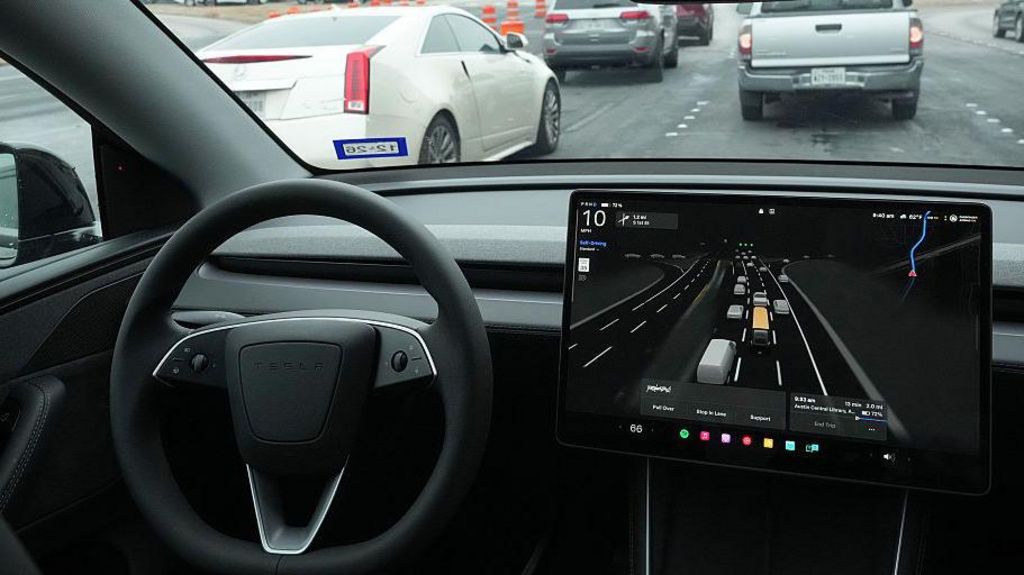
The U.S. National Highway Traffic Safety Administration (NHTSA) has opened a formal special investigation into a fatal June 19 Tesla crash in Texas that left a 76-year-old woman dead after the vehicle plowed into her home, marking the latest high-stakes scrutiny of the electric vehicle maker’s controversial automated driving technology.
According to local law enforcement accounts, the incident unfolded around 8 p.m. local time when the Tesla Model 3 driver failed to navigate a right turn at an intersection, departed the roadway, and struck the residential property at high speed. The driver was taken to a local hospital for treatment of injuries and has remained cooperative with authorities, while the woman inside the home was transported to a medical center where she later succumbed to her trauma.
Local police have confirmed the driver showed no signs of intoxication, but has maintained that the vehicle was operating under Tesla’s full self-driving (FSD) assisted driving system at the time of the collision. Sgt. Alex Turman of the Harris County Sheriff’s Office noted that investigators are still working to pinpoint the exact cause of the crash, with the driver’s claim about automated system engagement a key line of inquiry.
A NHTSA spokesperson confirmed the launch of the agency’s special crash investigation, the most rigorous, data-driven inquiry the regulator conducts, separate from the ongoing local law enforcement probe. Per NHTSA’s official protocols, these deep dives typically focus on emerging vehicle technologies, with the goal of collecting granular crash data that can inform broader automotive safety improvements. While the investigation does not carry immediate punitive action against Tesla, it can ultimately result in formal safety recalls or other regulatory measures.
This latest probe comes amid growing bipartisan and regulatory pressure over Tesla’s FSD technology, which the company has marketed as an advanced automated driving system. Critics have long argued that Tesla’s branding of the product is misleading, overstating the system’s capabilities and leaving drivers underprepared to intervene when the technology fails. Earlier this 2026, NHTSA already expanded an existing investigation into FSD over documented performance issues in wet and inclement weather. Just last week, two top Democratic U.S. senators, Edward Markey and Richard Blumenthal, sent a formal letter to NHTSA demanding a sweeping safety probe of FSD, arguing that Tesla’s claims that the technology is safer than human driving rely on flawed, misleading data analysis that skews results by comparing dissimilar crash outcomes and drawing on incomplete datasets. The pair also called for stricter reporting requirements for all automakers developing and deploying automated driving systems.
Tesla, led by billionaire CEO Elon Musk, has not issued any public statement on the Texas crash or the new NHTSA investigation, and did not respond to requests for comment. This latest incident comes as automated vehicle developers across the industry face growing regulatory scrutiny over safety: just weeks ago, Waymo, the autonomous vehicle unit owned by Google, recalled thousands of its vehicles operating in Texas over a flaw that prevented the system from properly identifying and avoiding flooded roadways.