Tensions have flared once again across the Middle East following Iran’s announcement that it has shut down the Strait of Hormuz, a critical global energy chokepoint, in response to fresh Israeli airstrikes on southern Lebanon that Tehran says violate a newly signed US-brokered ceasefire deal. The competing claims over the strait’s status have already roiled energy market expectations, just as high-stakes direct negotiations between Washington and Tehran are set to get underway in Switzerland on Sunday.
Iran’s military justified its move by pointing to deadly Israeli attacks in southern Lebanon that occurred less than 24 hours after an initial ceasefire between Israel and Iran-aligned Hezbollah went into effect. The strikes, which killed at least 20 people, marked a clear breach of the core terms of the ceasefire agreement reached between Washington and Tehran earlier this week, Iranian officials argue. That initial deal, signed by the leaders of both nations, requires an immediate and permanent end to all military operations across every front, including Lebanon, and outlines a 60-day window for further negotiations to finalize a comprehensive permanent peace agreement. A key provision of the preliminary accord also required Iran to reopen the Strait of Hormuz, which Tehran first blocked in February after the US and Israel launched joint attacks on the country that killed Iran’s supreme leader.
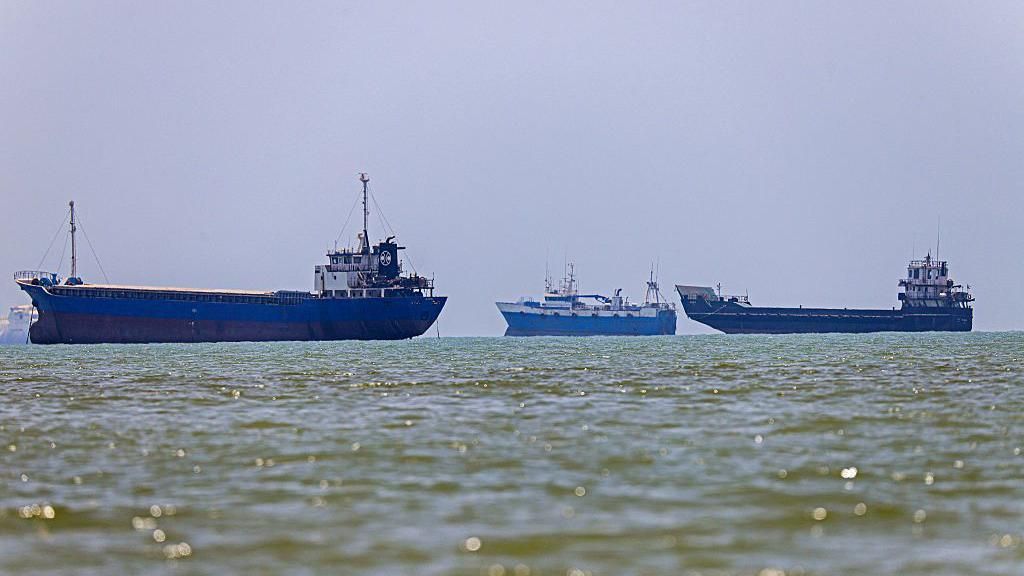
Almost immediately after Iran’s closure announcement, US Central Command pushed back against the claim. Spokesperson Tim Hawkins told reporters Saturday that commercial shipping traffic continues to flow unimpeded through the waterway, adding that US military forces are actively monitoring the situation to maintain free passage and that “Iran does not control the Strait of Hormuz”. Tracking data from BBC Verify offers a mixed picture: at least five oil tankers transited the strait Saturday, matching Centcom’s report that 55 merchant vessels passed through the waterway on the day, but several other vessels were recorded making U-turns away from the passage.
The strategic strait is one of the world’s most critical energy infrastructure chokepoints. According to 2025 estimates from the US Energy Information Administration, roughly 20 million barrels of crude oil and petroleum products pass through the strait each day, accounting for approximately 20% of global oil and liquefied natural gas trade, with an annual total value of nearly $600 billion. It is the only deepwater passage connecting major Gulf energy exporters to global markets, capable of accommodating the world’s largest crude tankers.
As the standoff over the strait intensifies, US Vice President JD Vance departed Washington Saturday for the upcoming US-Iran talks in Switzerland, with Pakistan’s Prime Minister Shehbaz Sharif set to attend the opening of negotiations. Pakistan has served as a neutral mediator throughout the conflict, hosting a previous round of US-Iran talks in Islamabad back in April. Speaking to reporters before his departure, Vance outlined the two core priorities for the negotiations: making progress on the Iranian nuclear issue and securing a lasting ceasefire in Lebanon. When asked about ongoing clashes between Israel and Hezbollah, Vance downplayed the severity of recent violence, saying “Things are actually getting better there, and things are slowing down a little bit.” He added that the US’s fundamental goal is sustained security for both Israel and Lebanon, and the broader region, that will require ongoing management.
Iranian foreign ministry spokesperson Esmail Baghaei confirmed ahead of the talks that Tehran will be demanding that all parties fully uphold their commitments under the existing preliminary agreement. Former President and current leading US political figure Donald Trump injected a new layer of unpredictability into the process Saturday, posting on social media that if Washington and Tehran fail to reach a viable negotiated deal, the US should impose its own tolls on commercial shipping transiting the Strait of Hormuz.
The latest violence in Lebanon has deepened the humanitarian crisis in the country, where Lebanon’s health ministry reports that 4,057 people have been killed since hostilities between Israel and Hezbollah resumed in March. Both sides have repeatedly accused one another of violating Friday’s ceasefire. On Saturday, the Israeli military said it carried out strikes on dozens of Hezbollah targets after the group launched more than 50 projectiles at Israeli forces in southern Lebanon. Lebanese state media reported that an Israeli strike killed an entire family of four in the town of Barich, and the Israeli military confirmed one of its soldiers was killed in battle Saturday. Israeli officials have previously stated they have no plans to withdraw their forces from southern Lebanon, and insist the conflict with Hezbollah is separate from the broader war against Iran. For its part, Hezbollah argues that Israel’s continued attacks in Lebanon are a deliberate attempt to sabotage the broader US-Iran peace negotiations.
The US government has publicly criticized Israel’s ongoing military operations in Lebanon, which entered the conflict after Hezbollah launched retaliatory rocket strikes on Israel following the February US-Israeli attacks that killed Iran’s supreme leader. Tehran’s initial closure of the strait in February sent immediate shockwaves through global energy markets, underscoring the outsized geopolitical and economic risk of any disruption to the passage.