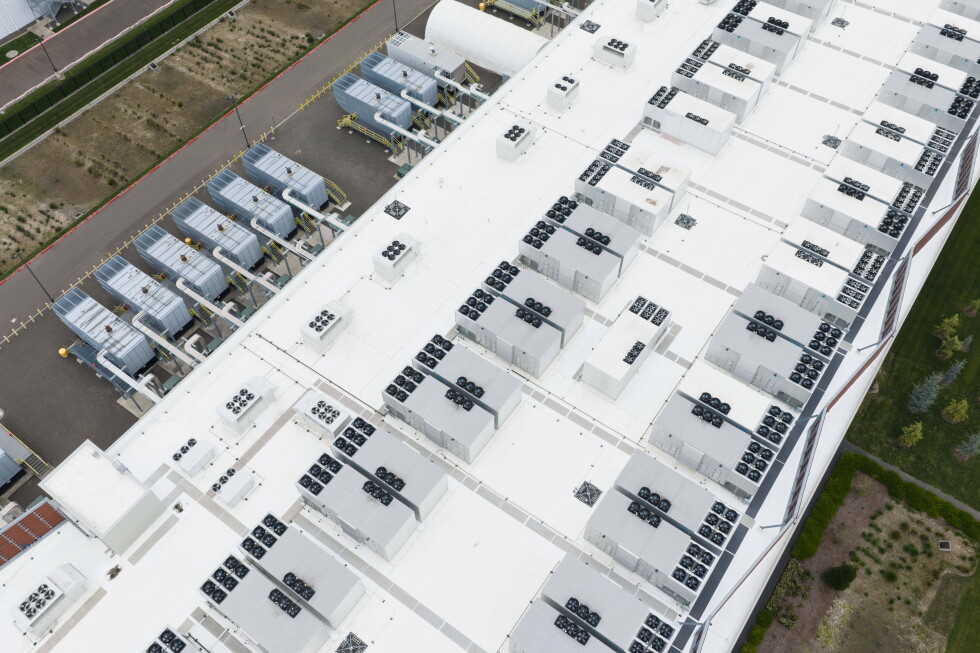
WASHINGTON – In a landmark move tailored to the explosive growth of artificial intelligence, federal energy regulators have greenlit new rules to speed up connections between large power users — most critically AI-focused data centers — and the nation’s aging electric transmission system. The vote comes as U.S. policymakers race to meet surging energy demand for AI infrastructure and shore up American competitiveness against China in the fast-expanding tech sector.
The policy shift was initiated eight months ago, when U.S. Energy Secretary Chris Wright called on the Federal Energy Regulatory Commission (FERC) to take bolder action to clear interconnection bottlenecks that have delayed data center development. In a unanimous vote by the five-member commission, FERC passed an order requiring that large power loads such as AI data centers gain timely, orderly access to high-voltage transmission lines. This marks the second major regulatory adjustment FERC has made in less than a year to accommodate AI infrastructure, following a December order that allowed data centers to connect directly to independent power plants.
FERC Chair Laura Swett, a Trump administration appointee, framed the decision as a historic step to modernize the U.S. electricity market while shielding ordinary consumers from unexpected costs. Under the new order, data center operators are required to cover 100% of the costs for transmission upgrades needed to support their connections, addressing widespread concerns that general ratepayers would be forced to foot the bill for expanding the grid to serve AI facilities. “Many Americans are increasingly concerned that adding large power loads like data centers will push up their electricity bills, and that concern is shared by this commission,” Swett said. “We take very seriously our congressional mandate to ensure rates remain reasonable for American households.”
The policy has drawn a mixed reception from stakeholders across the energy and political landscape. Tech giants and data center developers have welcomed the reform, which cuts through years-long interconnection backlogs that have left major AI companies scrambling to secure enough power to expand their operations. Major industry players including xAI, Google, Microsoft, Meta, Oracle, OpenAI and Amazon have already backed the administration’s efforts by signing the Ratepayer Protection Pledge, a voluntary commitment to build or purchase new power generation to match their data center demand, cover all grid upgrade costs, provide emergency backup power to avoid blackouts, and prioritize local hiring for construction projects.
But the rule has sparked significant pushback from utilities, state governments, and regional grid operators, who argue that the new federal framework erodes their existing authority to manage local transmission planning and interconnection processes. Clean energy advocates have also raised alarms, warning that the policy could undermine state-level requirements to power new data centers with renewable energy sources, slowing progress on national decarbonization goals.
Beyond regulatory and policy disputes, the FERC vote comes amid a growing grassroots backlash against data center development across the country. Local communities are increasingly pushing back against proposed facilities, citing fears that concentrated data center demand will drive up regional electricity prices, strain local water supplies, and cause environmental harm. Many residents have also protested the loss of open space and farmland to massive data center complexes, which have grown dramatically in size to meet AI’s extreme power requirements.
Current industry data underscores the scale of AI’s growing energy footprint. An estimated 4,000 data centers are already operating across the U.S., with another 3,000 planned or under construction — some of which consume as much electricity as a small entire city. The Electric Power Research Institute estimates that data centers already account for roughly 5% of total U.S. electricity demand, a figure that could triple by 2035. In Virginia, a major hub for data center development, facilities already make up more than 25% of the state’s total electricity demand, a share projected to climb above 40% by 2030.
Even with the new FERC rules, however, major structural challenges remain to matching AI’s power demand with available supply. The order does not address the growing gap between data center construction and the buildout of new power generation plants. In many regions, data center development is outpacing the addition of new generation capacity, leading to tightening energy supplies, rising retail electricity prices, and increased warnings of potential future blackouts.
Industry analysis also shows that even with clearer interconnection rules, overall data center capacity buildout is lagging far behind projected demand. A recent J.P. Morgan report, which analyzed satellite imagery of planned projects, found that more than 60% of data center capacity scheduled for completion by 2027 has not yet broken ground, and an additional 7% of projects have already been delayed. The report cited persistent permitting bottlenecks, supply chain delays for critical equipment including gas turbines and transformers, and widespread shortages of skilled construction labor as the primary causes of backlogs.
For the Trump administration, accelerating AI data center development is a core priority to maintain U.S. economic and military leadership in AI, a sector the White House views as critical to outcompeting China. President Trump has made AI competitiveness a central policy focus, recently signing an executive order to establish a 30-day national security vetting framework for the most advanced AI systems before they can be released to the public, while framing the sector as a magnet for global foreign investment into the U.S.