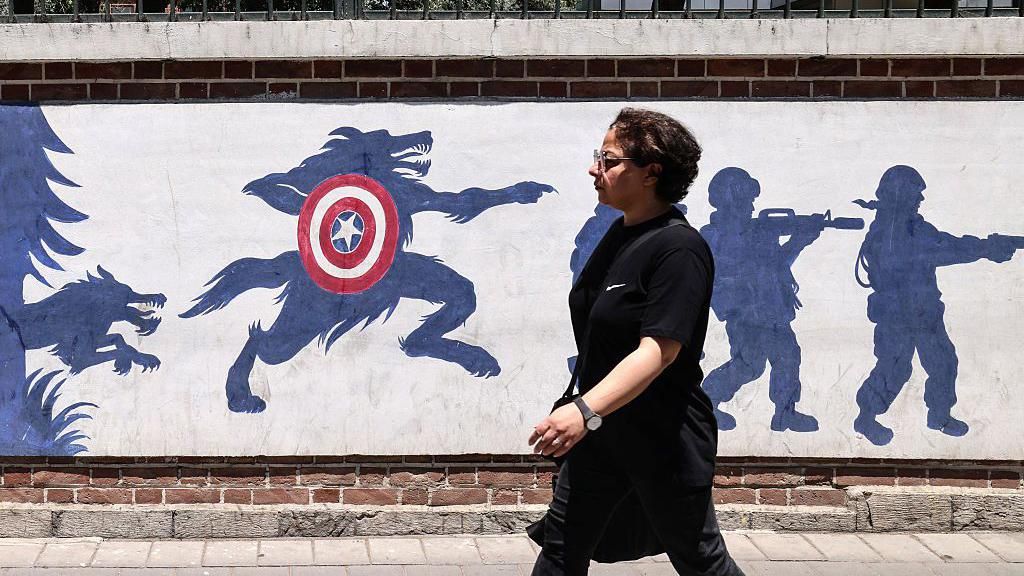
In the months after the U.S. and Israel launched a joint military invasion of Iran on February 28 aimed at toppling Tehran’s ruling regime, a memorandum of understanding (MOU) signed by U.S. President Donald Trump and Iranian President Masoud Pezeshkian has brought an uneasy end to open hostilities – but it has also reshaped regional power dynamics, exposed major strategic miscalculations, and left the future of the Middle East hanging in the balance. The human toll of the short, brutal war is already catastrophic: thousands of lives have been lost across Iran and Lebanon, with hundreds of those fatalities counted among civilian populations caught in the crossfire. What was intended to be a swift, decisive campaign to eliminate Iran’s Islamic Republic has instead ended in a clear strategic defeat for Washington and its closest regional ally, analysts and insiders agree.
From the start, the war grew out of a long-held goal of hardline U.S. and Israeli leaders. Israeli Prime Minister Benjamin Netanyahu spent decades pushing successive U.S. administrations to greenlight a full-scale attack on Iran, and when Trump approved the joint operation, both men predicted an immediate collapse of the Tehran regime. In the opening strikes, Israeli warplanes targeted and killed former Iranian Supreme Leader Ali Khamenei and his core inner circle, a move that U.S. and Israeli planners assumed would trigger a rapid breakdown of state institutions. Trump publicly called for Iran’s unconditional surrender, telling the Iranian people they would get a once-in-a-generation chance to overthrow their government. Netanyahu framed the attack in historic, almost religious terms, declaring: “This coalition of forces allows us to do what I have yearned to do for 40 years: smite the terror regime hip and thigh.” Neither prediction came close to matching reality.
Unlike weak, corrupt authoritarian regimes that have crumbled after the loss of top leadership, Iran’s Islamic Republic spent nearly 50 years building state institutions designed to withstand external efforts at regime collapse. Though the regime has been criticized for widespread corruption and brutal repression, including the killing of thousands of anti-government protesters just weeks before the invasion, its foundations are rooted in decades of ideological commitment, religious identity, and a culture of national survival forged during the 1980s devastating war with Saddam Hussein’s Iraq. Khamenei’s death did not trigger a collapse; it only pushed his successors to embrace bolder, more aggressive tactics to defend the regime. Where Khamenei had long refused to risk closing the Strait of Hormuz – the strategic choke point through which roughly one-fifth of the world’s oil and natural gas supplies flow – the new leadership did not hesitate to shut down the waterway at the start of the conflict.
That single decision changed the entire trajectory of the war. Closing the Strait immediately sent shockwaves through the global economy, raising the threat of a worldwide recession and putting enormous pressure on the U.S. to end the conflict. Far from destroying the regime, the closure gave Tehran disproportionate leverage over Washington, forcing Trump to agree to a set of sweeping concessions that have infuriated hardline Iran hawks in the U.S. and thrown relations between the U.S. and Israel into deep crisis. Under the terms of the signed MOU, the U.S. will end its counter-blockade of Iranian ports, waive sanctions to allow Iran to earn billions of dollars in new oil export revenue, and begin the process of unfreezing tens of billions of dollars in Iranian assets held in foreign accounts. In exchange, Iran will reopen the Strait of Hormuz to commercial shipping, and the two sides will restart suspended negotiations over Iran’s nuclear program – a return to the status quo that existed the day before the invasion, when the Strait was open and talks were already ongoing.
The agreement also calls for an immediate end to hostilities in Lebanon, a demand that Israel has already rejected. Israeli leaders insist they need a free hand to operate in the country, a disagreement that threatens to widen the rift between the U.S. and Israel and play directly into the hands of Iranian hardliners who oppose any negotiated deal with Washington. Relations between Trump and Netanyahu have already deteriorated sharply as a result of Israel’s ongoing military operations in Lebanon, and the fallout from the war may spell the end of Netanyahu’s decades-long political career. With Israeli elections scheduled for October, he faces a major reckoning with voters over a string of catastrophic security failures stretching back to the October 7, 2023, Hamas invasion from Gaza, when Israel’s vaunted military and intelligence services failed to detect the attack in advance. His hardline rejection of diplomacy and push for full-scale war with Iran was intended to cement his reputation as Israel’s most trusted security leader; instead, it has led to a strategic defeat that has left the country more isolated than ever.
Critics of the deal have been quick to condemn Trump’s concessions. Antony Blinken, former Secretary of State under President Joe Biden, posted on social media platform X that the only tangible “achievement” of the ceasefire is the reopening of the Strait of Hormuz – a waterway that was already open before the war began. “And we will apparently pay Iran to do so,” Blinken wrote, a line that sums up the frustration of many opposition figures who call the conflict the worst foreign policy blunder of Trump’s presidency to date. The core question that hangs over the entire debacle is unavoidable: what, exactly, was the war for? Thousands of people are dead, Iran’s economy has been shattered by months of fighting, and the global economy was brought to the brink of recession, all to return both sides to exactly the position they were in before the invasion began.
One of the most consequential long-term shifts to come out of the war is Iran’s discovery that the Strait of Hormuz is a far more effective and cost-efficient weapon of leverage than the decades-long, billion-dollar investment it made in building a network of proxy militias across the Middle East. Iran’s so-called “axis of resistance” has survived the war, barely – the Assad regime in Syria collapsed at the end of 2024, and the rest of the network suffered severe damage from Israeli airstrikes that leaves its future effectiveness in doubt. By comparison, closing the Strait was a low-cost, high-impact move that achieved what decades of proxy warfare never could: forcing the U.S. to make major concessions to Tehran. Iran’s nuclear program, which has long been the core point of contention with the West, also played a role in provoking the war, and the regime continues to deny it is pursuing a nuclear weapon. But even with the regime’s survival, the war has caused catastrophic damage to Iran, leaving thousands dead and its economy in tatters.
The MOU is not a final, binding peace deal – it is only a framework to resume negotiations over Iran’s nuclear program, with a 60-day negotiating window that is widely expected to be extended given the complexity of the issues involved. Mutual distrust remains deep between the two sides, and hardliners in Washington, Tehran, and Jerusalem all have reasons to undermine the talks. Iran could overplay its hand, pushing for maximalist concessions that put the economic relief it gained from the MOU at risk. But even with all the lingering risks, most independent analysts agree that the framework deal is still far better than continuing a catastrophic war that already killed thousands and pushed the global economy to the edge of recession. If the two sides can reach a final, mutually acceptable nuclear agreement and stick to its terms, the agreement could open the door to a fundamental transformation of the entire Middle East. That outcome remains a very large “if,” separated by months of difficult, high-stakes negotiations that could derail at any time, leaving the region once again on the brink of open conflict.