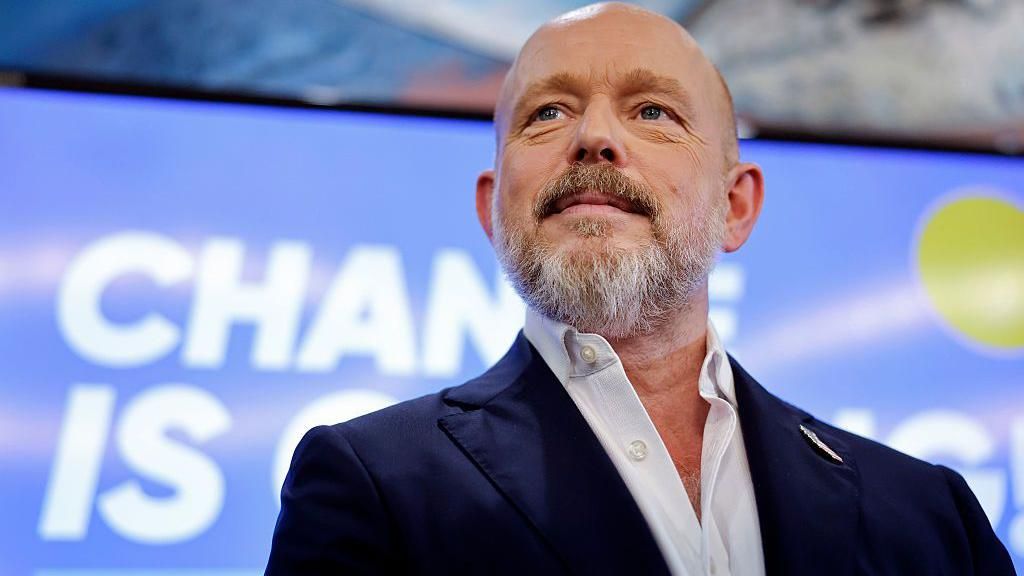
A former top advisor to one-time British Prime Minister David Cameron has launched a surprising bid for California’s governorship, framing his November campaign as a mission to rescue the state from what he calls suffocating bureaucratic overreach and spiraling economic decline. In his first interview with a UK media outlet since securing a spot in the general election this week, Steve Hilton told BBC Radio 4’s *Today* programme that his candidacy draws directly from California’s long-held “rebel spirit”, a tradition he argues has been eroded after 16 years of uninterrupted Democratic control of the state government.
Having relocated to California in 2012, Hilton is running as a Republican in the deep-blue liberal state, but he has positioned his campaign around a self-described “common sense” policy platform rather than strict partisan ideology. Casting himself as a political outsider untainted by decades of Sacramento insider politics, Hilton says he is running to rebuild housing affordability and expand economic opportunity in what he describes as “the most incredible place in the world”.
At the core of his policy agenda is a push for widespread tax cuts, broad business deregulation, and deep cuts to what he calls wasteful bloat in state government. “The quickest way we can get more money into people’s pockets is for government to take less out,” Hilton explained, outlining a pledge to set a $100,000 tax-free income threshold for Californians, alongside measures to slash sky-high energy and housing costs across the state.
Hilton’s political path to this race has been anything but conventional: he served as the architect of the UK Conservative Party’s iconic “Big Society” agenda under Cameron before becoming an early backer of Donald Trump’s 2016 presidential bid. When asked to place himself on the ideological spectrum between Cameron-style centrist conservatism and Trump-era right-wing populism, he rejected the framing entirely, arguing neither movement defines his personal political identity. Instead, he ties his platform to a broader cross-partisan critique of decades of stagnant wages and growing economic inequality, a trend he says has fueled populist backlash across both the American left and right.
This economic-focused message shapes his entire pitch to California voters, where he blames decades of Democratic policy making for the state’s crippling cost of living, rising business exodus, growing homelessness, and surging violent crime rates. “The record is a disaster,” he said, pointing to data that puts California among the highest U.S. rates for poverty, unemployment, and cost of living. When asked to draw comparisons to high-profile left-wing campaigns like that of New York City Mayor Zohran Mamdani, Hilton dismissed the comparison, saying he pays little attention to that race.
One of the biggest lingering questions for Hilton’s campaign is his close alignment with former President Donald Trump, who holds extremely low approval ratings in California. Trump has officially endorsed Hilton’s candidacy, claiming the British-born candidate would align fully with his policy agenda if elected. When asked whether Trump’s backing would prove a liability in the general election, Hilton pushed back, arguing it is actually an “asset for Californians”. He argued that closer cooperation with a second Trump White House would unlock critical policy progress, particularly on domestic energy production. Pointing to the state’s sky-high gasoline prices, he blamed restrictive environmental policies for forcing California to import most of its oil despite holding massive untapped domestic reserves. “I will work co-operatively to expand energy production,” he said, noting the shift would immediately bring down consumer costs.
Immigration policy also emerged as a key talking point in the interview. As the son of Hungarian immigrants, Hilton describes himself as a champion of the “legal immigrant community”, but he has come out strongly against California’s decades-old “sanctuary state” policies, which limit state and local law enforcement cooperation with federal immigration enforcement agencies. If elected governor, he says he would not obstruct federal immigration authorities, and would instead return to the more cooperative intergovernmental framework that was in place during the Obama administration. When pressed on civil liberties concerns, including cases where immigrants without criminal records have been detained by federal authorities, Hilton argued better coordination between state and federal agencies would eliminate these problematic scenarios.
Hilton’s Democratic opponent, Xavier Becerra, a former cabinet secretary under President Joe Biden, has already struck a sharp contrast in his own campaign, framing himself as a defender of the “California dream” who answers only to Golden State voters, not Washington D.C. insiders. Becerra has repeatedly accused Hilton of being a loyal ally of Trump who would hand control of the state over to the former president, and has questioned whether Hilton can be trusted to defend California’s election system against Trump’s unsubstantiated claims of widespread voter fraud. “Californians didn’t build the greatest state in the nation to hand it over to a Trump errand boy dead-set on throwing our progress into reverse,” Jonathan Underland, a spokesperson for the Becerra campaign, told the BBC. “Voters know Steve Hilton means higher prices, rights stripped away, and an all-out attack on our values — and they don’t want anything to do with it.”
Hilton’s advancement to the general election has already surprised most political observers, who did not expect the outsider candidate to break through a crowded primary field. He advanced in large part due to a split in the Democratic vote across multiple candidates, and Hilton has openly acknowledged the steep challenge he faces in a state where Democrats hold overwhelming majorities in nearly every level of government. Even so, he argues that widespread voter discontent has created a unique opening for a change candidate: polling consistently shows a majority of Californians believe the state is heading in the wrong direction. He also points to the 2024 presidential election, where more than six million Californians cast ballots for Trump, arguing that mobilizing that base of Republican voters, combined with winning over independent voters frustrated by the status quo, could be enough to pull off an upset. He added that a proposed ballot measure on mandatory voter ID, which is popular with Republican voters, could drive higher turnout that benefits his campaign. While Hilton says he has not seen evidence of widespread voter fraud in California, he has still called for sweeping electoral reform, including ending the practice of automatically mailing ballots to all 23 million registered voters — a system that he argues is the root cause of the state’s famously slow vote counting process.
The November election will now test whether Hilton’s pragmatic, outsider-focused message can resonate beyond the small Republican base in a state that has been dominated by Democrats for a generation, and whether a one-time Westminster political operative can successfully reinvent himself to win high office in American politics.