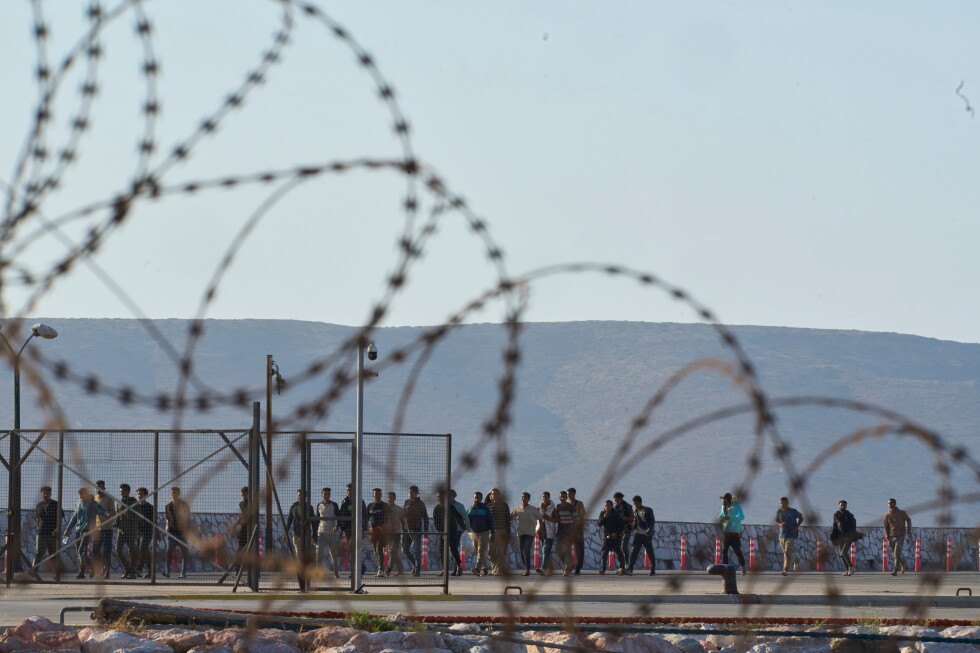
BRUSSELS — After years of fractious, high-stakes negotiations, the European Union’s sweeping new migration and asylum regulatory framework is set to take effect this Friday, marking the most significant overhaul of the bloc’s broken migration system in decades. What has become the European Migration and Asylum Pact was crafted to replace a decades-old system widely derided as ineffective, a failure that has proven a powerful political catalyst for far-right populist parties across the bloc to galvanize voter support in recent elections.
Under the original agreement, all 27 EU member states were required to complete domestic preparations ahead of implementation — including updating national legislation, training border and asylum staff, and expanding border processing infrastructure. But even the European Commission, the bloc’s executive body, has acknowledged that no country has finished all required preparations to fully roll out the new rules.
The new framework introduces a series of sweeping changes to how the EU processes irregular migration and asylum claims. All foreign arrivals will now undergo mandatory screening at external EU borders that can last up to seven days before being admitted into member states. Asylum seekers originating from nations classified as “safe” by the bloc or deemed to pose a security threat will be pushed through accelerated three-month processing procedures, half the length of the previous timeline. In some cases, applicants will be detained at the border for the full duration of their case review, and rejected claimants will only be granted a single opportunity to appeal the decision.
A key uncompleted task cited by the Commission is the rollout of Eurodac, an updated centralized biometric database that will store identifying information for all asylum seekers, including children as young as six. The Commission also noted that most member states still need to construct new border facilities purpose-built for screening, processing, and temporary detention, and many have not yet established required independent human rights monitoring mechanisms at border crossings.
One of the core policy pillars of the new pact is accelerating the return of rejected asylum seekers, both through voluntary repatriation and forced deportation. The framework automatically issues a return order immediately after an application is rejected, a top political priority for centrist and far-right parties that gained significant ground in 2024 EU elections. Under the new rules, returnees will be deported to countries labeled as safe, including Syria and Bangladesh. As of March this year, the European Agency for Asylum reported roughly 802,000 pending first-time asylum claims across the bloc. Currently, member states and EU lawmakers are negotiating plans to establish “return hubs” in third-party countries, where migrants who cannot be directly repatriated to their home countries can be transferred. The details of these offshore facilities are currently being discussed quietly by a coalition of five member states and potential host countries abroad.
Burden-sharing between member states was the most contentious issue throughout years of negotiations, dividing the bloc along geographic and political lines. Under the old system, asylum claims must be processed in the first EU country a migrant enters, leaving frontline Mediterranean states such as Greece and Italy to bear the overwhelming majority of the burden of irregular arrivals. For years, these countries have argued they lack the capacity to handle the influx, and many have allowed migrants to travel onward to northern and western Europe without formal authorization — shifting the burden to countries like Germany and Sweden, which saw asylum applications surge to record highs at the peak of the 2015 migration crisis, pushing their national systems to the edge of collapse.
The new pact addresses this gap with a formal solidarity mechanism, designed to share the burden across all member states. When frontline countries face high influxes, other member states are required to either accept a proportional share of asylum seekers or provide substantial financial compensation to offset the cost. Countries can also reduce their required contribution if they receive migrants who have moved onward from other EU member states, a common practice known as secondary movement.
Despite this compromise, the burden-sharing framework remains unpopular with several Central European member states. Poland has suspended the right to asylum since early 2025, claiming Belarus is weaponizing migration to destabilize the bloc, and has repeatedly extended this temporary emergency measure. Hungary’s new Prime Minister Péter Magyar has retained the hardline anti-migration policies of his predecessor Viktor Orbán, including a blanket refusal to accept relocated asylum seekers. However, Magyar has signaled he will align Hungary’s national asylum rules with the new pact to avoid daily fines of 1 million euros that were imposed for Orbán’s previous violations of EU asylum law.
EU officials have stressed that implementation will continue long after Friday’s official launch, given that no country is fully prepared. Susan Fratzke, a senior policy analyst at the Migration Policy Institute, noted the transition will be gradual, not immediate. “It won’t be like a light switch turning on on June 12,” Fratzke said. “Some of these things will take time.”
Susanna Zanfrini, director of the International Rescue Committee’s Italy office, warned that widespread lack of clarity and inconsistent preparation creates harmful uncertainty for all stakeholders. That ambiguity “creates uncertainty for both people seeking protection and the organizations supporting them at the very moment they most need clear information about their rights, options, and access to support to survive, recover and rebuild their lives,” Zanfrini said.
Leading human rights organizations have roundly criticized the new pact, arguing the accelerated procedures undermine the fundamental right to seek asylum by rushing claims assessments. Critics warn that fast-track processing opens the door to racial profiling, will result in legitimate protection claims being wrongfully rejected, and will lead to a sharp rise in prolonged detention of asylum seekers at EU borders.
Judith Sunderland, senior refugee and migrant rights adviser at Human Rights Watch, said the new pact “slams the door in the face of people who deserve to be treated with dignity and to have a fair hearing of their claims for protection.” Lukas Gehrke, Brussels chief for the International Organization For Migration, added that even after deportations, many rejected claimants will remain in the EU, and the new pact’s budget cuts integration funding for remaining migrants. “If we under focus on this, the failure of integration becomes a self-fulfilling prophecy,” Gehrke said.
The reporting was contributed by reporters based across Cyprus, Spain, and Poland, with correspondents in Nicosia, Barcelona, and Warsaw.