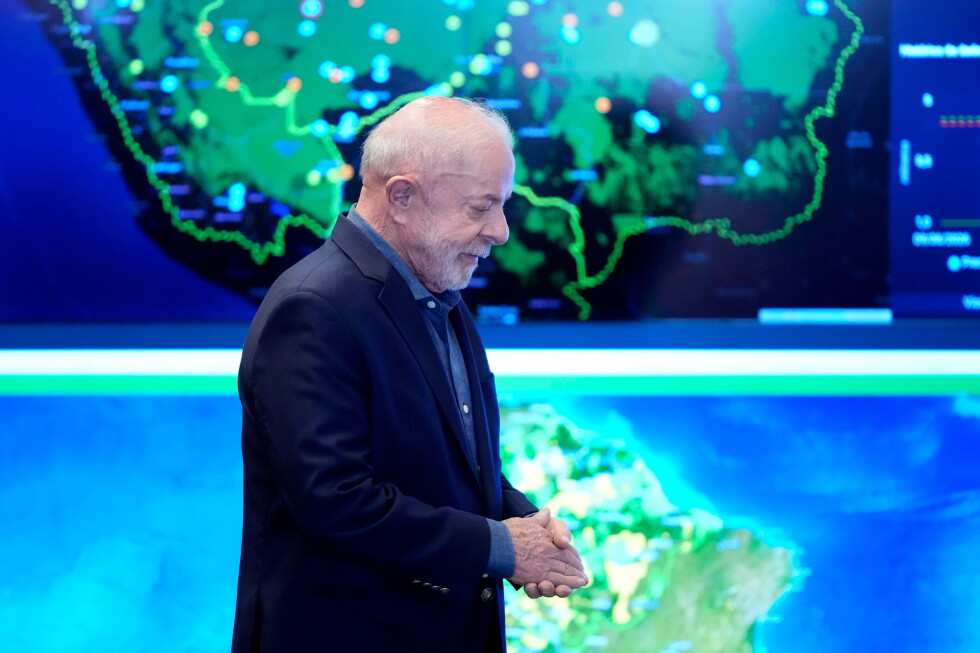
SAO PAULO — In a direct challenge to one of the core justifications the Trump administration cited for imposing new trade barriers on Brazil, Brazilian environmental and space officials unveiled dramatic new data Thursday showing a steep decline in Amazon rainforest deforestation rates.
According to joint figures released by Brazil’s National Institute for Space Research (INPE) and the Ministry of Environment, deforestation across the Brazilian Amazon fell 61.4% in May 2026 compared to the same month in 2025, marking the lowest May deforestation total ever recorded. Even with the sharp decline, 370 square kilometers (nearly 143 square miles) of forest were still cleared last month. In the Cerrado, a threatened central Brazilian savanna that has been heavily targeted by large-scale agribusiness operations, deforestation also dropped by 12% over the same period.
Environment Minister João Paulo Capobianco told reporters that May typically sees elevated deforestation activity, as it marks the beginning of the Amazon’s dry season, when land clearing operations become easier. Cumulatively, over the 10-month monitoring period from August 2025 through May 2026, Amazon deforestation is already down 37.5% compared to the same period a year earlier. Capobianco said the trend puts Brazil on track to hit its lowest annual deforestation rate on record once full-year data is finalized in the second half of 2026.
The new data comes less than a week after the Trump administration formally proposed 25% additional tariffs on all Brazilian imports, claiming the South American nation engages in unreasonable trade practices that harm U.S. commerce. A U.S. Trade Representative investigation leading up to the tariff announcement specifically cited illegal deforestation in Brazil as a core complaint, alongside claims of unfair Brazilian trade policies.
Capobianco argued that the updated deforestation numbers completely debunk the U.S. claims, saying “the unfair and unfounded accusation by the United States, which cited deforestation to justify imposing tariffs” has no basis in fact. Brazilian President Luiz Inácio Lula da Silva, who was present for the announcement, echoed the criticism, doubling down on his rejection of the U.S. framing.
Lula noted that the Trump administration previously lied about a U.S. trade deficit to justify earlier tariffs on Brazilian goods last year, and has now shifted to false claims about deforestation. “They don’t understand the work we are doing to bring deforestation down to zero by 2030. This is not a decision by any COP or by the United Nations. It is a decision of our government,” Lula said. “It’s a matter of justice, of Brazil’s contribution to the planet, fulfilling our obligation to avoid deforestation as much as possible. Preventing deforestation benefits Brazil, benefits the Amazon and benefits the world.”
Deforestation is the single largest contributor to Brazil’s greenhouse gas emissions, which drive global climate change. As the world’s largest tropical rainforest, the Amazon plays an outsized role in regulating global climate patterns; scientific research has linked widespread Amazon forest loss to disrupted agricultural output as far away as the U.S. Midwest and Western Europe, alongside accelerating planetary warming.
After declining for decades following record highs in the 1990s and early 2000s, deforestation surged again during the 2019–2022 presidency of Jair Bolsonaro, whose administration rolled back nearly all major environmental protections and enforcement for the Amazon. Since Lula returned to office in 2023, however, deforestation has fallen steadily, hitting its lowest annual level in a decade last year.
Even with the recent progress, the Amazon still faces a range of ongoing and emerging threats. Forest degradation driven by wildfires, illegal logging, and drought now impacts roughly 40% of the rainforest, and in recent years has outpaced full clear-cutting as the leading source of forest damage. A strong El Niño event this year is expected to worsen these risks, bringing higher temperatures and drier conditions that increase the likelihood of large-scale wildfires across the basin.
This climate and environmental reporting from The Associated Press receives funding from multiple private foundations, with AP retaining full editorial control over all content.