A sharp war of words between senior Israeli and Turkish leaders has pushed already strained bilateral relations to a new boiling point, with top Israeli officials openly labeling Turkey an enemy state amid a growing geopolitical split over the ongoing Gaza conflict and competing influence across the Middle East.
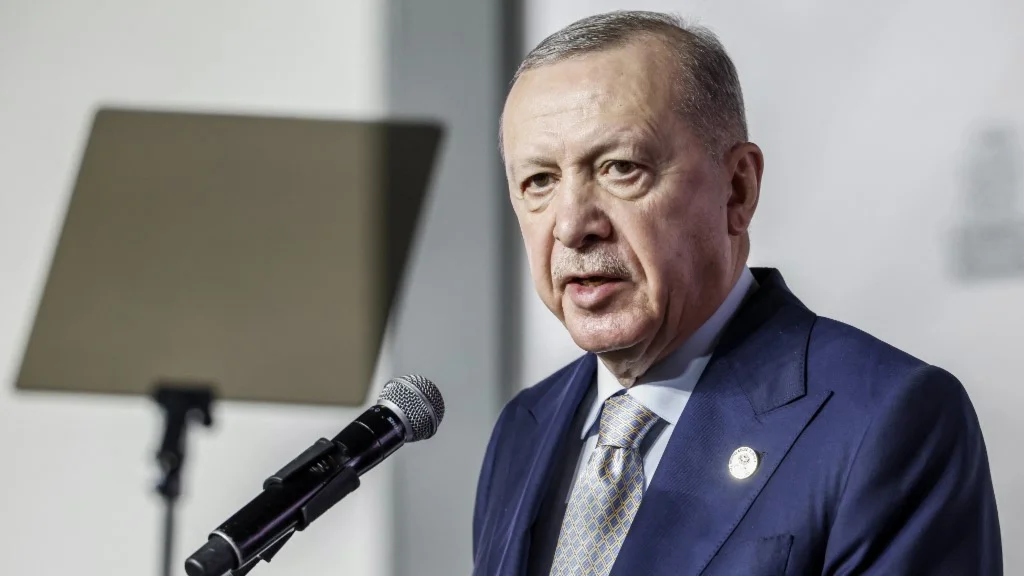
The latest escalation began when Turkish President Recep Tayyip Erdogan delivered a forceful address this week, arguing that Israel’s ongoing military operations in Syria and Lebanon had grown so aggressive that they now pose a direct security threat to Turkey. Erdogan went further, framing Israeli actions as a risk to global stability, and declared that halting Israeli military expansion was a universal moral duty for the international community.
That speech drew immediate and harsh pushback from Israeli leaders aligned with Prime Minister Benjamin Netanyahu’s ruling right-wing Likud party. First, Knesset member Ariel Kellner openly branded Turkey an enemy state “for all intents and purposes” during an interview with Israeli outlet Galei Israel radio. Kellner doubled down on his criticism, describing Erdogan as a dictator with expansionist ambitions to rebuild an Islamic caliphate, saying “He is a very dangerous person who hates Israel to the core.” He called on both Israel and Western governments to formally recognize Erdogan as a global security threat.
Netanyahu himself followed up Kellner’s remarks with an equally scathing rebuke, labeling Erdogan an antisemitic dictator. This verbal escalation is not an isolated incident: just weeks before Kellner’s comments, Israeli Culture and Sports Minister Miki Zohar became the first senior cabinet member to publicly call for treating Turkey as an official enemy, warning that Ankara could emerge as Israel’s next major military adversary. “If Turkey chooses the path of war with us, it will undoubtedly pay a very heavy price. Israel knows how to defend itself and how to harm those who harm it,” Zohar stated.
The sharp exchange of accusations comes against a years-long backdrop of deteriorating bilateral ties. Turkey has positioned itself as one of the most vocal international critics of Israel’s military campaigns in Gaza, Iran, and Lebanon. Relations hit a new low in May 2024, when Ankara formally cut official trade ties with Israel and joined South Africa’s genocide case against Israel at the International Court of Justice.
Despite the formal embargo, limited trade has continued through indirect third-party channels, with total bilateral trade volume reaching $924 million in 2025 according to trade data. Energy cooperation also remains intact, with Azerbaijani crude oil transported via the Baku-Tbilisi-Ceyhan pipeline continuing to flow to Israeli markets through Turkish ports.
International reaction to the rising tensions has been mixed. When asked to comment on Erdogan’s recent statements, former U.S. President Donald Trump pushed back against criticism, telling reporters “He’s a very good friend of mine, and we’ve worked very well together. I like him a lot.”
Analysts note that the current rhetorical escalation reflects a deeper structural rift between the two nations, rooted in competing regional ambitions, disagreements over the future of Syria, and clashing positions on the Israel-Palestinian conflict that have only widened as the Gaza war drags on into its second year.