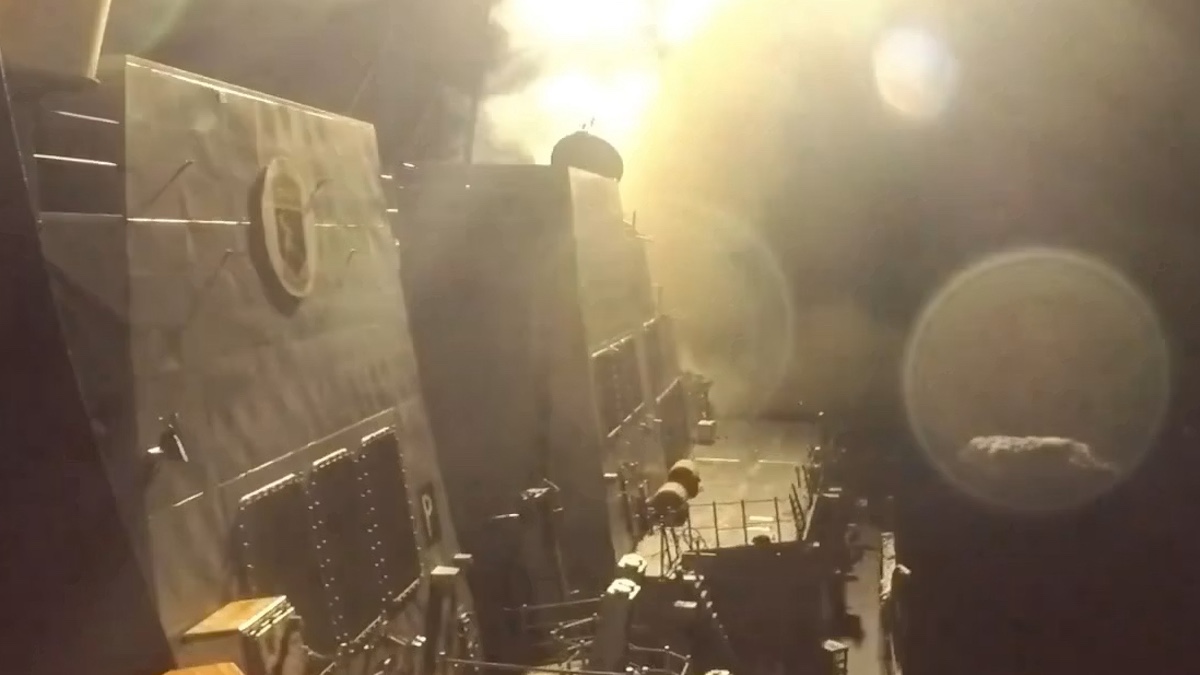
This week, the United States has launched a new wave of airstrikes targeting Iranian assets, a sharp escalation of military pressure that comes as former President Donald Trump has lost patience with months of stalled negotiations to end the broader Middle East conflict. The move marks a stark shift from the fragile ceasefire that had held between Washington and Tehran since early April, a truce both sides had initially signaled they wanted to preserve even as talks dragged on.
US Secretary of Defense Pete Hegseth left little room for ambiguity following the strikes, warning that additional military action would continue if peace negotiations remain deadlocked. “If we need to negotiate with bombs, we’ll negotiate with bombs,” he stated. The airstrikes were launched in retaliation for the downing of a US helicopter by Iranian forces, an incident that followed days of cross-border missile exchanges between Iran and Israel that had already tested the truce.
Even as military tensions spike, Trump continues to publicly insist that a comprehensive peace deal is imminent. To understand the sudden breakdown of the calm that held for months, analysts have put forward several overlapping explanations for the current escalation.
The most widely cited framework is the strategic doctrine of “escalate to deescalate”, a common tactic in interstate conflict where a power ramps up military force to intimidate the opposing side into making concessions. Both Washington and Tehran have leaned into this approach, seeking to demonstrate their willingness to use force to push the other side to accept an agreement aligned with their core non-negotiable interests.
To date, however, the two sides remain fundamentally at odds on the issues that matter most. The United States is demanding that Iran fully capitulate on its nuclear program, agreeing to dismantle all nuclear infrastructure and end all uranium enrichment activities, and reopen the Strait of Hormuz – a critical global chokepoint for energy trade – to unconstrained commercial shipping. For its part, Iran is demanding the immediate release of billions of dollars in frozen sovereign assets and a permanent ceasefire between Israel and the Iran-aligned militant group Hezbollah in Lebanon.
With talks stuck in this stalemate, both sides see limited downside in demonstrating their willingness to escalate, even as neither seeks to collapse the ceasefire entirely and trigger a return to full-scale war. Yet this mutual pressure tactic carries major risks: when both sides pursue the same strategy simultaneously, it can easily lead to an uncontrollable “escalation trap”, where each side is forced to ramp up attacks to avoid appearing weak, leaving no path to de-escalation.
A second, alternate explanation frames the current escalation as an unintended consequence of the tense, militarized status quo that has prevailed under the ceasefire, particularly the ongoing live military blockade of the Strait of Hormuz. It remains unclear to this day whether the Iranian drone that downed the US helicopter – the incident that directly triggered the US airstrikes – was a deliberate act of aggression or an accidental mistake amid heightened military alertness.
Compounding these dynamics is the deeper regional complexity that the Trump administration has largely failed to account for: this is not merely a bilateral conflict between the US and Iran. Israel is currently conducting a large-scale military offensive against Hezbollah, Iran’s key regional ally, in southern Lebanon, an operation that has already upended the existing geopolitical order and put enormous strain on the US-Iran truce.
For both Israel and Iran, the conflict is not a temporary dispute over terms of a peace deal – it is an existential struggle that predates the current war by decades. Iran’s Islamic regime has long rejected Israel’s legitimacy and place in the Middle East, while successive Israeli governments have repeatedly identified a nuclear-armed Iran as the single greatest threat to Israeli national survival. Against this backdrop, Iran cannot be expected to respect a ceasefire with the US while Israel wages war on its closest ally; Tehran views itself and Hezbollah as part of a single unified front in this regional struggle.
On the Israeli side, the October 7, 2023, Hamas attacks on Israeli territory triggered a fundamental shift in Prime Minister Benjamin Netanyahu’s regional strategy. Netanyahu’s far-right government has since adopted an aggressive expansionist military doctrine, seeking to seize territory in neighboring Syria, Lebanon, and Gaza to establish permanent security buffer zones, and has vowed to eliminate all threats posed by Iran, Hamas, and Hezbollah.
This approach faces a fundamental structural flaw: non-state militant groups such as Hamas, Hezbollah, and the Yemeni Houthis cannot be eliminated through conventional military force. These organizations are deeply embedded within civilian populations, able to disperse, regroup, and reemerge months or even years after major military offensives. As a result, even with massive military firepower that has left wide swathes of Gaza and southern Lebanon in ruins, Israel has not come close to eliminating Hamas or Hezbollah, and the fighting will continue.
Trump’s approach to Middle East diplomacy has centered heavily on bilateral, personal diplomacy between leaders, and has consistently shown little patience for unpacking the deeply rooted ideological and political drivers that motivate the multiple actors involved in this layered conflict. This oversimplification has left the administration unprepared for the spillover from Israel’s campaign in Lebanon that is now unraveling the ceasefire.
Looking ahead, the future of the truce depends heavily on how Trump defines a ceasefire itself. During a press conference this week, Trump offered a revealing framing, noting that in the Middle East context, a ceasefire often means “shooting in a more moderate manner.” It is clear he has no interest in returning to full-scale open war, which is why he publicly called for an immediate halt to exchanges between Iran and Israel earlier this week.
The most likely outcome in the coming weeks is that limited strikes will continue across all three fronts even as formal negotiations proceed. While a preliminary memorandum of understanding between the US and Iran could be reached in the near term, it would almost certainly do no more than commit both sides to keep talking, rather than resolving the core sticking points that have deadlocked talks for months. Israel, meanwhile, is highly unlikely to withdraw its troops from southern Lebanon or end its asymmetric campaign against Hezbollah.
As analyst Jessica Genauer, academic director at the Public Policy Institute of UNSW Sydney, argues, the current dynamics are already laying the groundwork for a long-term “frozen conflict”: an unresolved, low-intensity war that remains below the threshold of full-scale open combat but continues indefinitely. Unless the deeper structural and ideological roots of the conflict are addressed, any ceasefire between the US, Israel, and Iran can only ever be a temporary pause, not a lasting resolution.