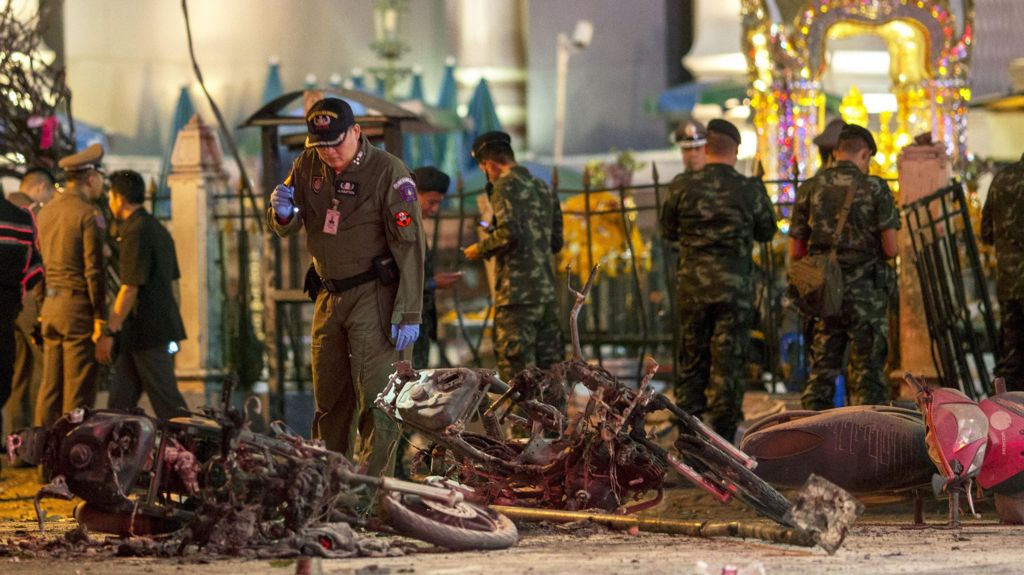
Ten years after Thailand’s deadliest terrorist attack shook the heart of Bangkok, a court has handed down death sentences to two ethnic Uyghur men from China convicted of planning and carrying out the 2015 Erawan Shrine bombing – but deep flaws in the investigation and drawn-out legal proceedings have cast persistent doubt over whether the verdict delivers true justice.
On the evening of August 17, 2015, a powerful explosive device detonated next to the Erawan Shrine, a popular tourist landmark in central Bangkok that draws thousands of visitors annually. The blast killed 20 people and injured more than 120, tearing through crowds of worshippers and knocking nearby motorcyclists off their vehicles, igniting some of their bikes. A Reuters correspondent who arrived at the scene within minutes described a scene of utter chaos: sirens blaring, first responders scrambling to triage the wounded, and sheets covering the bodies of those killed in the attack. Witnessing a grieving injured man asked to wait for care while holding the hand of his dead wife left an indelible mark; for those familiar with Bangkok’s history of political unrest, this large-scale attack targeting civilians was unprecedented, leaving urgent questions about who was responsible and what motivated the attack.
From the earliest stages of the investigation, red flags emerged. Fearing negative impacts on the country’s critical tourism industry, the Thai military government ordered the blast site to be cleared and repaired as quickly as possible, reopening the shrine just two days after the attack and cementing over the bomb crater before forensics teams could fully collect evidence. Most security cameras in the area were non-functional at the time of the bombing, and the only usable footage was grainy, showing a man with long hair and thick glasses leaving a backpack under a bench before fleeing. While police captured video of a second suspect disposing of an unexploded secondary bomb in a nearby canal, the primary suspect’s trail quickly went cold. Initially, officials even denied the attack was an act of terrorism, despite its scale and targeting of a high-profile tourist site.
Just two weeks after the attack, Thai authorities arrested the two men now convicted: Bilal Mohammad, who was found hiding in a suburban Bangkok home where bomb-making chemicals were discovered, traveling on a forged Turkish passport under the name Adem Karadag; and Yusufu Mierali, who was apprehended in Cambodia and extradited to Thailand. Both men are Uyghurs, but Thai police initially acknowledged neither matched the description of the bomber seen in surveillance footage. Arrest warrants were issued for 13 additional suspects, most of whom had already fled Thailand, and the case was effectively declared closed after the arrests, even as most suspects remained at large. In a controversial move, police awarded the $80,000 reward for information leading to arrests to themselves, despite the ongoing open investigation into other co-conspirators.
In the weeks before the bombing, Thailand had drawn international condemnation for forcibly repatriating 109 Uyghur men to China, a decision that sparked widespread protests from Uyghur rights activists around the world. Many independent analysts quickly connected the attack, which targeted a shrine popular with Chinese tourists, to the repatriation as a likely retaliatory act. But the ruling military junta rejected this narrative out of hand, first suggesting the attack was carried out by anti-government political opponents, then later shifting blame to human trafficking groups angered by a government crackdown on smuggling networks.
The trial itself stretched on for more than a decade, marked by repeated delays that human rights groups say are unjustifiable. Both defendants were held in military custody and have long claimed they were tortured into giving forced confessions, which they withdrew immediately once the formal trial began. Bilal Mohammad has maintained he was simply waiting for a smuggler to facilitate his travel to Malaysia, en route to Turkey, a common route for Uyghur asylum seekers, and had no involvement in the bombing. Most delays were officially blamed on difficulties finding qualified Uyghur-speaking translators, after the defendants rejected translators provided by the Chinese government.
International human rights organizations, including the International Commission of Jurists, have heavily criticized the trial process, pointing to widespread human rights violations and systemic failures in Thailand’s criminal justice system exposed by the case. The group argues that the multiple procedural flaws and unreasonable decade-long delay are so severe that the two men should have been released. Defense lawyers have confirmed they will immediately appeal the guilty verdict and death sentences, leaving the legal saga far from over a full decade after the attack that shook the nation.