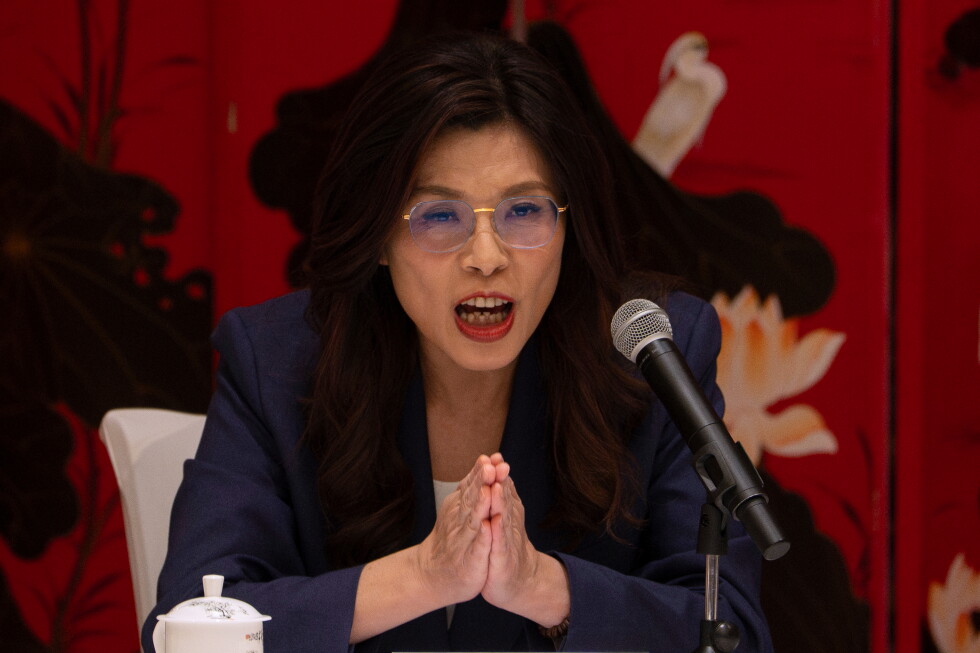
WASHINGTON D.C. – Against a backdrop of intensifying international scrutiny over the Trump administration’s evolving policy toward Taiwan, a visit by the leader of Taiwan’s Beijing-leaning opposition party to the U.S. capital this week has put cross-strait relations back in the global spotlight.
Two senior Republican lawmakers from the U.S. House of Representatives have scheduled formal talks with Cheng Li-wun, chair of the Kuomintang Party, which has long publicly advocated for peaceful cross-strait reunification with mainland China. The meeting lineup includes Brian Mast, the Florida Republican who chairs the powerful House Foreign Affairs Committee, and Young Kim, a California Republican who leads the chamber’s East Asia policy subcommittee.
In a pre-meeting interview, Mast noted that he entered the discussions without rigid pre-set expectations, framing the encounter as an opportunity to gather on-the-ground perspective from a key regional stakeholder. As committee chair, he emphasized, “I take intelligence from anywhere I can get.”
Ellie Gilchrist, a spokesperson for Rep. Young Kim, laid out the lawmaker’s clear agenda for the bilateral talks. First, Kim will push Cheng and the Kuomintang to back expanded defense spending for Taiwan, framing increased investment as a critical step to prove the island’s commitment to self-defense and cross-strait deterrence. Second, Kim plans to press for greater transparency around the talks Cheng held with Chinese President Xi Jinping during an April visit to mainland China, seeking clarity on what commitments or understandings were reached during that meeting.
The timing of Cheng’s Washington visit overlaps with a major pending decision from the Trump administration on U.S.-Taiwan engagement. President Donald Trump has repeatedly publicly kept open the possibility of a direct phone call with Taiwan’s sitting President Lai Ching-te – a step that would break decades of diplomatic protocol and draw sharp backlash from Beijing, which has already issued formal warnings against such contact.
When questioned by reporters aboard Air Force One on a recent return trip to the U.S. from China, Trump reaffirmed his openness to the conversation, saying simply, “I’ll always talk to him.” The potential call comes as the administration weighs moving forward with a $14 billion arms package for Taiwan that was approved by Congress earlier this year but has remained in political limbo.
The discussion over defense spending comes on the heels of a high-stakes vote in Taiwan’s legislature, which is currently controlled by opposition parties including the Kuomintang. Lawmakers passed a $25 billion special defense budget earmarked for major purchases of U.S. military equipment earlier this year, but the final approved figure represents a steep cut from the $40 billion proposal originally put forward by President Lai Ching-te. The reduction prompted open expressions of disappointment from senior Trump administration officials, who had backed the original larger funding request.