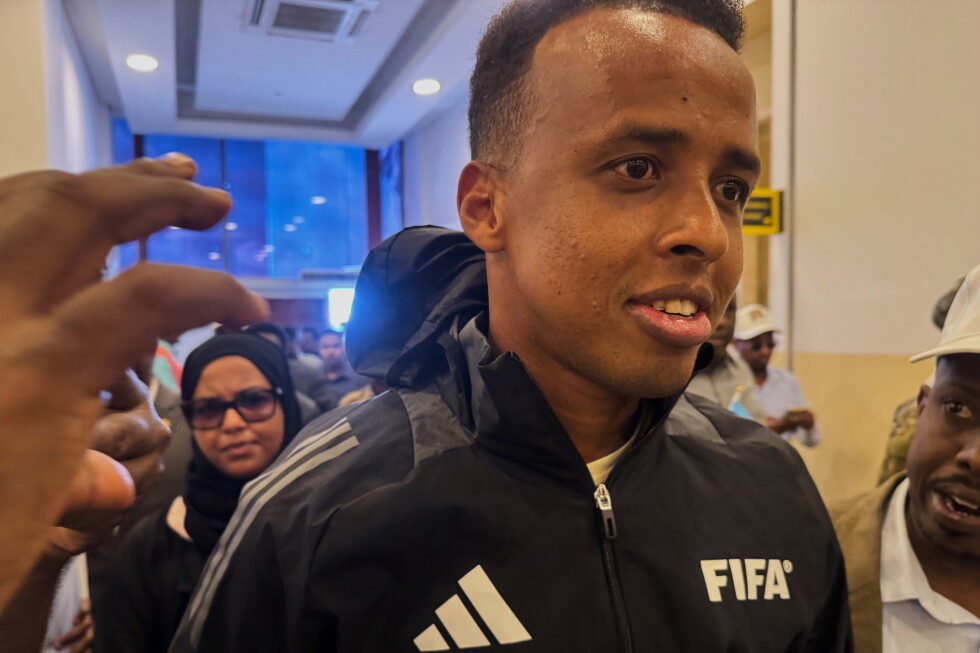
For a nation emerging from decades of crippling civil conflict, Omar Artan’s historic selection as the first Somali referee to earn a spot on the 2026 FIFA World Cup officiating roster looked set to be a watershed moment for Somalia — a testament to the country’s slow recovery and the resilience of its grassroots soccer culture. But what should have been a crowning achievement for the 34-year-old official turned into an unprecedented diplomatic and sporting controversy, when U.S. border authorities denied him entry ahead of World Cup referee preparation camp in Miami, forcing his removal from the tournament’s final officiating list.
Artan, widely recognized as Africa’s top male referee for 2025, has spent nearly a decade climbing the ranks of international soccer officiating to reach the sport’s biggest stage. He earned his FIFA referee credentials in 2018, and made history again in January 2024 when he became the first Somali to officiate a match at the men’s African Cup of Nations, taking charge of the group-stage fixture between Tunisia and Namibia. Just months later, he was selected to referee the decisive second leg of the 2025 African Champions League final in Morocco, the most high-profile club soccer match on the continent. He also served as an official at the 2024 men’s Under-20 World Cup in Chile, adding critical elite-level experience to his resume ahead of World Cup selection.
FIFA’s path to World Cup officiating is a rigorous, multi-year process that requires candidates to prove their consistency across domestic, continental and global competitions. National associations first nominate eligible officials to join the FIFA international referee list, after which candidates must officiate continental tournaments, FIFA-organized qualifiers and youth or Olympic competitions to demonstrate their skill. Top performers are invited to preparation camps in the year leading up to the tournament, with the final officiating roster announced in April 2025 — where Artan’s name appeared, making him the first Somali to ever earn the honor.
For 19 million Somalis, the announcement was more than a sporting milestone. For decades, civil war and political instability shattered institutions and infrastructure across the country, but soccer remained a unifying force, holding communities together even at the height of conflict. Today, despite limited resources, the Somali Football Federation organizes 22 annual competitions ranging from youth regional leagues to the 12-club Somali Premier League. The 2020s restoration of Mogadishu’s 65,000-seat national stadium, once occupied by armed groups as a military base, has become a defining symbol of the country’s slow progress toward stability. Artan’s success, many Somalis hoped, would shine a global spotlight on that recovery.
That progress hit an unexpected barrier when Artan arrived in the U.S. to join the pre-tournament referee camp. U.S. Customs and Border Protection confirmed the referee was ruled inadmissible over unspecified vetting concerns, with an anonymous U.S. official later claiming the denial stemmed from “association with suspected members of terror organizations.” Somali government officials have pushed back on that claim, suggesting the rejection stems from longstanding entry restrictions first implemented by the Trump administration, which added Somalia to a list of nearly 40 countries targeted by broad immigration bans. The restrictions have remained in place in subsequent years, and Trump made repeated public statements targeting Somali immigrants, even calling for those already residing in the U.S. to leave the country.
The decision to bar a FIFA-vetted referee from entering a World Cup host nation is unprecedented in modern soccer history. The 2026 tournament is co-hosted by the U.S., Mexico and Canada, making U.S. border authorities responsible for granting entry to participating teams and officials. FIFA has sought to distance itself from the controversy, noting that host nations retain final authority over visa and entry decisions for event-related personnel in line with longstanding event protocols.
Still, the ruling has sparked widespread outrage among global soccer fans on social media, who have criticized the U.S. government’s decision and raised questions about the country’s ability to successfully host a global, inclusive sporting event. Fans have also noted that Artan’s case is not an isolated one, with similar entry denials having already disrupted pre-tournament preparations for visiting teams.
Despite the disappointment of missing out on his historic World Cup appointment, Artan received a jubilant hero’s welcome when he returned to Mogadishu on Wednesday. Addressing young Somali athletes and fans, he urged the next generation of Somali sportspeople to remain proud of their identity and their country, framing his own experience as a test of resilience rather than a defeat. For many Somalis, that resilience has long been embodied by their country’s soccer culture — and Artan’s standing as a national hero remains undimmed, even after the lost World Cup opportunity.