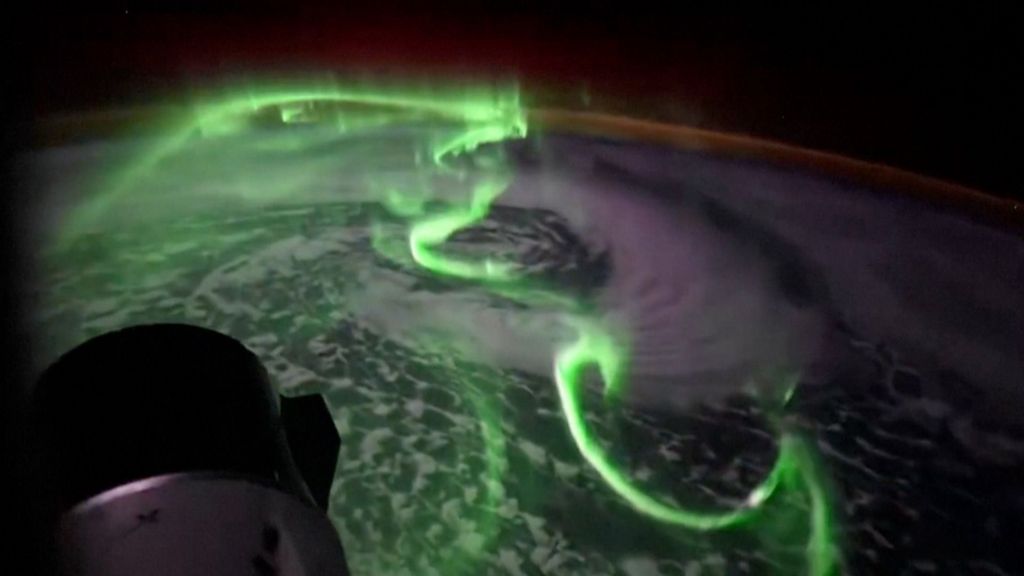
A breathtaking new timelapse sequence has given humanity a one-of-a-kind perspective on one of Earth’s most dazzling natural phenomena: the aurora australis, more commonly known as the Southern Lights. The remarkable footage was not captured from a remote viewing spot on the planet’s southern surface, but from the unique vantage point of low-Earth orbit, taken by NASA astronaut Jessica Meir during her mission aboard the International Space Station (ISS).
Auroras like the Southern Lights form when charged particles released from the sun collide with gaseous molecules in Earth’s upper atmosphere. These interactions spark the glowing, dancing waves of green, purple and blue that draw skywatchers to polar regions year after year. While ground-level photographs and timelapses are common for this event, Meir’s capture from space offers an unprecedented, sweeping view that shows the full scale of the auroral oval as it wraps around the Earth’s southern pole.
The timelapse compresses hours of activity into a brief, mesmerizing sequence, revealing how the lights shift and undulate across the upper atmosphere against the backdrop of the dark, star-studded expanse of space. Space agencies including NASA regularly share imagery captured by ISS astronauts to engage the public with Earth science and astronomy, highlighting the dynamic beauty of our planet that can only be fully appreciated from orbit. Meir’s footage joins a growing archive of extraordinary astronomical and geophysical observations collected from the ISS, helping both scientists and the public better understand the behavior of space weather and its visible impacts on Earth.