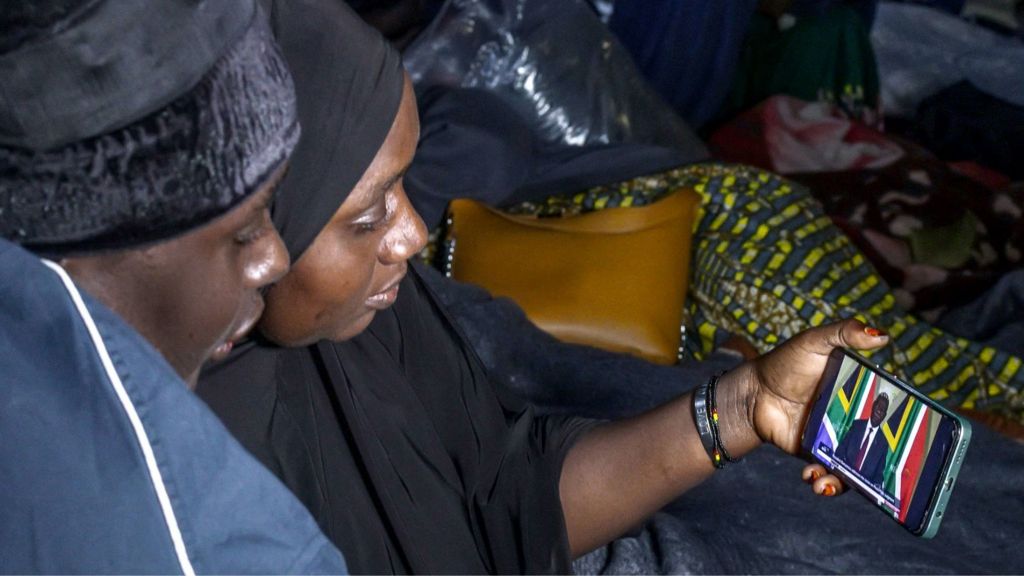
Against a backdrop of surging anti-migrant tensions, soaring public frustration over record-high unemployment, and planned anti-foreigner marches, South African President Cyril Ramaphosa has addressed the nation to roll out a sweeping five-point plan to curb undocumented migration across the country.
The unfolding crisis has already prompted multiple African nations to organize evacuation operations for their citizens, as violent intimidation pushes thousands of migrants to flee their homes or voluntarily return to their countries of origin. Over the past week alone, around 140 migrants boarded government-arranged buses bound for Malawi and Mozambique, following a wave of door-to-door harassment in the Overberg region of Western Cape that left two Mozambican nationals dead in Mossel Bay. Hundreds of displaced migrants sought temporary shelter in community halls, coastal areas and nearby mountain ranges, while in Durban, dozens of foreign nationals have spent weeks camped outside the city’s home affairs department, relying on phone updates of Ramaphosa’s address as they live in constant fear for their personal safety.
Ramaphosa’s new strategy targets five core areas of the crisis: holding violators of immigration law accountable, strengthening border control infrastructure and enforcement, rooting out systemic corruption within the country’s immigration bureaucracy, closing existing legal loopholes that enable undocumented entry and stay, and building collaborative partnerships with other African nations to address cross-border migration challenges.
Among the most significant new measures is the introduction of prison time for employers that knowingly hire undocumented workers. Currently, businesses caught violating this rule only face small financial penalties, and exploitative employers often take advantage of undocumented migrants by paying wages far below the national minimum wage. To enforce this new rule, the administration plans to hire 10,000 additional labor inspectors to conduct targeted compliance checks across all sectors.
The president also announced plans to speed up deportation proceedings for undocumented migrants by establishing dedicated immigration courts, and to roll out a universal biometric national register to eliminate widespread identity theft enabled by the outdated green paper ID system, which will be phased out entirely as the country transitions to a fully digital national ID system for all residents. Other imminent changes include moving all refugee reception centers from inland population centers to official border posts, introducing national quotas for foreign employment across every economic sector, and launching a full registration drive for all informal township grocery stores, commonly known as spaza shops, many of which are owned and operated by foreign migrants. These small businesses have repeatedly been targeted during past waves of xenophobic violence in South Africa.
In his national address, Ramaphosa acknowledged that undocumented migration has placed unfair additional strain on South Africa’s already stretched public services, a core grievance cited by anti-migrant groups that have set a June 30 deadline for all undocumented migrants to leave the country. However, he issued a sharp warning against vigilantism and extrajudicial action, emphasizing that only authorized government officials are permitted to enforce immigration law.
“No other person is allowed, for example, to confront someone in the street to demand proof of nationality,” Ramaphosa said, adding that the government would not tolerate groups exploiting public anxiety over illegal migration to advance personal, political or criminal agendas. He also cautioned against the spread of misinformation about foreign nationals on social media, stressing that “there is no space for xenophobia, racism, sexism, Afrophobia or any other forms of intolerance in South Africa.”
“Our country – like many others throughout history – is a product of migration. It is the reason for our diversity and contributes to our vibrancy,” he added.
Official data places the total foreign-born population of South Africa at more than three million, roughly 5% of the country’s total population, though independent estimates suggest the number of undocumented residents is far higher. Ramaphosa noted that illegal migration routes have become increasingly intertwined with transnational organized crime, adding that the Border Management Authority intercepted more than 450,000 attempted illegal entries into the country in the past 12 months alone.
Some political analysts have linked the recent resurgence of anti-migrant sentiment to upcoming local government elections scheduled for November. To coordinate regional cooperation on the new policy, Ramaphosa announced he will dispatch special envoys to capitals across Africa to outline the reforms, noting that regional peace and economic development are critical to reducing irregular migration pressures on South Africa.
Closing his 30-minute address, Ramaphosa struck an optimistic tone, saying the package of reforms would help the country build a “secure, lawful, compassionate and prosperous” nation. “South Africa has overcome far greater challenges than this. We have overcome division. We have overcome conflict. We have overcome injustice. We will overcome this challenge too,” he said.
South Africa currently holds one of the highest unemployment rates in the world, with roughly 33% of the workforce out of a job, and youth unemployment exceeding 60%, a statistic that has fueled widespread public frustration over competition for jobs and public resources.