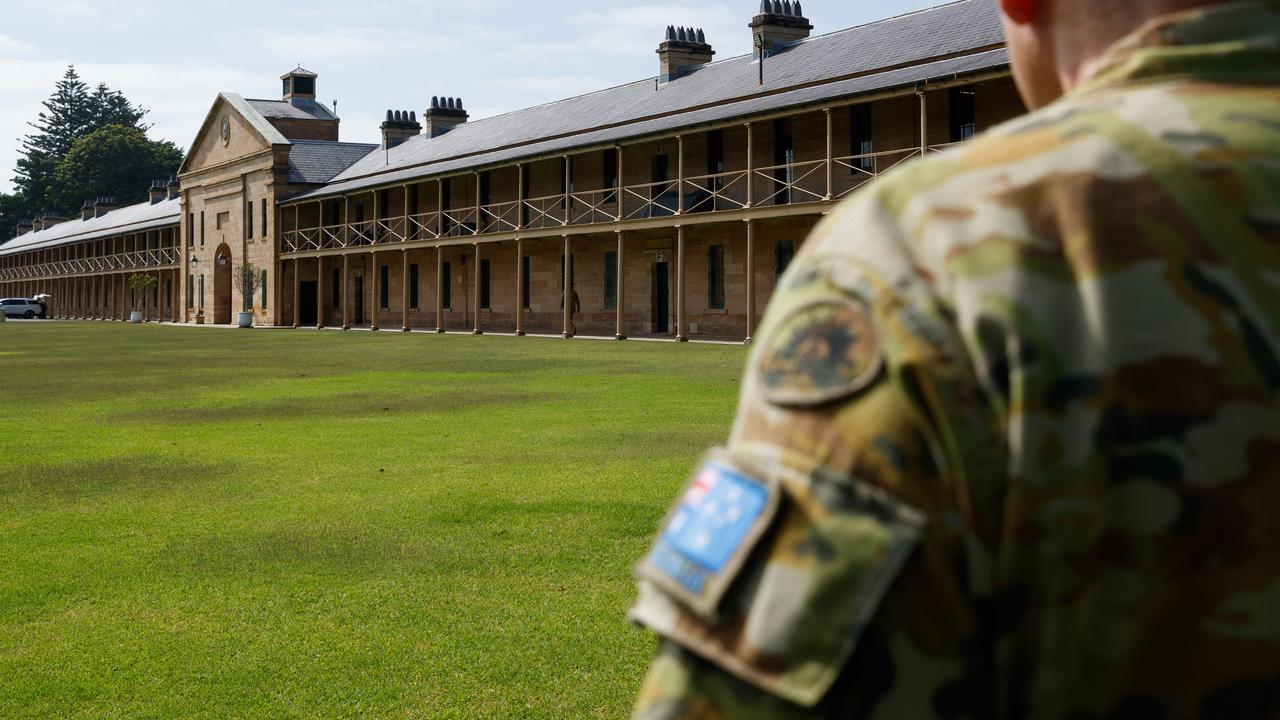
Fresh escalations between the United States and Iran around the Strait of Hormuz have thrown a spotlight on Australia’s hidden military footprint alongside its key Western allies, with the nation’s top defence official confirming that more than 700 Australian Defence Force (ADF) personnel are currently embedded with American and British armed forces.
Addressing a Senate estimates hearing on Wednesday, Chief of Defence Admiral David Johnston revealed the exact figure stands at 729 active ADF troops, with an additional 96 Australian public servants also deployed alongside allied commands. Johnston noted that the actual number of personnel embedded with US forces alone is likely even higher than the current official count, though only a small fraction of these troops are assigned to frontline tactical units.
With regional violence on the edge of a major widening, Johnston emphasized that strict Australian government rules limit all embedded personnel to strictly defensive roles, clarifying that Australia is not participating in any offensive operations targeting Iran. He pointed to the recent deployment of an E-7A Wedgetail airborne early warning and control aircraft to the United Arab Emirates as a key example of this constrained mandate, explaining that the jet supports defensive security efforts for Gulf states rather than engaging in offensive strikes.
The hearing saw intense questioning from Greens Senator David Shoebridge, who pressed Johnston over the risks of blurred rules of engagement, particularly for Australian personnel posted aboard US submarines. Past disclosures have already confirmed that Australian service members were present on a US submarine that sank an Iranian frigate in the Indian Ocean, raising questions about how Australian personnel navigate conflicting operational orders.
Johnston pushed back against concerns, asserting that all deployed personnel have full clarity on what actions they are authorized to take, and that he is unaware of any case where troops have faced uncertainty over their rules of engagement. When asked whether Australia’s presence on the submarine that sank the Iranian vessel aligned with national interests, Johnston framed the embedding as a critical training opportunity: Australian personnel are gaining hands-on experience operating Virginia-class submarines, a capability Australia is set to introduce under the AUKUS pact, to ensure they can safely and proficiently operate the platforms when they enter Australian service.
Beyond troop deployments, the hearing also shone a light on Australia’s controversial contract with US spyware firm Palantir, with officials confirming the ADF has paid roughly AU$14.4 million for access to the company’s data aggregation software. Senator Shoebridge highlighted that Palantir’s tools are used by both the US and Israel — two powers actively engaged in conflict against Iran and its regional allies — including for target identification operations in Gaza, Lebanon and Iran.
Australian Army Major-General Richard Vagg, head of land capability, confirmed that the ADF is using the same product suite that includes AI-powered targeting functions, but stressed that Australian use of the software is limited to non-offensive applications. Vagg explained that the ADF runs the platform in an isolated “sandbox” environment disconnected from main defence networks, using it only to practice aggregating multiple data streams to improve commanders’ situational awareness and battlefield target selection training, rather than for active offensive targeting operations.
The disclosures come as renewed tensions between Washington and Tehran have stoked fears of a full-scale regional war, prompting new scrutiny of Australia’s military commitments alongside its allies and the potential for the nation to be drawn unintentionally into a wider conflict.