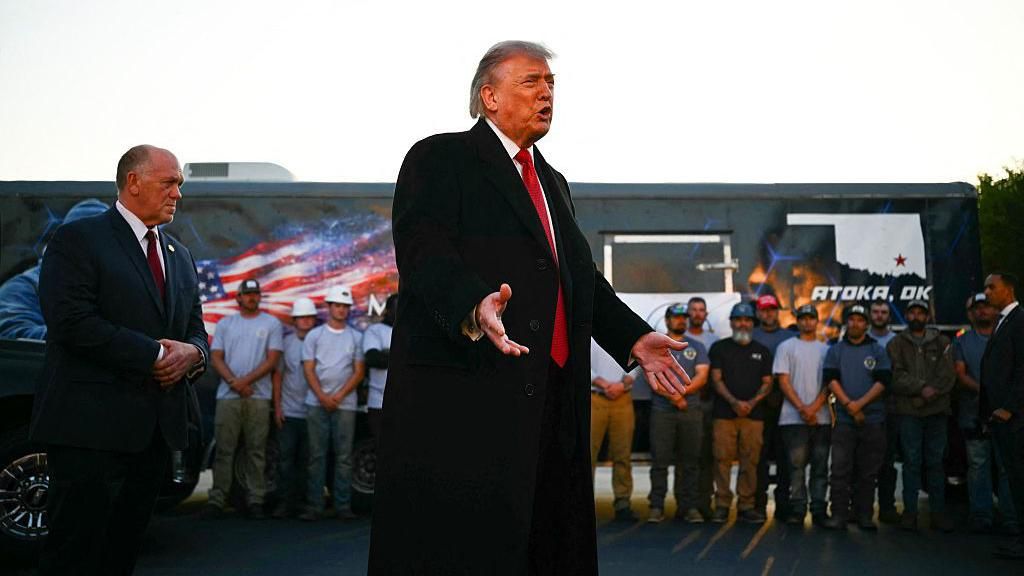
As dozens of high-profile musical performers have pulled out of or disavowed involvement in the series of official anniversary events marking the United States’ 250th year of independence, former and current U.S. President Donald Trump has declared the celebrations do not need celebrity entertainment to succeed.
On his social media platform Truth Social, Trump issued a blunt dismissal of the exiting artists. “I don’t want so-called ‘artists’ that get paid far too much money, who aren’t happy,” he wrote. “I only want to be surrounded by happy people, smart people, successful people and people that know how to win.”
Following the wave of withdrawals, the president directed his administration representatives to explore making him the headlining attraction of the 16-day “Great American State Fair” scheduled to open on the National Mall in Washington D.C. later this month. While it remains unconfirmed whether Trump’s proposed “giant Make America Great Again Rally” will replace the absent musicians, the move is the clearest example yet of how the sitting president has centered himself in the nation’s landmark Independence Day commemorations.
Since returning to the White House in January 2025, Trump has repeatedly framed his second term as a unique opportunity to lead the U.S. through a series of historic national and global events, including this year’s men’s FIFA World Cup, the 2028 Los Angeles Summer Olympics, and the 250th anniversary of American independence. Of these milestone occasions, Trump has shown particular interest in the semiquincentennial, an event steeped in patriotic symbolism and national pageantry.
A decade ago, the U.S. Congress created the official “America 250” commission to plan coordinated, national anniversary events. But shortly after Trump’s return to office, allies and groups aligned with the president launched a parallel, privately funded initiative called the “Freedom 250” committee to host separate celebrations aligned with the president’s agenda. The competing slate of events includes the National Mall state fair, a UFC mixed martial arts fight hosted on the White House grounds, a national fitness competition in Orlando, Florida, a street Grand Prix racing event through downtown Washington D.C., and what Trump has claimed will be the largest fireworks display the world has ever seen on the Fourth of July. Trump has regularly promoted these events on social media, even sharing AI-generated images of himself starting the street race and posing beside the White House fighting ring.
In contrast, the official congressionally authorized America 250 initiative has planned far more modest events, including traveling art exhibitions and community block parties across all 50 states.
Beyond lining up events, the Trump administration has prioritized a series of public space “beautification” projects across Washington D.C. to prepare for months of anniversary activities. More than a dozen iconic fountains in high-traffic public parks and circles across the capital have been restored, and Lafayette Park directly across from the White House is currently closed for major renovations. The Lincoln Memorial Reflecting Pool, a landmark at the heart of the National Mall, is undergoing resurfacing work, though the project has drawn questions over its funding and construction methods. Four historic bronze horse statues near Memorial Bridge are set to receive a coating of 23.75-karat gold leaf, while downtown streets have been repaved and city lampposts repainted by work crews.
Trump, who built his pre-political career as a New York City real estate developer, has leaned into his personal interest in construction projects, often sounding more like a municipal public works official than the U.S. head of state when discussing the renovations. During last week’s Cabinet meeting, he dedicated more than 20 minutes to detailing the capital improvement projects, saying, “I love construction. DC is looking beautiful.”
Last month, the U.S. Commission of Fine Arts approved plans for a new 250-foot triumphal arch to be built across the Potomac River from the Lincoln Memorial, though the controversial project still requires additional regulatory approval and is already facing ongoing legal challenges from critics who argue it is an unnecessary distortion of the National Mall’s historic landscape.
White House aides and senior administration officials have worked for months to tie Trump directly to every part of the anniversary celebrations. In March, the U.S. Treasury approved a commemorative gold coin featuring Trump at a presidential desk. Just last week, Treasury Secretary Scott Bessent confirmed the department is also developing a special $250 bank note that would feature Trump’s portrait. Adding a portrait of a living U.S. president to federal currency would require explicit approval from a majority in both chambers of Congress, however.
The proposal for the Trump-branded $250 note drew immediate fierce pushback from congressional Democrats, who are broadly united in opposing the administration’s framing of the anniversary. “Get over yourself,” House Democratic Leader Hakeem Jeffries wrote on social media platform X. “The upcoming July 4th anniversary is not about a wannabe king. It is about celebrating the American journey.”
Trump and his administration have dismissed the criticism as unpatriotic, arguing that the administration’s large-scale events and investments are appropriate for a momentous national occasion. But the end result has transformed what was meant to be a unifying national milestone into yet another front in American partisan conflict, coming at a time when the nation remains as deeply politically divided as it has ever been.