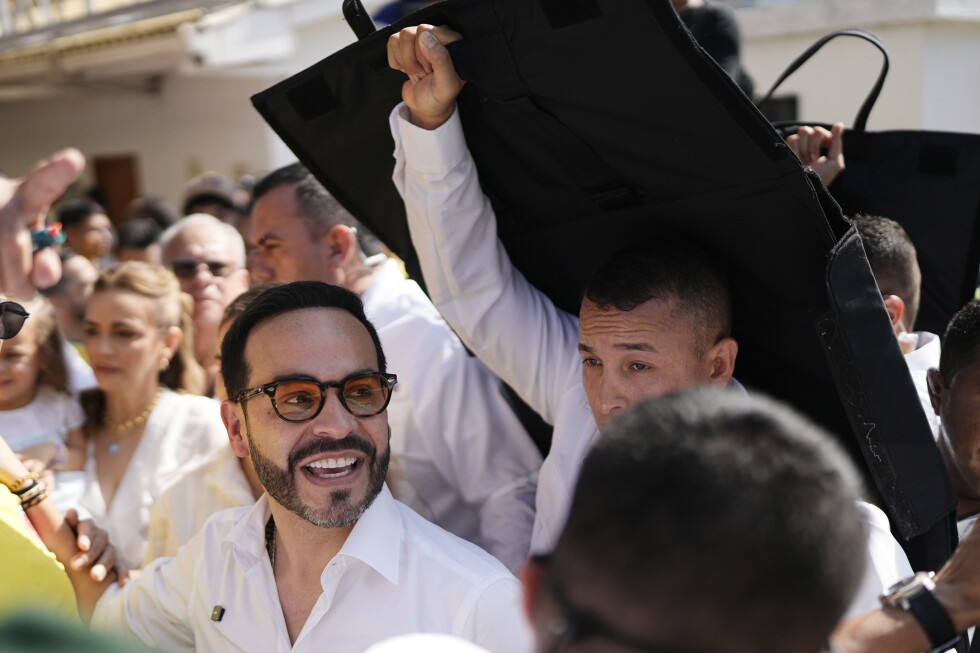
Over the weekend, Colombia’s first round of presidential elections delivered a stunning political upset: bombastic pro-Trump outsider lawyer Abelardo de la Espriella secured the top spot, riding a regional wave of voter demand for harsh crackdowns on organized criminal activity. De la Espriella, who captured nearly 44% of the vote, outpaced long-time polling leader progressive Senator Iván Cepeda, who finished with less than 41% of ballots cast. The two candidates will advance to a decisive runoff election scheduled for June 21, where political analysts widely expect de la Espriella to pick up support from voters who backed other conservative candidates in the opening round.
Almost immediately after Sunday’s results were tabulated, Cepeda and his political ally, sitting Colombian President Gustavo Petro, raised unsubstantiated questions about the integrity of the election process. Political analyst Sergio Guzmán noted that Cepeda faces a steep uphill battle in the runoff, framing de la Espriella’s first-round win as a reflection of a profound shift in Colombian public opinion that will be extremely difficult for the progressive candidate to reverse. “Abelardo de la Espriella won the first round. In other words, that’s a shift in public opinion that is very difficult to overcome. So now Abelardo is emerging as the likely favorite to win,” Guzmán explained.
Nicknamed “El Tigre” (The Tiger), the 47-year-old candidate has never held public office in Colombia. Before launching his presidential campaign, he built a high-profile legal career representing controversial clients including former conservative President Álvaro Uribe and Venezuelan ally of Nicolás Maduro Alex Saab, who faces U.S. criminal charges (de la Espriella stopped representing Saab roughly seven years ago). De la Espriella spent years living a luxury lifestyle in Italy, and has campaigned as an anti-establishment outsider who would align closely with former U.S. President Donald Trump and replicate El Salvador President Nayib Bukele’s controversial hardline war on gangs. The Bukele model has cut homicide rates in El Salvador but sparked widespread global allegations of systematic human rights abuses.
In a final-campaign interview with the Associated Press, de la Espriella laid out his uncompromising approach to Colombia’s long-standing narcotic and gang violence crisis: “I will wipe out narcoterrorism and those who I’ve declared a military target like cockroaches, like rats. I will unleash upon them the wrath of God never seen before.” He also pledged to construct 10 new mega-prisons to hold convicted gang members and criminal actors. De la Espriella’s rise fits into a broader political realignment across Latin America, where a growing number of candidates from Chile to Honduras have adopted the “Bukele model” as voters increasingly abandon progressive administrations that focused on addressing the root causes of violence, such as systemic youth poverty and institutional corruption.
De la Espriella has drawn support from a broad cross-section of Colombian voters. The day before the election, 64-year-old Bogotá coffee vendor Yolanda Peréz hinted she would cast her ballot for “El Tigre.” For 20-year-old first-time voter Miguel Maheca, who publicly displayed his pro-de la Espriella ballot after voting, security concerns trumped all other policy priorities: “Love isn’t what’s going to make us safe in Colombia,” he said.
Despite the candidate’s popular appeal, security experts warn that the El Salvador security model is nearly impossible to replicate in Colombia, a country more than 50 times larger than the Central American nation, with a far more fragmented landscape of competing armed groups fighting to control territory and illicit trade routes. De la Espriella’s first-round win comes amid a more aggressive U.S. diplomatic push across Latin America under the Trump administration, which has ramped up pressure on Colombia, Mexico, and Ecuador to adopt harsher anti-crime policies.
For Cepeda, the result is a major blow to his campaign and the future of the progressive movement that brought President Petro to power in 2022. Cepeda has run on a platform to continue Petro’s controversial “total peace” initiative, which seeks to end decades of conflict by negotiating formal peace agreements with remaining guerrilla factions and criminal gangs. The progressive movement emerged from widespread rejection of the hardline militarized anti-guerrilla campaign waged by former President Uribe, which was marred by the “false positives” scandal that saw Colombian security forces kill thousands of civilians and disguise them as guerrilla combatants to inflate victory counts.
Cepeda has framed his opponent as a return to Colombia’s problematic past: De la Espriella “represents a return to the paramilitary politics and drug-trafficking — a mafia-run, plutocratic and corrupt past that the country experienced during Álvaro Uribe’s two administrations,” he said Sunday.
Petro, a former rebel who made history in 2022 as Colombia’s first left-wing head of state, breaking decades of right-wing rule tied to Uribe’s political movement, saw his movement put on the defensive after Sunday’s results. Petro built his winning 2022 coalition on support from rural, Indigenous, and low-income Colombians who had long been ignored by traditional political establishments.
Renata Segura, director of the International Crisis Group’s Latin America and the Caribbean Program, wrote that the election is now de la Espriella’s to lose. She argued that Cepeda’s strategy of running exclusively on a left-wing platform was a critical error, and his ability to pivot toward broader appeal in the next five weeks will determine whether he has any chance of pulling off an upset in the runoff.