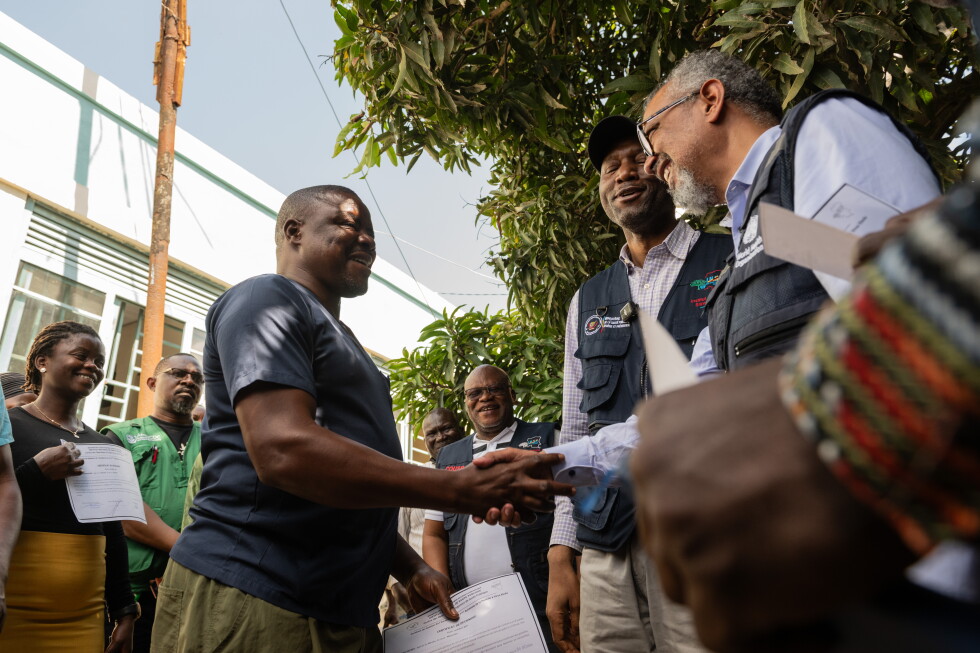
BUNIA, Democratic Republic of Congo – In an update released Sunday evening, Congolese health authorities confirmed that the ongoing Ebola outbreak in the country’s eastern region has reached 282 confirmed cases, as survivors of the virus share stories of unexpected recovery that have offered a glimmer of hope amid widespread response challenges.
The vast majority of infections – 264 of the total confirmed cases – are concentrated in Ituri province, the epicenter of the current outbreak. Nationwide, more than 1,000 additional suspected cases are being investigated, with the pathogen identified as the Bundibugyo strain of Ebola, a rare variant for which no universally approved vaccine or targeted treatment currently exists.
Congolese health officials outlined the core barriers halting effective containment of the virus. Key challenges include timely detection of new infections and rapid isolation of positive cases, thorough contact tracing of exposed individuals, implementation of safe, culturally respectful burials for virus victims, and bolstering infection control protocols at local health facilities. To date, only 45% of required contact tracing has been completed, with 220 suspected cases still undergoing testing and verification.
Against this difficult backdrop, the five people confirmed to have recovered from the strain – all of whom work in the health sector, including four nurses and one laboratory technician, the group most heavily impacted by the outbreak so far – have opened up about their experiences, describing overwhelming relief at surviving the deadly disease.
Baraka Bulambulu, one of the recovered nurses, shared that he felt indescribable joy after his final two consecutive Ebola tests returned negative results. Bulambulu was among the survivors honored with recovery certificates by World Health Organization Director-General Tedros Adhanom Ghebreyesus during the opening ceremony of a new Ebola treatment center in Bunia, Ituri’s provincial capital, on Sunday. “My first test came back positive, but the second and third were negative,” Bulambulu said, smiling as he spoke. “Coming out of this illness alive is a joy that cannot be put into words.”
Another recovered nurse, Ezo Étienne, recalled how his symptoms first emerged while he was completing routine ward rounds checking on patients at his hospital. “That was how it started,” he said. “I called the response team and told them something was wrong. I checked my blood pressure and saw I had immediate hypotension. I decided to rest for a few minutes, and shortly after I began vomiting.”
To date, all clinical care for infected patients has focused on managing symptoms, as no targeted antiviral treatment for the Bundibugyo strain is yet approved for widespread use. Speaking to the recovered health workers at the treatment center opening, Tedros emphasized that their survival carries a powerful message for the response effort. “Your courage gives hope, and your living story proves that this outbreak can be stopped,” he told the group.
Neighboring Uganda has already confirmed nine cases of Ebola linked to the Congolese outbreak, and has closed its shared border with Congo in an effort to slow cross-border transmission.
While the DRC and Uganda have recorded more than 20 previous Ebola outbreaks across the region, the Bundibugyo strain remains extremely rare. Complicating the current response beyond the lack of approved medical countermeasures are the remote location of outbreak hotspots and ongoing armed violence in the eastern DRC that hinders aid access. Despite these significant hurdles, senior Congolese health leaders say the recoveries mark an important milestone.
These five recoveries are “a victory worth celebrating,” said Dr. Dieudonne Mwamba Kazadi, director-general of the DRC’s National Institute of Public Health. He added that the outcomes send a clear message: “It is possible to recover from Ebola when you seek care early at a dedicated treatment facility.”