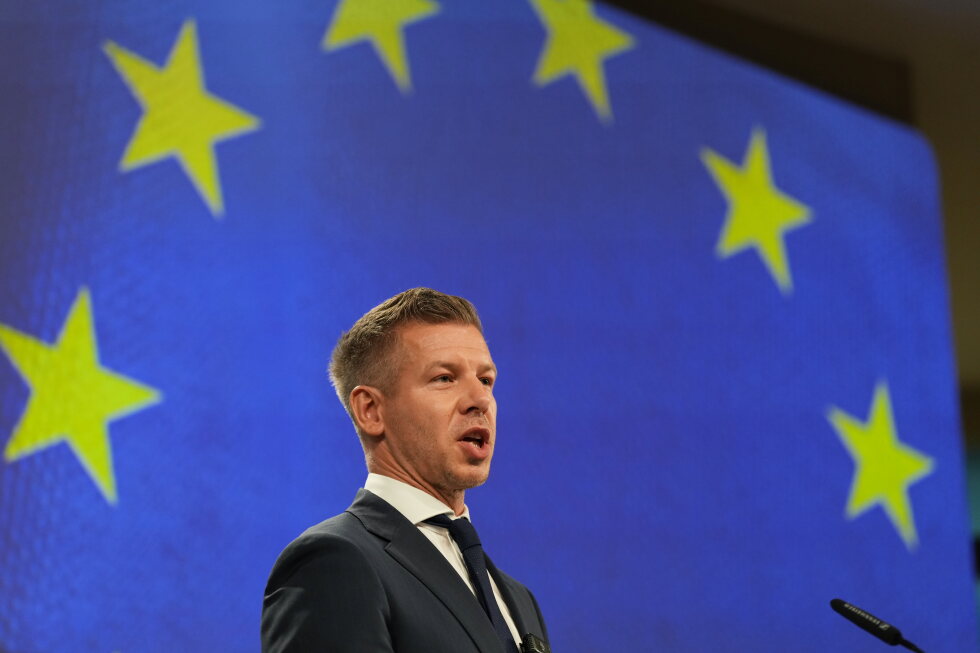
In a major post-election shakeup reshaping Hungary’s political landscape after 16 years of populist rule under Viktor Orbán, newly elected Prime Minister Péter Magyar has confirmed plans to amend Hungary’s constitution to oust the sitting president, a holdover appointee from Orbán’s administration.
Magyar’s Tizsa party secured a landslide victory in April’s national parliamentary election, winning a supermajority of two-thirds of seats — a threshold that grants the new government the power to enact sweeping structural reforms to the authoritarian political system Orbán built during his long tenure. Since taking power, Magyar has repeatedly pressured President Tamás Sulyok, who was appointed by Orbán’s former ruling party, to step down voluntarily, setting a firm May 31 deadline for his exit. Magyar has publicly labeled Sulyok as Orbán’s loyal puppet, arguing the sitting president is incapable of representing the new democratic mandate Hungarian voters delivered.
Though Hungary’s presidency is largely a ceremonial position, it holds key constitutional powers: the office is responsible for formalizing all legislation by signing it into law, and can opt to send parliamentary bills to the Constitutional Court for judicial review. That authority has sparked significant anxiety among the new government’s supporters, who warn Sulyok could use his institutional powers to block and derail Magyar’s promised reform agenda.
On Monday morning, the two leaders held closed-door talks at Sándor Palace, the official presidential residence in Budapest. After the meeting, Magyar addressed reporters at a public press conference, confirming that Sulyok had flatly rejected calls to resign voluntarily. In response, Magyar announced he would immediately direct Tizsa party lawmakers to launch the necessary constitutional procedures to remove the president from office, a process he projected will take approximately four weeks to complete.
“Hungary does not belong to Tamás Sulyok, nor to Viktor Orbán. It does not belong to a single party or a closed political system,” Magyar told reporters. “Our constitution clearly states that the president must embody the unity of the nation and safeguard the democratic functioning of the state.”
Magyar stopped short of releasing specific details of the constitutional amendments that will be used to facilitate Sulyok’s removal, but outlined a series of accusations against the sitting president, arguing he has failed to fulfill his core constitutional duties. In particular, Magyar criticized Sulyok for remaining silent when Orbán made dehumanizing public remarks targeting political opponents and government critics, and when Orbán’s administration passed legislation banning annual LGBTQ+ Pride events in the country.
“It is in Hungary’s national interest that the office of the president regains the public prestige that has been eroded by its years of silence and inaction,” Magyar added.
Sulyok’s office pushed back against Magyar’s demands late last week, releasing an official statement arguing that the prime minister’s calls for resignation harm the constitutional order and undermine the institutional authority of the Hungarian presidency. The statement also confirmed that Sulyok has requested an independent legal review of the political conflict from the Venice Commission, the advisory legal body attached to the Council of Europe, Europe’s leading intergovernmental human rights organization.
The clash over the presidency is the latest in a series of rapid changes Magyar has spearheaded since taking office, including unlocking billions in frozen European Union funding by delivering on initial reform commitments, maintaining Hungary’s membership in the International Criminal Court, and launching investigations into alleged misconduct by Orbán’s former government.