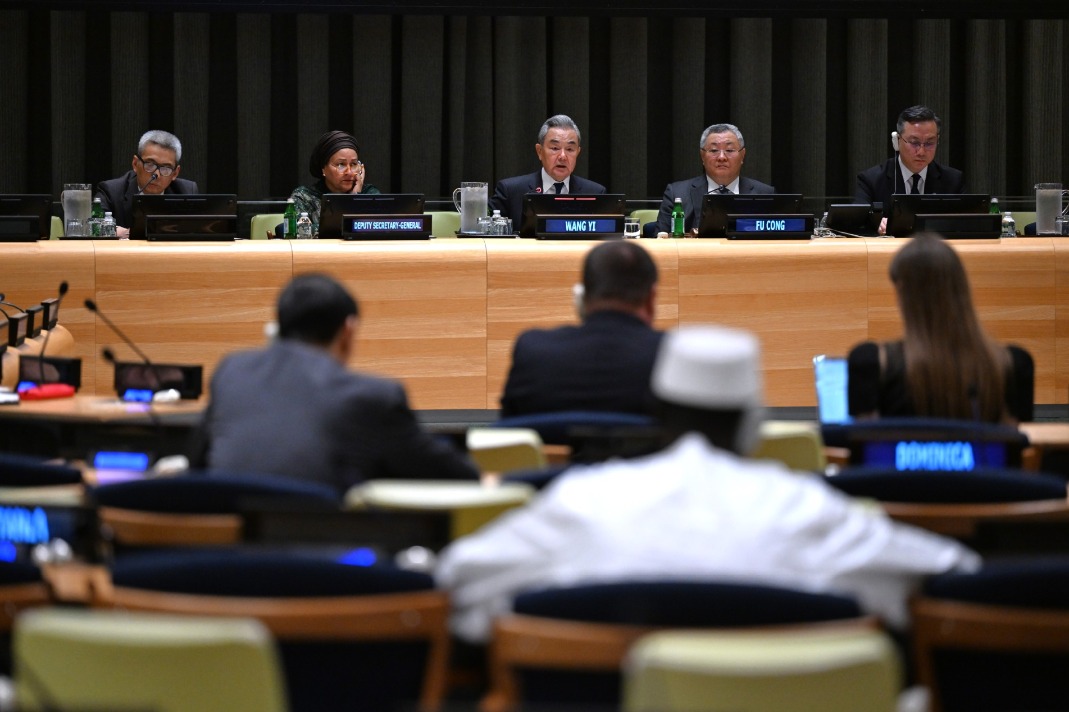
NEW YORK — On Thursday, Chinese Foreign Minister Wang Yi took the stage at the Group of Friends of Global Governance meeting hosted at United Nations headquarters, laying out a clear vision for updating global governance frameworks and advancing targeted reform of the UN system amid growing global geopolitical and institutional turbulence. Wang, who also serves as a member of the Political Bureau of the Communist Party of China Central Committee, opened his address by framing the overhaul of global governance systems as a defining, generational responsibility that requires sustained commitment and unwavering collective purpose from the international community.
A core priority Wang emphasized was reform to strengthen the United Nations itself. He clarified that the ultimate goal of any UN restructuring is to reinforce the world body’s capacity to serve its member states, not undermine its central role in global affairs. He added that all reform processes must be member-state led, and adhere to core principles of fairness, inclusivity, and full transparency. A critical outcome of this reform, Wang argued, should be a more efficient United Nations overall and a more authoritative, capable Security Council that can deliver on its core mandate of maintaining global peace and security.
Wang also highlighted the urgent need to elevate the representation and voice of developing nations, as well as small and medium-sized states, in global governance structures. He specifically called for redressing long-standing historical injustices that have marginalized African countries in international institutional decision-making.
Beyond core UN reform, Wang outlined a broad agenda for updating global governance across multiple critical domains. He called for adapting UN peacekeeping operations to align with evolving 21st-century security challenges, building broad international consensus around accelerated inclusive global development, guiding global human rights governance onto a fair, balanced path, and advancing deep reform of the global economic and financial system to better reflect contemporary global economic realities. He also pushed for the creation of formal, multilateral rules for artificial intelligence governance, stronger coordinated governance frameworks for emerging strategic domains including cyberspace and outer space, and expanded people-to-people and cultural exchanges between civilizations to reduce global tensions.
Speaking to the role of the Group of Friends of Global Governance itself, Wang noted that the grouping has emerged as a critical stabilizing force and voice for fairness in an increasingly fragmented and unpredictable global landscape. He called for greater investment in and utilization of this multilateral platform to advance collective governance priorities. Wang reaffirmed that China will remain a steadfast advocate of multilateralism, and will continue to contribute its own domestic governance experience to strengthen collective global governance efforts.
The meeting drew participation from foreign ministers and senior diplomatic representatives from more than 60 countries across the globe, including Pakistan, Turkmenistan, Kyrgyzstan, Cuba, and Zimbabwe. UN Deputy Secretary-General Amina Mohammed delivered a briefing to attendees ahead of discussions on global governance priorities.