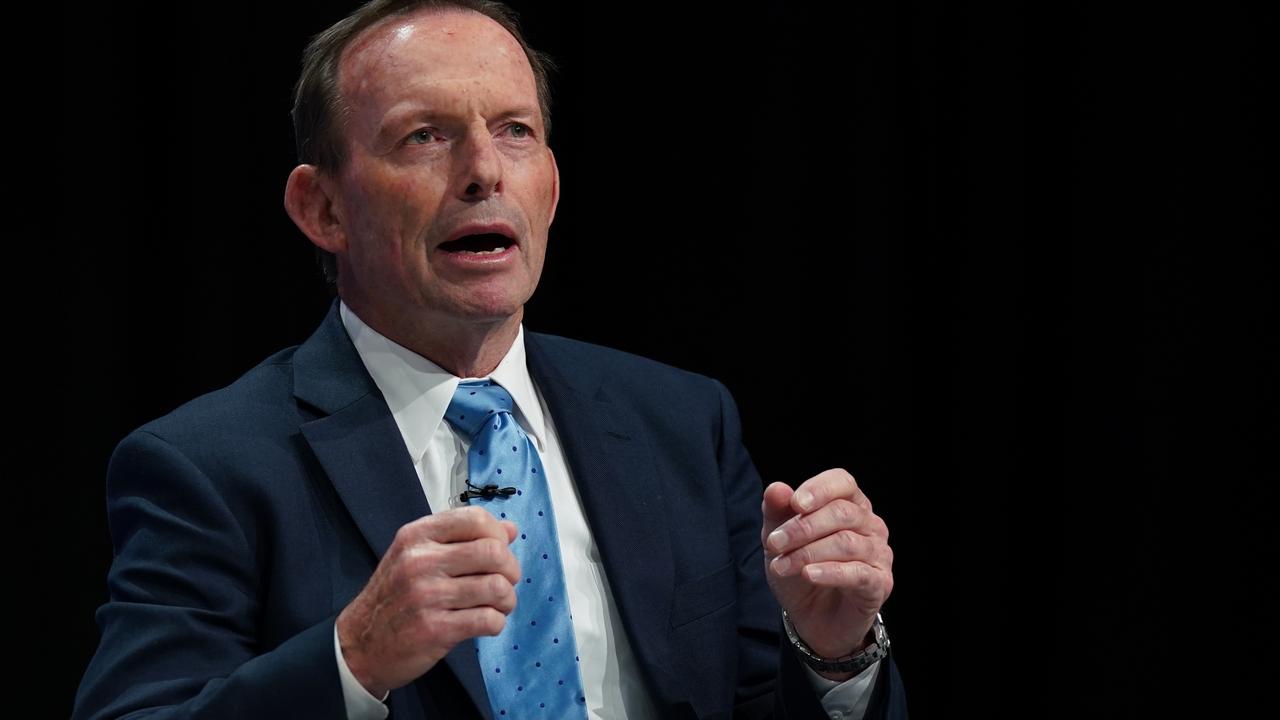
Australia’s former prime minister Tony Abbott has secured the position of president of the country’s federal Liberal Party after being nominated for the role without any challengers. In remarks delivered to party loyalists during a meeting of the Liberal Party’s federal council on Friday, Abbott framed his return to a top internal party role as a debt repayment and a responsibility he could not shirk.
The one-time Member for Warringah, who led the center-right Coalition to a federal election victory in 2013, said he owed the party an enormous debt, and that he viewed accepting the presidency as his duty to serve during what he called a period of “existential crisis” for the party. As the last person to successfully lead the Coalition as opposition leader to an election win, Abbott argued he is uniquely positioned to help current Opposition Leader Angus Taylor replicate that success, and eventually become Australia’s 32nd prime minister.
While Abbott reiterated that Australia remains the greatest nation on Earth, he warned that the country is sliding backward. He cited stagnant economic growth, deepening social divisions, growing threats to national security, and a widespread underlying “spiritual malaise” as core problems facing the nation. For the modern Liberal Party, he added, the central challenge is rebuilding trust with a skeptical electorate to prove it is a credible alternative to the current government — a goal he said he believes the party is fully capable of achieving.
“We remain the best hope of better government in this country, the better government that we so desperately need right now,” Abbott said, thanking Taylor for the opportunity to return to a formal leadership role within the party.
The former prime minister’s appointment has not been without controversy, drawing sharp criticism from old political rivals who warn the move could shift the party even further to the ideological right. Fellow former Liberal prime minister Malcolm Turnbull — whose tumultuous political history with Abbott includes Abbott ousting him as opposition leader in 2009, followed by Turnbull toppling Abbott in a 2015 leadership spill — dismissed early rumors of Abbott’s nomination by saying he was “clearly a masochist” for seeking the role, before acknowledging Abbott’s longstanding commitment to Australian politics.
Turnbull went further to warn against a further rightward shift for the Liberal Party, noting that repeated election results have sent a clear message that a large share of the electorate already believes the party has moved too far right. “They’re basically arguing that the Liberal Party’s mistake has been not being right-wing enough, despite every election sending them the message that a significant part of the electorate feel they have gone too far to the right,” Turnbull told the Australian Broadcasting Corporation (ABC).
Independent MP Zali Steggall, who defeated Abbott in his long-held Warringah seat during the 2019 federal election, echoed Turnbull’s criticism. She argued that Abbott’s appointment proves the Liberal Party has failed to learn key lessons from its poor performance in the last three consecutive national elections. Steggall emphasized that moderate, rational Australian voters are hungry for constructive policy solutions, not the ideological culture wars and partisan blame games she linked to Abbott’s leadership style. “It’s clear that the Australian public, the sensible public, wants rational policies. They don’t want culture wars. They don’t want blame game. They want something constructive,” she told the ABC.
Abbott’s ascension comes as the Liberal Party grapples with internal ideological tensions and low poll numbers following three straight election defeats, making his new role as the top party leader a high-stakes test for the future direction of Australia’s main conservative political force.