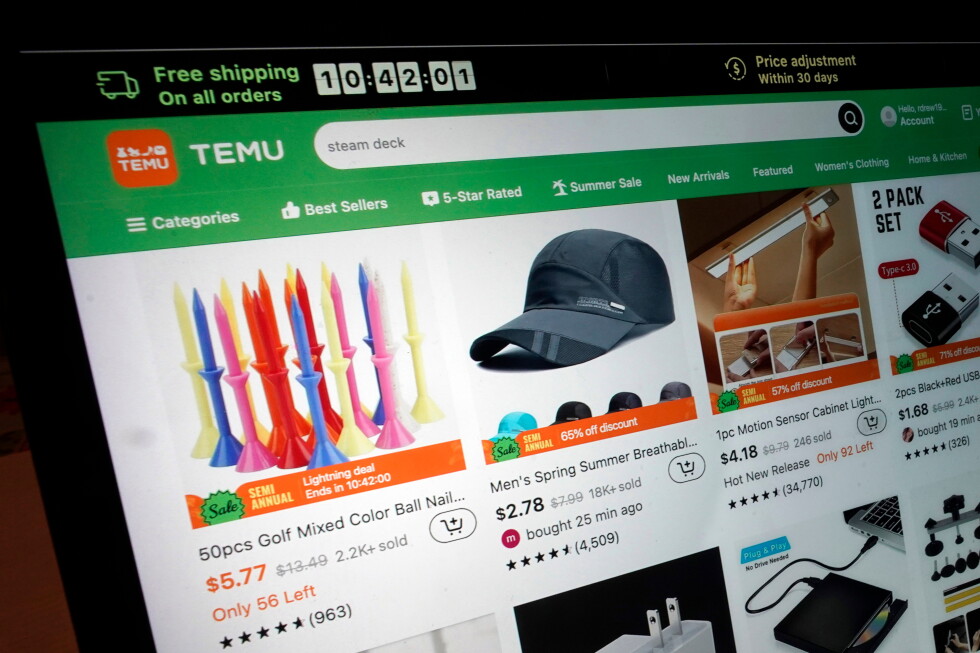
BRUSSELS, LONDON – In one of the most significant penalties issued under the European Union’s landmark Digital Services Act (DSA) to date, Chinese e-commerce giant Temu has been fined 200 million euros ($232 million) after regulators concluded the platform systematically failed to shield European consumers from dangerous, non-compliant products ranging from toxic children’s toys to uncertified unsafe electronics.
The penalty, announced Thursday by the European Commission, the EU’s executive governing body, follows a year-long investigation that grew out of 2023 preliminary findings confirming Temu’s marketplace exposed shoppers to widespread risks from goods that violate the bloc’s strict consumer safety standards. The action marks the first formal DSA compliance evaluation of Temu completed by the commission in 2024, and it puts the fast-growing discount retailer on notice to overhaul its platform governance or face further penalties.
The DSA, the EU’s sweeping regulatory framework for large online platforms, mandates that major digital marketplaces implement rigorous systems to root out harmful content and illegal, non-compliant goods, with violations punishable by fines reaching up to 6% of a company’s global annual revenue. For this penalty, regulators settled on a 200 million euro fine, an amount they say reflects the seriousness of Temu’s compliance failures.
Officials detailed that a mystery shopping probe carried out by investigators uncovered alarming levels of non-compliant products across high-risk categories. Among the most troubling finds were a large share of baby toys that contained toxic chemicals exceeding EU safety limits, plus small detachable parts that presented a choking and suffocation hazard for young children. Investigators also discovered dozens of electronic device chargers that failed basic electrical safety testing, putting users at risk of fire or electric shock.
In a statement following the announcement, European Commission Executive Vice-President Henna Virkunnen emphasized that mandatory risk assessments are not perfunctory procedural steps for large platforms. “Temu’s risk assessment underestimates concrete risks, lacks specificity, is not grounded in solid evidence, and is not comprehensive,” Virkunnen said in prepared remarks. “It leaves regulators, users, and the public in the dark about the true scale of potential harm posed by illegal products sold on Temu. Now it is time for Temu to comply with the law.”
Regulators added that Temu’s failure to conduct proper, comprehensive risk assessments for illegal goods on its platform qualifies as an especially severe breach of DSA rules. The commission has given Temu until the end of August 2024 to submit a formal action plan outlining how it will correct its compliance gaps. If Temu fails to meet the deadline or does not implement sufficient reforms, the platform could face additional recurring daily, weekly or monthly fines for continued non-compliance.
Temu, which is owned by China-based PDD Holdings Inc. — the parent company of Chinese domestic e-commerce giant Pinduoduo — has rapidly expanded its European footprint in recent years, attracting 92 million monthly users across the 27-nation bloc. The platform built its customer base by offering ultra-low-priced goods across categories from clothing to home goods, with most inventory shipped directly from third-party sellers based in China.
In response to the penalty, the company pushed back against the commission’s findings. A Temu spokesperson said the company disagrees with the decision and considers the $232 million fine “disproportionate.” The company also noted that the ruling is based on its 2024 evaluation that reflects the platform’s systems at an earlier point in time, “and does not reflect the current state of our systems.”
“Temu engaged constructively with the Commission throughout the process and has since taken further steps to strengthen risk assessment, platform governance, and user protection,” the company added in its official statement.