A rare and rapidly spreading Ebola outbreak in the Democratic Republic of Congo (DRC) has escalated into a public health crisis of international concern, with regional authorities warning that a catastrophic collapse of response efforts is imminent without urgent global support. The outbreak, centered in DRC’s Ituri province, has stretched already strained local resources to breaking point, as the region continues to grapple with long-running armed conflict.
In an interview with French broadcaster RFI, Ituri’s military governor Johnny Luboya Nkashama framed the fight against the virus as an unexpected “second war” the province is ill-equipped to win. “Our existing resources were already dedicated to the war against armed groups, and this second war that is now upon us demands even more,” he explained. As of current reporting, more than 900 suspected Ebola cases and 223 suspected deaths have been recorded since the outbreak was first declared on May 15, with transmission expanding faster than initial projections.
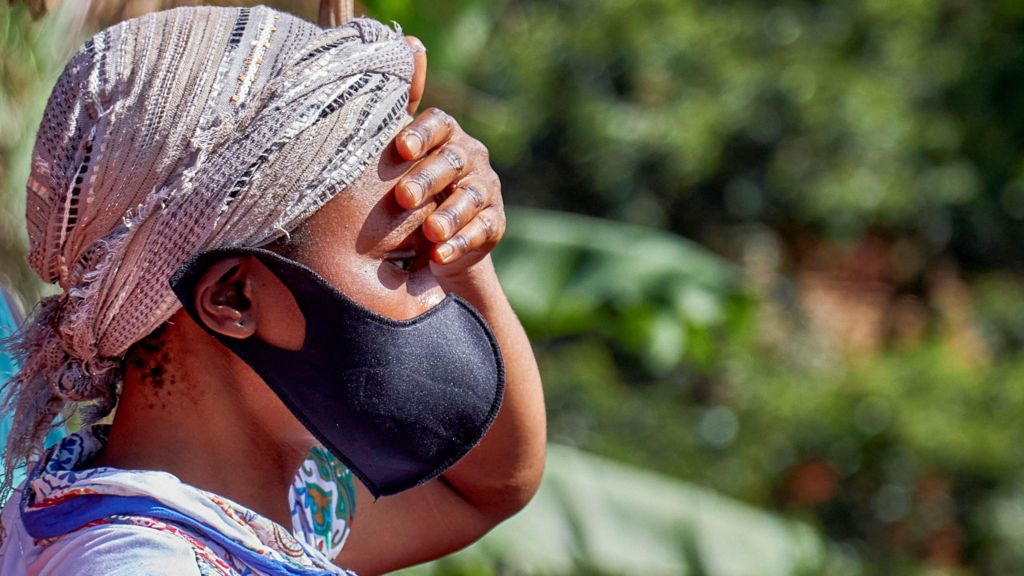
Local communities in affected zones have already adopted individual preventive measures, including widespread face mask use and social distancing to slow transmission. But Nkashama outlined multiple cascading challenges undermining response efforts: affected residents face acute food shortages, overcrowded living conditions accelerate spread, and co-occurring other diseases place additional strain on already depleted health systems. To avoid total catastrophe, Nkashama called for an immediate scaled-up response, including urgent deployment of qualified medical personnel, construction of secure, properly resourced treatment centers, and rapid mobilization of critical funding. “The more time we lose, the closer we come to disaster,” he warned.
Security threats have further complicated response work. Two treatment centers have already been targeted by angry family members of Ebola victims, who have attempted to retrieve the bodies of deceased loved ones in violation of infection control protocols. The outbreak has also spread beyond Ituri, with cases confirmed in DRC’s North and South Kivu provinces, and seven confirmed cases recorded in neighboring Uganda. Eleven other African countries, including Angola, Burundi, the Central African Republic, Ethiopia, Kenya, Rwanda, South Sudan, Tanzania and Zambia, have been identified as at high risk of cross-border transmission.
The World Health Organization (WHO) formally declared the outbreak a Public Health Emergency of International Concern (PHEIC) after confirming that transmission is outpacing efforts to scale up response operations. WHO Director-General Tedros Adhanom Ghebreyesus, who is scheduled to travel to the affected region to assess the situation, acknowledged that responders are currently “playing catch-up” to contain the spread.
This outbreak is the 17th Ebola event recorded in DRC since the virus was first identified in 1976, and only the third global occurrence of the rare Bundibugyo Ebola species — a strain not documented in any outbreak for more than a decade. Critically, there are currently no licensed vaccines or specific antiviral treatments approved to target Bundibugyo Ebola. While candidate vaccines are in active development, the WHO has warned it could take up to nine months before a safe, deployable vaccine is ready for use.
Regional health bodies have moved to coordinate a cross-border response. Over the weekend, Africa Centres for Disease Control and Prevention (Africa CDC) director-general Dr Jean Kaseya convened emergency talks with health ministers from DRC, Uganda and South Sudan to align response strategies and finalize a coordinated cross-border action plan. The group agreed on a $319 million budget to scale up operations and stop the outbreak from expanding across the continent. So far, 10% of the total budget has been secured from the affected countries themselves. On the day following the meeting, South African President Cyril African President Cyril Ramaphosa pledged an initial $5 million contribution to the response fund. Kaseya announced that African business leaders will gather later this week to mobilize additional domestic funding, while international partners have also committed to contributing financial support.