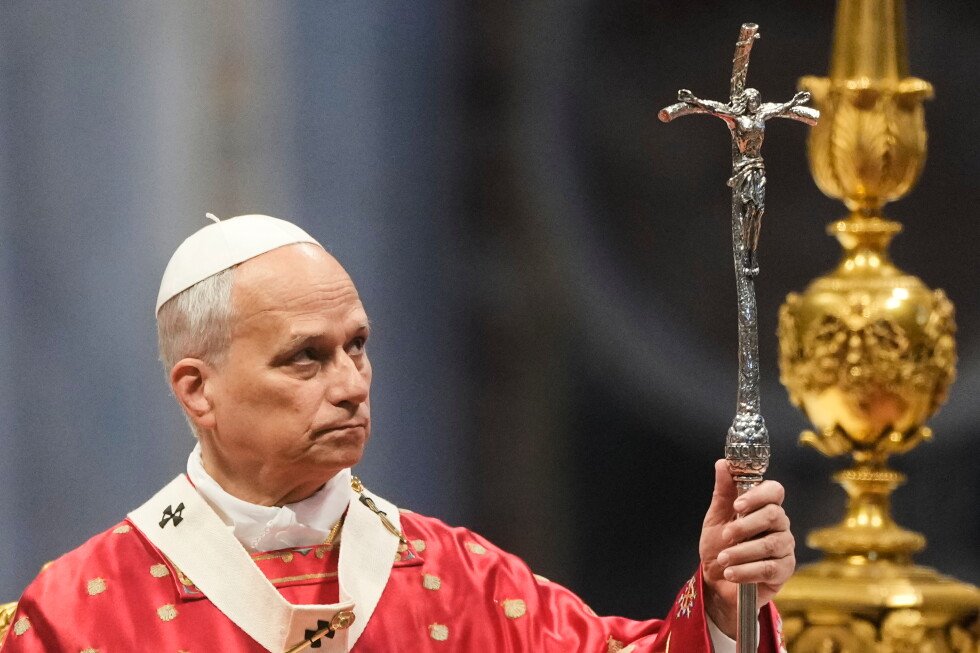
On a watershed Monday for the global Catholic Church, Pope Leo XIV — the first pontiff born in the United States, with a documented family tree that includes both enslaved people and slave owners — delivered a groundbreaking apology for the Holy See’s own centuries-long role in legitimizing chattel slavery, an act of atonement decades in the making for Black Catholics, scholars and activists worldwide.
While prior popes have offered general apologies for Christian participation in the trans-Atlantic slave trade, no pontiff has ever publicly acknowledged, let alone sought forgiveness for, the explicit authorizations past Vatican leaders granted to European colonial powers to subjugate and enslave non-Christian peoples. This historic admission was included as a core section of Pope Leo’s first encyclical, titled *Magnifica Humanitas* (Magnificent Humanity), a wide-ranging pastoral manifesto focused on protecting human dignity amid the rapid expansion of unregulated artificial intelligence.
In the document, Pope Leo drew a direct line between the colonial-era exploitation of the trans-Atlantic slave trade and what he frames as new forms of dehumanizing enslavement and neocolonialism emerging from the digital revolution, pointing in particular to the abusive, unregulated working conditions faced by miners extracting the rare earth minerals critical for manufacturing AI chips.
“It is impossible not to feel deep sorrow when contemplating the immense suffering and humiliation endured by so many in stark contrast to their immeasurable dignity as persons infinitely loved by the Lord,” Leo wrote. “For this, in the name of the Church, I sincerely ask for pardon.”
The apology confronts a long-unaddressed chapter of Vatican history. For decades, the Holy See has maintained that it has always upheld the inherent dignity of all people as children of God. But historical records show that a series of 15th-century papal bulls directly authorized Portuguese monarchs to conquer African and Indigenous American territories and enslave non-Christian peoples. In 1452, Pope Nicholas V issued *Dum Diversas*, a papal edict that granted the Portuguese crown and its successors the right to “invade, conquer, fight and subjugate” “Saracens, and pagans, and other infidels, and enemies of the name of Christ” across the globe, and explicitly permitted “to reduce their persons to perpetual slavery.”
That edict, followed three years later by a second bull *Romanus Pontifex*, formed the foundational legal and ideological basis for the Doctrine of Discovery, the framework that legitimized colonial powers’ seizure of Indigenous land across Africa and the Americas. According to Jesuit scholar and author Rev. Christopher J. Kellerman, the permissions granted to Portugal were reaffirmed by subsequent popes: Pope Callixtus III in 1456, Pope Sixtus IV in 1481, and Pope Leo X in 1514, with similar rights later extended to Spanish monarchs for their American holdings.
In 2023, the Vatican formally repudiated the Doctrine of Discovery, but it never formally revoked or rejected the original 15th-century papal bulls that underpinned the doctrine. The Holy See has previously pointed to a 1537 edict, *Sublimis Deus*, which affirmed that Indigenous peoples should not be stripped of their liberty or property or enslaved, as evidence of the Church’s long-held position.
In his encyclical, Pope Leo acknowledged that it was not until 1888 that Pope Leo XIII, his namesake, became the first pope to explicitly condemn slavery — a step that came long after many nations had already abolished the trans-Atlantic trade. Centuries earlier, even Church institutions themselves owned enslaved people during antiquity and the Middle Ages.
“Already in the early modern period, the Apostolic See of Rome, responding to the requests of sovereigns, intervened several times in order to regulate and legitimize forms of subjugation, and, in certain cases, including the enslavement of ‘infidels,’” Leo wrote. He noted that it would be unfair to judge medieval decisions by modern moral standards, but added: “Yet neither can we deny or diminish the delay with which both society and the church came to denounce the scourge of slavery.”
While the Church has long rooted its doctrine in the affirmation of universal human dignity, “even if it took eighteen centuries for its full incompatibility with slavery to be explicitly recognized,” Leo wrote. “This constitutes a wound in Christian memory, one from which we cannot consider ourselves detached.”
Extending this lesson to the present, the pontiff warned that the Church must today firmly condemn all forms of human trafficking and exploitation emerging from the digital technology revolution “if we want to avoid the need to ask for pardon again in the future for having failed to respect the treasure of human dignity that is required by our faith.”
The apology answers decades of persistent calls from Black American Catholics, social justice activists and academic researchers for the Vatican to take formal responsibility for its own role in the trans-Atlantic slave trade, rather than only acknowledging general Christian complicity. Prior popes had broached the topic: in 1985, St. John Paul II asked forgiveness from Africans for the slave trade on behalf of participating Christians, but did not name the Vatican or past popes’ role. During a 1992 visit to Senegal’s Goree Island, the largest West African slave trading hub, he denounced slavery as a “tragedy of a civilization that called itself Christian” but stopped short of a formal apology for the Holy See’s specific role.
Genealogical research conducted by prominent scholar Henry Louis Gates Jr. confirms the unique personal context of Pope Leo’s apology: 17 of the pontiff’s American ancestors were Black, recorded in census records as mulatto, Black, Creole or free people of color, and his family tree includes both slaveholders and enslaved people. Just one month before issuing the encyclical, Leo visited a Catholic shrine at a major slave trade hub in Angola, where he referenced centuries of suffering for Angolans but did not explicitly address the Vatican’s role. The 2026 apology marks the first time any pope has taken this historic step of accountability.