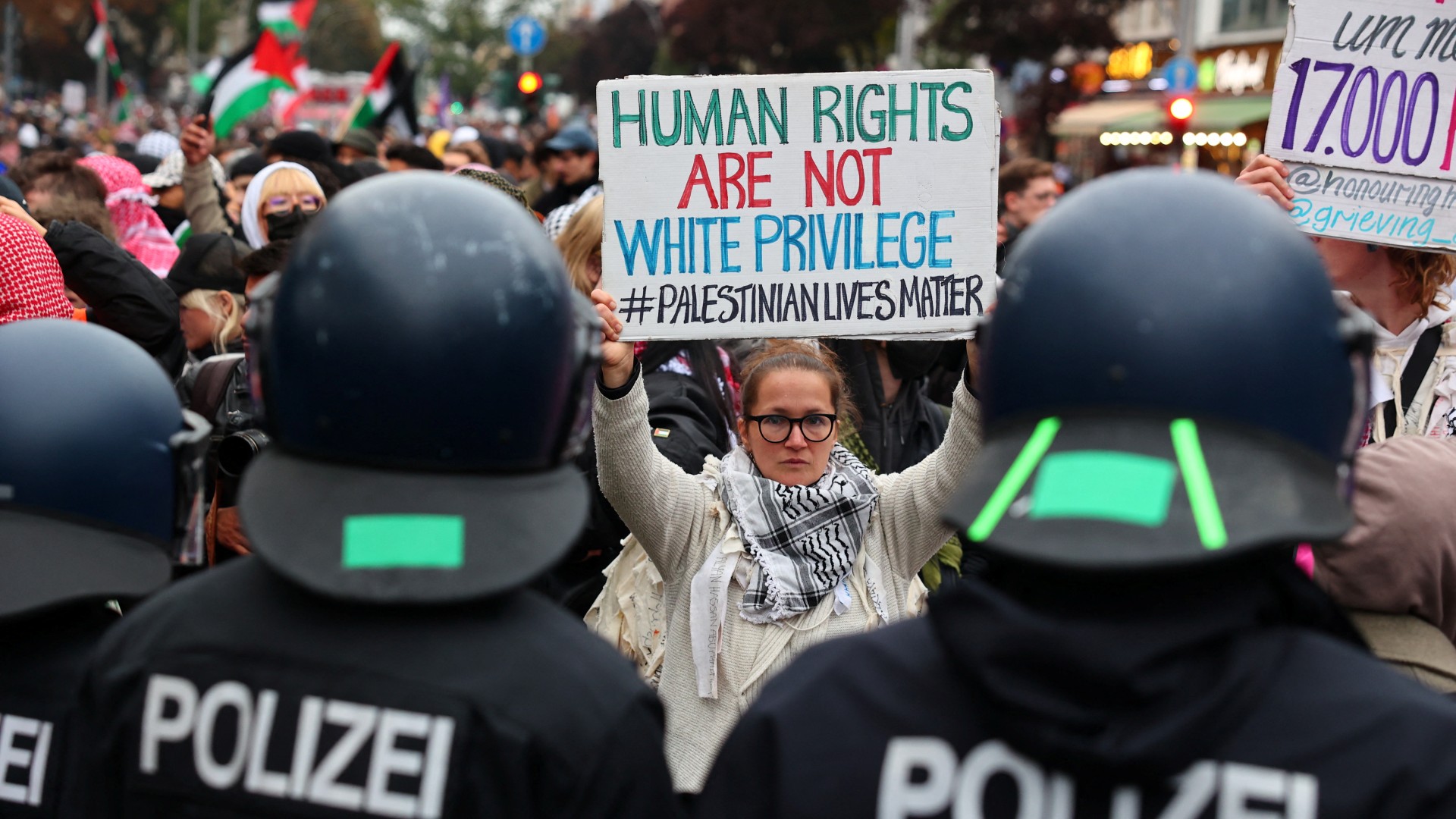
In the wake of escalating tensions over the Gaza conflict, Germany’s domestic intelligence agency, the Federal Office for the Protection of the Constitution (BfV), has released an 80-page official brochure that has ignited fierce controversy for conflating legitimate pro-Palestinian speech and criticism of Israeli military action with antisemitism. Titled “Hidden Messages — Anti-Semitic Codes and Ciphers,” the document was published last week with the stated goal of raising public and educational awareness of covert antisemitic rhetoric and imagery. However, its sweeping categorization of pro-Palestinian advocacy as inherently antisemitic has drawn sharp condemnation from human rights organizations, which warn it legitimizes a broader crackdown on peaceful pro-Gaza protest across the country.
The brochure builds on a prior controversial BfV dossier released just days earlier, which labeled iconic Palestinian symbols — including the watermelon, a widely used visual shorthand for Palestinian solidarity, and Handala, the famous cartoon of a displaced 10-year-old Palestinian refugee — as identifying markers of “secular pro-Palestinian extremism.” For its new publication, the BfV adopts the widely contested International Holocaust Remembrance Alliance (IHRA) working definition of antisemitism, which the agency frames as a universally accepted standard. The definition expands the scope of antisemitic harm to include targeting the State of Israel as a Jewish collective, a framing that critics argue effectively shields Israeli policy from legitimate political critique.
Targeted primarily at teachers and educational staff as a guideline for identifying antisemitic speech in academic and workplace settings, the brochure is also distributed to members of the public interested in German social and political developments. In its opening section, the BfV frames antisemitism as a persistent “bridging phenomenon” that connects disparate ideological groups across the political spectrum — from mainstream society to right-wing extremism, left-wing extremism, Islamist extremism, and a vaguely defined category of “foreign-related extremism.” The document claims that despite rare actual collaboration, shared anti-Jewish and anti-Israel sentiment can unite otherwise opposing groups, pointing specifically to post-October 7 pro-Palestinian protests. It argues that left-wing and far-left expressions of solidarity with the Palestinian liberation movement normalize Hamas’ October 7 terrorist attacks, a claim that lacks supporting statistical data on connections between antisemitic attacks and the groups it names. To visualize this purported cross-ideological alliance, the BfV included an AI-generated graphic showing different ideological groups connected by bridges leading from antisemitism to the “middle of society.”
The bulk of the brochure catalogs historic and contemporary symbols, terms, and images the BfV classifies as antisemitic. It correctly includes classic Nazi-era antisemitic tropes: the octopus motif used to falsely claim Jewish control of global society, caricatures depicting Jews as power-hungry, the ancient blood libel myth, dehumanizing imagery comparing Jews to rats, parasites or monkeys, and modern dog whistles such as references to “Wall Street” and the “East Coast” as code for Jewish-controlled financial power. However, the publication mixes these unambiguous hate symbols with examples of peaceful pro-Palestinian advocacy and documentation of civilian harm in Gaza, labeling them antisemitic by extension.
Two high-profile examples included in the brochure have drawn particular criticism. The first is a viral graphic circulated online to highlight the catastrophic child death toll in Gaza, which reads: “Israel kills an entire classroom every day – 28 kids.” The image was created to draw attention to data from Save the Children, released in September 2025, which recorded that at least one Palestinian child had been killed on average every hour by Israeli forces in Gaza, with total child fatalities surpassing 20,000. While the BfV includes a minor disclaimer acknowledging room for interpretation over the image’s antisemitic content, it argues the graphic reverses perpetrator and victim, erases the October 7 Hamas attacks and the broader context of the Israeli-Palestinian conflict, and revives the historic antisemitic “Jewish child murderer” trope by framing Israeli killings of children as a ritualized act.
The second contentious example is a political cartoon depicting an Israeli soldier pulling the plug on an incubator holding a Palestinian infant, while asking “Do you condemn Hamas?” The cartoon references a verifiable real-world event: a November 2023 Israeli airstrike on Gaza’s al-Nasser Medical Complex that cut oxygen to the hospital’s neonatal intensive care unit. When medical staff returned following a ceasefire days later, four unevacuated babies were found dead. The BfV labels the cartoon antisemitic, claiming it simplifies the decades-long conflict into a binary good-versus-evil framing and reinforces the antisemitic trope that Jews lack basic human morality out of a ruthless desire for power. The brochure makes no mention of the actual real-world event that inspired the cartoon.
Critics point to a key absence in the document: it never acknowledges that rising criticism of Israel is a direct response to Israel’s large-scale military campaign in Gaza that has killed hundreds of thousands of Palestinian civilians. Human rights groups including Amnesty International have already condemned the German government’s broader crackdown on peaceful pro-Palestinian activism, a crackdown that this brochure serves to validate. Germany has long been one of Israel’s most prominent international backers, despite its own 20th-century history of genocidal violence against Jewish people, Slavs, Roma, and Indigenous populations in colonial Namibia. The publication has amplified concerns that German authorities are using the country’s historic responsibility to combat antisemitism to silence legitimate dissent against Israeli military action and marginalize pro-Palestinian voices within the country.