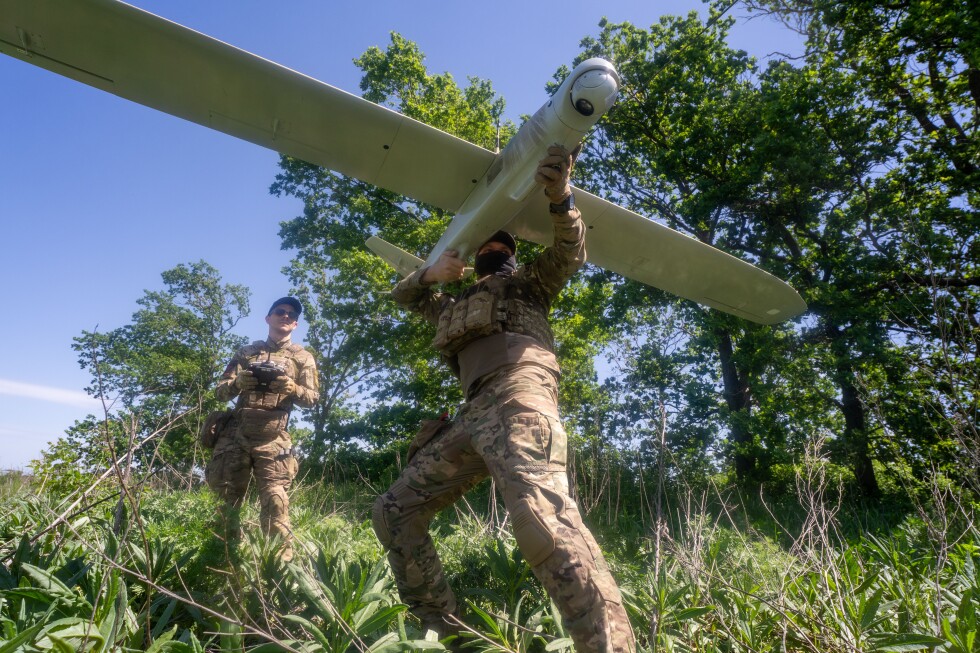
Over recent months, a string of unintended Ukrainian drone incursions into the airspace of NATO and European Union Baltic member states has exposed gaps in regional air defenses, sparked political upheaval, and escalated geopolitical tensions along the alliance’s eastern border. What began as a series of isolated incidents has evolved into a major security challenge, with far-reaching implications for NATO cohesion and Ukraine’s efforts to disrupt Russia’s energy revenue streams.
The incursions trace back to Kyiv’s expanded military campaign targeting Russian Baltic Sea ports that serve as critical hubs for Moscow’s oil exports. With oil prices pushed higher by U.S. involvement in the Iran conflict, these energy exports represent a core source of funding for the Kremlin’s war effort in Ukraine, making port and energy infrastructure a top strategic target for Kyiv. Ukraine has concentrated its strikes on key Russian ports of Ust-Luga and Primorsk, located just kilometers from the Estonian and Finnish borders. In one major May attack on Primorsk that ignited large port fires, regional Russian governor Alexander Drozdenko confirmed more than 60 Ukrainian drones were intercepted and downed during the assault.
But as Ukraine’s long-range drones travel north to reach these targets, several have gone off course, crossing into NATO territory. Incidents have included a drone crashing into a power plant chimney in Estonia, another striking empty fuel storage tanks in Latvia, and a third being shot down by a Romanian fighter jet deployed to Lithuania as part of NATO’s rotational defense mission. Most recently, on a Wednesday in Vilnius – the capital of NATO member Lithuania – residents were ordered to shelter in underground parking garages amid official warnings of unidentifiable drone activity near the Belarusian border. It marked the first time a NATO capital has implemented such shelter protocols since Russia’s full-scale invasion of Ukraine in 2022. To date, no fatalities or injuries have resulted from the stray incursions, but the repeated airspace violations have triggered significant political and security fallout: in May, the incursions directly contributed to the collapse of Latvia’s sitting government, with both the prime minister and defense minister stepping down after the incident.
Ukrainian officials have repeatedly apologized for the unintended incursions, blaming Russia’s widespread electronic jamming and spoofing operations for pushing the drones off their intended course. The explanation has been backed by Baltic leaders, who have long documented consistent Russian interference with global navigation satellite systems (GNSS) across the region. Russia uses two primary tactics to disrupt drone navigation: jamming, which overwhelms satellite navigation receivers with strong competing radio frequencies that block location calculation, and spoofing, which transmits fake satellite signals to trick a drone’s navigation system into believing it is operating in a different location. Lithuanian Foreign Minister Kęstutis Budrys has explicitly stated Russia is deliberately redirecting stray Ukrainian drones into NATO airspace to sow chaos and stoke tensions between Kyiv and the alliance.
The repeated incursions have also drawn renewed attention to longstanding gaps in air defense coverage across NATO’s eastern flank. A September 2025 incident that saw 20 Russian drones enter Polish airspace – which required scrambling expensive multirole fighter jets to intercept – first exposed these vulnerabilities, as the drones were not detected prior to crossing the border. Last week, an armed Ukrainian drone crashed in Lithuanian territory after also evading early detection, according to Vilmantas Vitkauskas, head of Lithuania’s National Crisis Management Centre. While Poland and Romania have already deployed new purpose-built anti-drone defense systems, the first of their kind used by the alliance, this specialized technology has not been rolled out across the entire Baltic region. Estonian Defense Forces Colonel Janno Märk notes that countering drone incursions is an inherently complex challenge: drones operate across a wide range of speeds and altitudes, requiring a layered, multi-system defense approach rather than a single one-size-fits-all solution. Despite the tensions, Budrys says Baltic nations are looking to Ukraine itself for support: as Kyiv has led the world in developing advanced counter-drone technology amid its two-year war with Russia, Ukrainian expertise offers the most effective path to mitigating future incursions, especially as Kyiv now holds the capability to strike targets deep inside Russian territory, increasing the volume of drone traffic near NATO borders.
The drone incidents have also prompted aggressive rhetoric from Moscow, which has sought to frame the incursions as proof that NATO is directly involved in the war against Russia. Russia’s Foreign Intelligence Service (SVR) recently made an unsubstantiated claim that Ukraine plans to launch drone strikes against Russia from Baltic territory, and alleged Ukrainian military personnel have already deployed to Latvia. The SVR warned that Latvia’s NATO membership would not shield the country from what it called “just retribution.” Both Ukraine and Baltic leaders have rejected the claim outright. Ukrainian foreign ministry spokesman Heorhii Tykhyi confirmed no Baltic state or Finland has ever permitted Ukraine to use their territory for strikes against Russia, while Budrys dismissed the SVR’s allegation as a “transparent act of desperation” designed to distract from Ukraine’s successful strikes against Russia’s military supply chains. NATO Secretary-General Mark Rutte has echoed that framing, praising the alliance’s calm, decisive, and proportional response to the drone incidents, and placed full blame for the incursions on Russia’s illegal war of aggression against Ukraine.