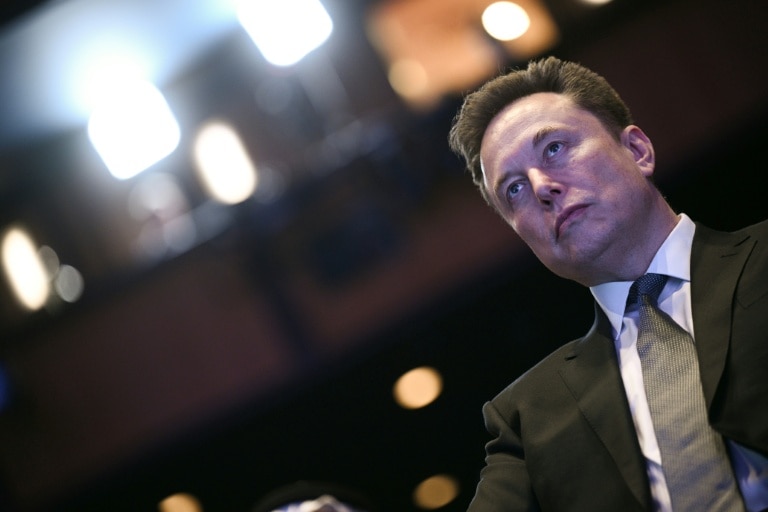
Elon Musk’s aerospace and technology conglomerate SpaceX has taken the first formal step toward a public listing, filing an initial public offering (IPO) prospectus with U.S. regulators this Wednesday that is poised to shatter all previous Wall Street records if brought to fruition.
The confidential filing, already under review by the U.S. Securities and Exchange Commission (SEC), outlines plans to raise up to $75 billion in public capital, which would value the company at as much as $1.75 trillion. Trading on the Nasdaq exchange under the ticker symbol SPCX could launch as early as June 2026, according to industry media reports. If completed, the listing would surpass every IPO in U.S. history in terms of capital raised, cementing Musk’s reputation as one of the most transformative entrepreneurs of the 21st century.
This IPO marks a watershed moment for SpaceX, which was founded 24 years ago and has never publicly disclosed its detailed financial performance until now. The S-1 prospectus— the regulatory document required for all public listings that lays out financials, risk factors and strategic plans—revealed that SpaceX generated $18.7 billion in total revenue in 2025, but recorded an operating loss of $2.6 billion driven by massive investments in next-generation rocket technology and artificial intelligence development.
Starlink, the company’s satellite internet division, stands out as its core revenue driver, pulling in $11.4 billion in 2025 revenue, a nearly 50% increase year over year. By contrast, the company’s combined AI segment— which includes Musk’s xAI and the social platform X, formerly Twitter—posted $3.2 billion in 2025 revenue but a staggering $6.4 billion operating loss, as the company pours capital into building AI training data centers to compete with industry giants Google, Meta and Amazon. Capital expenditure for the AI segment hit $12.7 billion in 2025 alone, and grew to $7.7 billion in just the first quarter of 2026, reflecting the enormous cost of staying competitive in the global AI arms race.
In a surprising business deal disclosed in the filing, SpaceX has agreed to lease excess capacity at its COLOSSUS and COLOSSUS II data centers to leading rival AI firm Anthropic for $1.25 billion per month through May 2029. The IPO filing comes just days after Musk suffered a major legal defeat in his long-running public feud with OpenAI, another top AI competitor that is also preparing for its own public listing. With Anthropic also targeting an IPO in 2026, this year is on track to become one of the most high-profile years for tech public offerings in recent Wall Street history.
A key detail of the listing plans confirms that Musk will retain near-total control of SpaceX after it goes public via a dual-class share structure, a setup designed to avoid the kind of corporate governance battles that have repeatedly disrupted his leadership at electric car maker Tesla, where shareholders have repeatedly challenged his massive compensation packages and the independence of Tesla’s board. Under the proposed structure, Musk will hold roughly 42% of the company’s total equity but control approximately 79% of all shareholder voting power. SpaceX explicitly warned outside investors in the filing that this arrangement creates inherent risks, noting Musk “will have the power to control the outcome of matters requiring shareholder approval, including election of all our directors.”
The prospectus also laid out SpaceX’s extraordinarily ambitious long-term strategic roadmap: building AI data centers in orbit, arguing that solar power captured directly from space is “the only truly scalable solution” to meet the exponentially growing energy demand of global AI computing. The company plans to begin launching purpose-built AI computer satellites as early as 2028, with a long-term goal of deploying 100 gigawatts of orbital compute capacity annually. Achieving that goal will require thousands of rocket launches per year and moving roughly one million metric tons of payload into orbit annually— a challenge SpaceX says no other company on Earth is positioned to tackle at commercial scale.
In a projection that underscores the company’s massive growth ambitions, SpaceX calculated its total addressable market—the maximum potential revenue opportunity across all its business lines, excluding the Chinese and Russian markets—at a staggering $28.5 trillion.