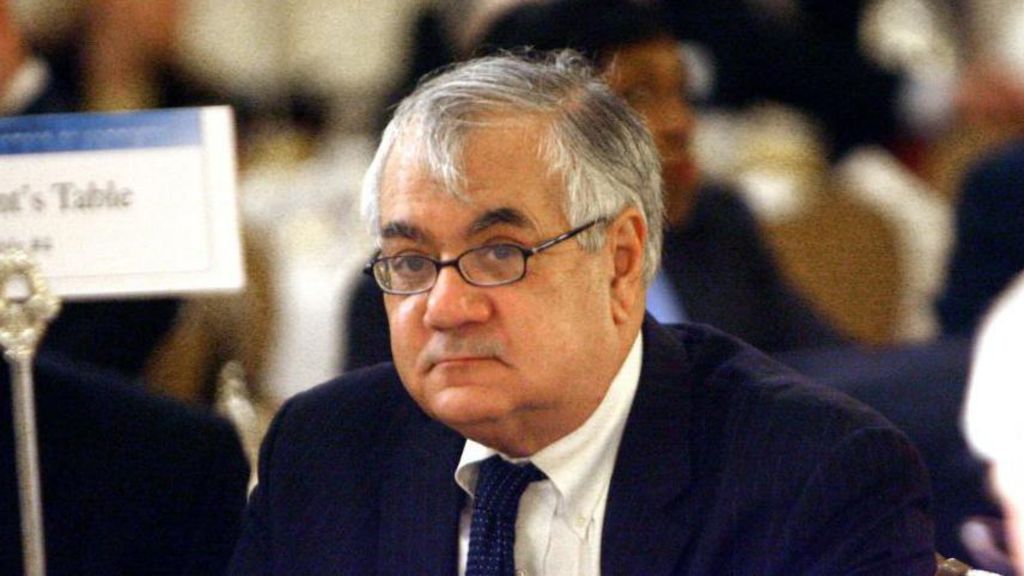
Veteran American politician Barney Frank, a transformative figure who reshaped both national financial policy and LGBTQ+ representation in Congress, has passed away at the age of 86. Multiple U.S. media outlets confirmed the former Democratic congressman died peacefully Tuesday night, months after entering hospice care at his Maine residence in April.
Over his 32-year tenure representing southern Massachusetts in the U.S. House of Representatives (1981–2013), Frank built a legacy defined by two landmark contributions: advancing civil rights for marginalized communities and leading post-2008 financial regulatory overhaul. As one of the first openly gay members of Congress and the first to enter a same-sex marriage while in office, he broke long-standing barriers for LGBTQ+ representation in American politics.
Frank’s most consequential policy work came in response to the 2008 Great Recession, triggered by the subprime mortgage collapse. He co-authored the landmark Dodd-Frank Wall Street Reform and Consumer Protection Act alongside former Connecticut Senator Chris Dodd. Signed into law by President Barack Obama in 2010, the legislation created new independent regulatory bodies, tightened oversight of large financial institutions, and implemented sweeping protections for consumers – the most comprehensive update to U.S. banking rules since the Great Depression. In 2018, the Donald Trump administration rolled back a portion of Dodd-Frank’s restrictions, a change Time Magazine labeled the decade’s “biggest rollback of bank rules.”
On civil rights, Frank was a vocal critic of the military’s “don’t ask, don’t tell” policy, which banned openly gay and lesbian service members from serving, and lobbied aggressively for its repeal. He also led a years-long push for federal legislation to outlaw workplace discrimination against LGBTQ+ workers, a goal that was not achieved during his time in office. In a 2011 interview with The Boston Globe ahead of his retirement, Frank summed up his approach to combating prejudice: “Prejudice is based on ignorance, and the best way to counterbalance it is with a living example, with reality.”
Close associates remembered Frank as a principled leader committed to public service. “He was, above all else, a wonderful brother. I was lucky to be his sister,” Frank’s sister Doris Breay told NBC Boston. Jim Segel, Frank’s former campaign manager, confirmed the former congressman had accepted his declining health and was at peace in his final months. “He certainly left a mark, and he was a leader on civil rights, on gay rights, on leading other marginalized communities, and then he helped the country get through the 2008 financial crisis, which was the most significant recession, almost since 1930,” Segel told Axios.
In the weeks before his death, while receiving hospice care, Frank spoke with multiple national media outlets to reflect on his decades of public service, assess the current political climate, and share his thoughts on the future of the American left. Even amid frustration with contemporary politics, he retained a measured hopefulness: “I’m filled with disgust at the current state, but optimism that it’s going to get better,” he told CNN’s Jake Tapper earlier this month.