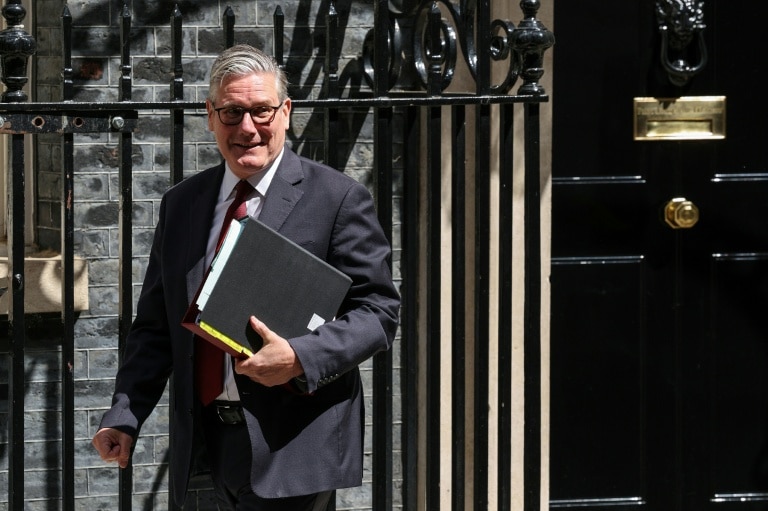
In a politically charged move that has drawn sharp criticism from domestic opponents and global allies alike, Prime Minister Keir Starmer’s newly elected Labour government has moved to ease sanctions on imports of Russian-derived jet fuel and diesel, framing the policy as a necessary buffer to shield British consumers from skyrocketing energy costs amplified by ongoing Middle East conflict.
The newly approved indefinite trade licence, which permits imports of Russian crude oil processed through refineries in third countries like India, is set to undergo periodic reviews, according to the UK’s Department of Business and Trade. Alongside this, the government issued a temporary licence that relaxes existing sanctions on liquefied natural gas originating from specific Russian production facilities. This adjustment comes as the government prepares to fully implement a previously announced ban on Russian crude-derived imports, first unveiled in October 2024.
Starmer defended the adjustment during a press briefing Wednesday, stressing that the targeted changes do not represent a rollback of existing sanctions against Moscow. “This is not a question of lifting existing sanctions in any way whatsoever, and we will continue to work with our allies on further sanction packages,” he stated, adding that the two short-term licences are designed to phase in the full ban gradually while avoiding sudden price shocks for UK households and businesses.
The decision has immediately ignited fierce domestic political pushback. Conservative Party leader Kemi Badenoch condemned the move, accusing Starmer of “choosing to buy dirty Russian oil” and arguing that revenue from these fuel sales will directly fund Moscow’s military offensive against Ukraine, where thousands of Ukrainian soldiers have been killed since the 2022 full-scale invasion.
The controversy also extends to the international stage. The policy aligns with a similar decision from the United States, which last Monday extended a sanctions waiver for Russian oil cargoes already in transit for a second time. That waiver was put in place after escalating Middle East tensions — driven by the conflict between Israel and Iran that has disrupted global energy supplies — pushed crude prices to multi-year highs. However, the EU has openly criticized the US waiver extension, with EU economics commissioner Valdis Dombrovskis noting at a recent G7 finance ministers meeting that the current moment is not the time to reduce economic pressure on Russia. The UK was a participant in that meeting, where the policy drew international scrutiny.
UK officials have offered conflicting framing of the change in recent days. Treasury minister Dan Tomlinson defended the adjustment to Sky News, framing it as a step to protect core UK national interest amid the current global energy crisis. “The government has announced this time-limited change to the rules around oil and refining given the extremes of the impacts of the conflict in Iran, and the impact of it washing up on our shores,” he said. That framing was later echoed by trade minister Chris Bryant, who apologized to Members of Parliament for the government’s “clumsy” rollout of the new policy, and committed to keeping the approved licences as “temporary as possible.”
The current energy market volatility traces back to Iran’s decision to effectively close the Strait of Hormuz — a critical chokepoint that carries roughly 20% of the world’s daily oil supplies — in retaliation for US-Israeli strikes launched in February. While commercial traffic has slowly resumed in the waterway during a recent ceasefire, market uncertainty has kept prices elevated. As of Wednesday, Brent North Sea crude, the global benchmark for oil prices, was trading close to $110 per barrel, a level far above pre-Middle East conflict averages.
The UK first imposed a sweeping sanctions regime against Russia shortly after Moscow launched its full-scale invasion of Ukraine in 2022. Those measures included restrictions on Russian oil and energy exports, alongside sanctions targeting more than 3,000 Russian individuals and business entities. Wednesday’s policy adjustment has reopened fierce debate over how Western nations balance energy security for domestic consumers with the goal of maintaining collective pressure on Russia over its war in Ukraine.