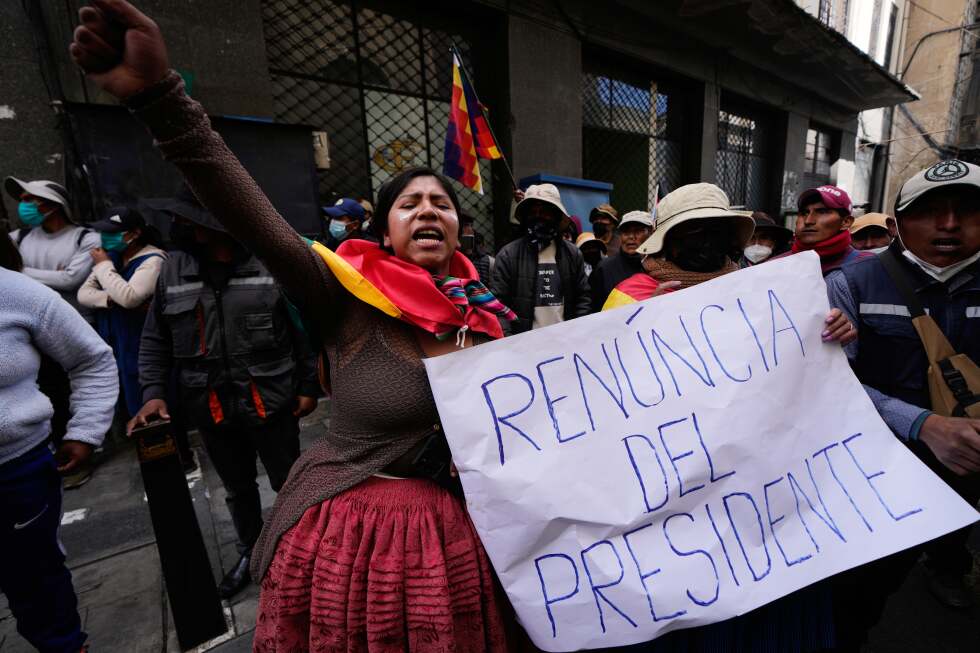
Six months after Rodrigo Paz took office as Bolivia’s president, the South American nation is grappling with its most severe political and humanitarian crisis in decades, as nationwide protests and coordinated road blockades have left the country’s administrative capital La Paz effectively under siege. What began as scattered demands from disparate labor and social groups has evolved into a full-scale movement calling for Paz’s resignation, amplified by the shadow of influential former president Evo Morales, who is currently evading arrest on sexual assault charges.
The unrest has stretched into its third week, led by a coalition of Bolivia’s largest labor union, the Bolivian Workers’ Central (COB), peasant unions, and mining groups. The sustained road closures have gutted local markets in La Paz, drained critical oxygen supplies at the capital’s hospitals, and already claimed at least three lives: emergency response vehicles were blocked from reaching medical facilities, leaving patients without urgent care. On Monday, clashes broke out between police and Morales supporters who joined the mass mobilization in the capital, intensifying pressure on a beleaguered administration that holds no legislative majority and lacks a cohesive, nationwide political party structure.
For Paz, a business-friendly centrist who won office last year as part of a broader regional wave of conservative electoral gains, the uprising represents the existential threat of his young presidency. Despite his warning Friday that “Those seeking to destroy democracy will go to jail,” blockades have since expanded to cover nearly the entire country, leaving more than 5,000 vehicles stranded on national highways and draining the national economy of an estimated $50 million every single day, according to local business associations.
The demands driving the protest are varied across participating groups. The COB initially called for significant wage hikes, while peasant groups have demanded a consistent, affordable supply of gasoline. Miners are pushing for expanded access to untapped mining territories, and public school teachers are conducting separate negotiations for salary increases. Presidential spokesperson José Luis Gálvez argues that most of these demands have already been addressed responsibly in line with Bolivia’s current economic constraints, claiming “dark forces” aligned with Morales are deliberately destabilizing the elected government.
Paz has repeatedly emphasized that he inherited a “bankrupt state” from the previous government led by Morales’ Movement Toward Socialism (MAS). His critics, however, decry his slow, ineffective response to a national crisis that has seen annual inflation climb near 20% and persistent fuel shortages – the worst economic downturn the country has faced in 40 years. A damaging early controversy, dubbed the “junk gasoline” scandal, further eroded public trust: the government imported low-quality fuel that damaged thousands of vehicles, sparking initial transport strikes and forcing the resignation of two senior executives at the state-owned oil company.
Morales, who led the MAS government for 14 years before leaving office in 2019, has emerged as the most high-profile figure behind the current unrest, organizing the latest mass march from his remote hideout in the Bolivian tropics. The former president has evaded an arrest warrant for 18 months stemming from allegations that he sexually abused a 15-year-old girl, charges he dismisses as politically motivated fabrication. In a recent post on social media platform X, Morales pushed back against claims he has lost his political influence, saying, “The government and the right wing claim that I am a political corpse and that I lack the ability to mobilize anyone, yet they continue to blame me. As long as structural demands — such as those concerning fuel, food and inflation — remain unaddressed, the uprising will not be quelled.” Most independent political analysts, however, argue Morales no longer holds the broad popular support he once commanded, and is instead stoking unrest primarily to distract from his legal troubles and avoid imprisonment.
The collapse of the MAS, which governed Bolivia for 20 years before splitting into factions led by Morales and former president Luis Arce, left Bolivia’s political landscape deeply fragmented, with no single party holding a clear governing majority. Paz’s surprise electoral victory last year quickly unraveled when his own political vehicle, the Christian Democratic Party, fractured soon after he took office. Compounding his governing challenges, Paz is also locked in a public, bitter feud with his own vice president, former police officer Edman Lara.
Early in his term, Paz positioned himself as a reformer, moving quickly to end the country’s international isolation that marked the MAS era and court foreign investment and loans. While he secured multiple pledges of international financial support, most of those funds have yet to materialize in Bolivian coffers. His first major domestic policy move, cutting long-standing fuel subsidies to stabilize public finances, did initially avoid mass unrest, but the subsequent low-quality fuel import scandal undermined what early goodwill he had with the public.
The crisis has drawn significant attention and response from across Latin America and the United States. Eight Latin American governments, ranging from Chile to Costa Rica, released a joint statement rejecting “any action aimed at destabilizing the democratic order.” Neighboring Argentina has stepped in to launch a week-long humanitarian airlift to bring critical supplies to Bolivia and alleviate widespread shortages of food and medical goods. The United States, which is rebuilding diplomatic and economic ties with Bolivia after decades of tense relations under Morales, has expressed public support for Paz’s efforts to “restore order for the peace, security and stability of the Bolivian people,” while also issuing a travel alert urging U.S. citizens in the country to exercise heightened caution amid ongoing unrest.