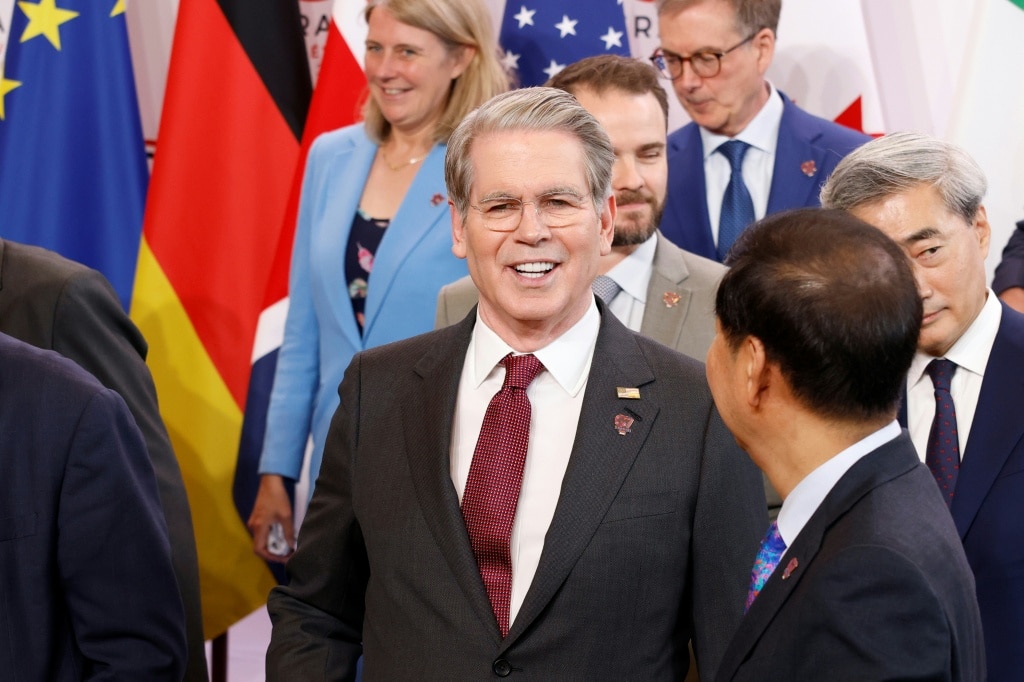
Against a backdrop of escalating geopolitical tension and mounting economic instability, finance leaders from the Group of Seven major global economies wrapped up two days of talks in Paris on Tuesday, leaving French officials acknowledging that negotiations were marked by candid, at times strained, exchanges before the bloc agreed to a unified statement reaffirming commitment to multilateral collaboration.\n\nRoland Lescure, France’s finance minister, told reporters following the closed-door meetings that delegates engaged in open, unvarnished discussions to craft both immediate and long-term policy responses to pressing global economic challenges, with the core goal of safeguarding broad-based economic stability. The gathering included top finance officials from all G7 members, among them United States Treasury Secretary Scott Bessent.\n\nDespite the friction in talks, the G7’s final official communique reaffirmed the bloc’s core pledge to work together through multilateral frameworks to counter growing risks threatening the interconnected global economy. The document framed current global conditions as a series of overlapping, complex challenges that demand coordinated policy action, pointing specifically to the ongoing conflict in the Middle East as a key driver of heightened economic uncertainty.\n\nIn the communique, G7 leaders noted that the Middle Eastern conflict has amplified existing risks to both global growth and persistent inflation, with cascading disruptions hitting critical global supply chains. The statement specifically called out acute pressures on energy, food, and fertilizer supply networks — disruptions that disproportionately harm low-income and vulnerable developing economies that rely heavily on global imports.\n\nOne of the most pressing geopolitical economic issues addressed was the persistent disruption to global shipping through the Strait of Hormuz, a critical strategic waterway that carries roughly a fifth of the world’s daily oil trade. Since the escalation of regional conflict, Iran has implemented an effective blockade that has severely restricted shipping traffic through the strait. The G7 statement called for an immediate end to the disruption, urging a “swift return to free and safe transit” for all commercial vessels.\n\nThis week’s meeting in the French capital was held as France holds the rotating G7 presidency, and it served as a key preparatory step for the group’s full head-of-state summit scheduled for June 2025. That higher-level gathering will be hosted at the Alpine lakeside resort of Evian, with French President Emmanuel Macron set to chair the proceedings, and U.S. President Donald Trump expected to attend in person.