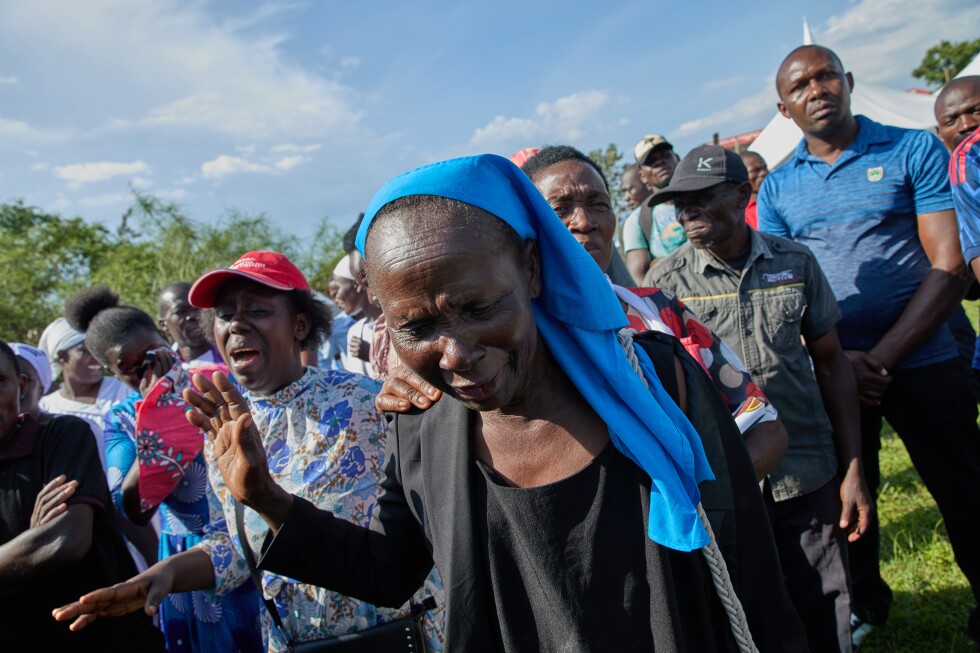
Along a sunbaked roadside in Kisumu, western Kenya, the body of 64-year-old Tom Ochieng Mima lies in state, dressed in crisp formal funeral garments. Gathered under white canvas tents, hundreds of attendees sit on lightweight plastic chairs, their voices rising and falling in a raw, haunting blend of hymn-like singing and unfiltered weeping. A cluster of mourners sways in unison, waving leafy branches and striking them against the dusty earth in a steady, rhythmic pattern. To an outside observer, this scene reads as a conventional, deeply emotional community funeral — until the context comes into light.
None of these performing mourners ever met Mima, nor do they have any personal connection to his grieving family. They are part of a growing, unique trade in western Kenya’s poorer regions: professional mourners, hired to channel open, visceral grief in accordance with long-held Luo cultural customs. For many practitioners, this unlikely occupation offers a rare source of consistent, livable income in an area plagued by widespread economic uncertainty.
Unlike many skilled trades that require years of formal training, professional mourning is open to anyone who can connect deeply with emotion and extend genuine empathy to grieving families, according to Francis Oyoo, a two-year veteran of the field. Oyoo typically takes on one to two funerals per month, earning roughly $80 per assignment — a modest sum that is nevertheless enough to cover his basic living costs. For Oyoo, the work is rooted in personal experience: he entered the profession after losing his uncle in a sudden accident, and now draws on his own unresolved grief to connect with the families he serves. When channeling emotion for a stranger’s funeral, he says he simply calls to mind the loved one he lost, letting that natural pain flow out.
James Ajowi, another professional mourner at Mima’s service, has been practicing the trade for more than two decades. His own journey into the work was shaped by grief as well: a few years ago, he lost his daughter to a progressive lung disease, and he says his personal experience of devastating loss has only deepened his commitment to comforting other grieving people. “It’s as if she was preparing me for this work,” Ajowi explained.
For bereaved families like Mima’s, the presence of these hired mourners brings unexpected and profound comfort, even though they never knew the deceased. In western Kenya, funerals are major community gatherings, designed to be loud, crowded, and collective affairs that bring together neighbors and loved ones to mourn as one. “They support us. They show us love,” said Lawrence Ouma Angira, Mima’s nephew, who was raised by his late uncle. “They help fill the emptiness left by his passing, and they comfort us — they understand what it means to lose someone you love.”
Anthropologists explain that the role of professional mourners grows out of a centuries-old fusion of Luo traditional beliefs and modern Christianity that defines cultural life in the region, where Luo communities are concentrated around the shores of Lake Victoria. For the Luo, mourning serves a dual purpose: it is not just a space to express personal grief, but a ritual that protects the community from harmful evil spirits, explained Charles Owour Olunga, an anthropologist who studies Luo cultural practices. Collective singing, weeping, and rhythmic movement by large groups of mourners works to drive away negative forces surrounding a death. While unrelated hired mourners (most often women) are a traditional fixture of funeral rites across many regions of Africa and Asia, Olunga noted that it is relatively unusual for men to participate in the practice alongside women. Beyond expressing grief, the professional mourners also help manage crowds and maintain order at large funerals.
The professionalization of this ancient ritual, however, is a relatively new development, tied directly to the forces of urbanization and growing commercialization across rural Kenya, Olunga said. “We are moving away from the fully authentic, community-led version of the rite, but we are still holding tight to the core of the tradition. These professional mourners add depth and color to the existing ritual process.”
This blend of ancient Indigenous tradition and mainstream Christianity is a defining feature of religious life across western Kenya. Research from the University of Nairobi notes that the region is home to a large number of African-initiated churches, religious movements that emerged as a local response to the strict prohibitions on Indigenous ritual imposed by early colonial Christian missionaries. These churches allow followers to hold both Christian beliefs and honor long-held traditional cultural practices, creating a unique religious tapestry.
For the professional mourners themselves, the theological nuances of this blended faith matter far less than the core purpose of their work: building collective connection around grief, and bringing comfort to people when they need it most. “Death is painful,” Oyoo said. “But I also find strength in knowing that one day, I too will die — and people will gather for me.”
This report is part of Associated Press religion coverage, produced in collaboration with The Conversation US through funding from Lilly Endowment Inc. The AP holds sole responsibility for all content.