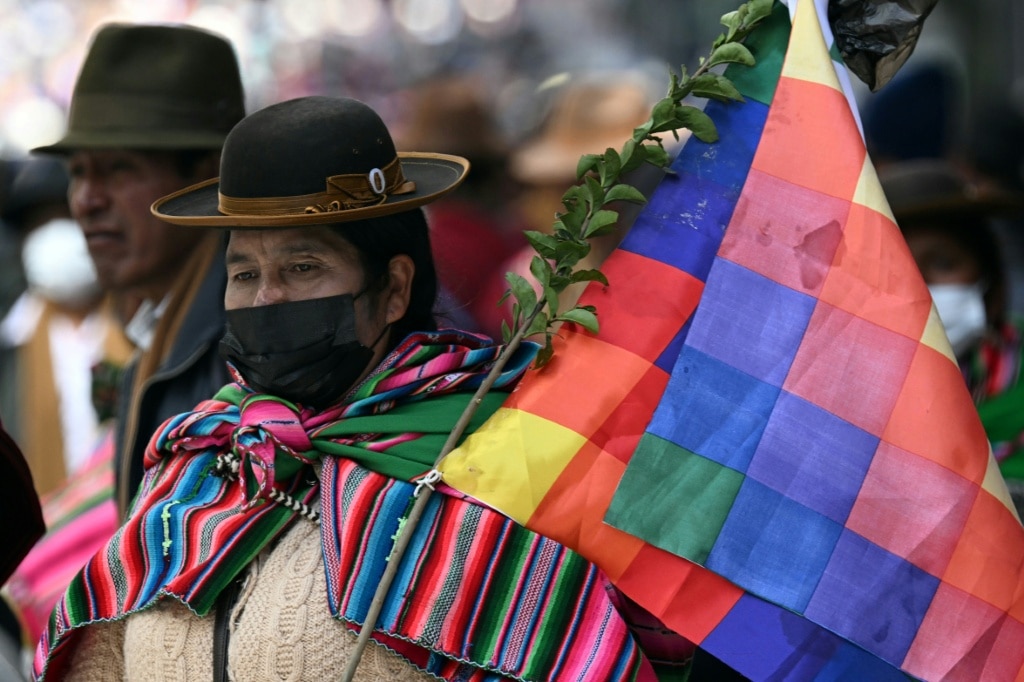
Weeks of growing civil unrest in Bolivia boiled over into violent confrontation in the capital La Paz on Monday, as thousands of demonstrators demanding the resignation of center-right President Rodrigo Paz stormed key government sites, triggering tear gas barrages from security forces and widespread disruption across the Andean nation. The unrest comes as Bolivia grapples with its most severe economic crisis in 40 years, deepening public anger over soaring prices, failed policy reforms, and growing inequality after a shift away from two decades of socialist governance.
The diverse coalition of protesters is led by workers, Indigenous communities, farmers, miners, and teachers, who have united around three core demands: immediate wage hikes to offset runaway inflation, concrete measures to restore long-term economic stability, and a reversal of moves to privatize Bolivia’s state-owned enterprises. Inflation in the country hit 14% year-on-year in April, the highest level in a generation, eroding household purchasing power and leaving many struggling to afford basic necessities.
Paz, a conservative leader who took office less than six months ago after 20 years of socialist rule, has drawn sharp criticism for his early policy moves. Most notably, he eliminated long-standing fuel subsidies that had drained the national treasury’s international dollar reserves, a reform intended to shore up public finances that has instead left the country facing persistent fuel supply shortages.
Monday’s clashes erupted early in the day, when riot police deployed tear gas to block a group of protesting miners from entering La Paz’s main central square, where the seat of national government is located. In response, demonstrators hurled stones and homemade explosives back at security forces. Official government imagery released after the confrontation confirmed that protesters had looted a government office, stealing furniture, computers, monitors and other office equipment. While authorities have not officially reported any casualties from the day’s violence, reporters from Agence France-Presse (AFP) on the ground observed at least two injured protesters. Deputy Interior Minister Hernan Paredes also confirmed that one protester died in clashes over the weekend, after falling into a ditch during skirmishes that broke out when security forces temporarily cleared protest blockades.
On Monday afternoon, calm began to gradually return to La Paz’s streets, but the aftermath of the unrest was visible everywhere: thick clouds of tear gas still hung over major thoroughfares, most local businesses remained shuttered, and basic supplies were running critically low after weeks of road blockades that have cut off supply routes into the capital. As of Monday, the Bolivian Highway Administration counted at least 28 active blockades on major highways across the country. Prosters retook their blockade positions over the weekend after security forces briefly opened access routes Saturday, and resumed cutting off traffic to the capital on Monday. The government has been airlifting emergency food supplies into La Paz since May 10 to address widespread shortages of food, medicine, and fuel.
In a significant escalation of the government’s response to the unrest, Attorney General Roger Mariaca announced Monday that authorities had issued an arrest warrant for Mario Argollo, secretary-general of the Central Obrera Boliviana (COB), Bolivia’s largest trade union federation, which has joined the calls for Paz’s resignation. Argollo faces charges of terrorism and inciting criminal activity, and the warrant is already in the hands of national police command. The government’s crackdown on the union leader has done little to dampen protester resolve, however.
“We want him to resign because he’s incompetent. Bolivia is going through a moment of chaos,” 60-year-old farmer Ivan Alarcon, who traveled 60 miles from his home in Caquiaviri in western Bolivia to join the protests, told AFP.
Supporters of former socialist President Evo Morales, who held power from 2006 to 2019, added further momentum to the protests on Monday, arriving in La Paz after a seven-day march from Oruro, a city roughly 180 kilometers south of the capital. While the government has already reached deals to end protests with some smaller groups, including urban teachers and certain mining factions, hardline factions of the movement have vowed to escalate their actions until Paz steps down.